Fueling the Warfare State. America’s $1.4 Trillion “National Security” Budget Makes Us Ever Less Safe

This March, when the Biden administration presented a staggering $813 billion proposal for “national defense,” it was hard to imagine a budget that could go significantly higher or be more generous to the denizens of the military-industrial complex. After all, that request represented far more than peak spending in the Korean or Vietnam War years, and well over $100 billion more than at the height of the Cold War. 

It was, in fact, an astonishing figure by any measure — more than two-and-a-half times what China spends; more, in fact, than (and hold your hats for this one!) the national security budgets of the next nine countries, including China and Russia, combined. And yet the weapons industry and hawks in Congress are now demanding that even more be spent.

In recent National Defense Authorization Act proposals, which always set a marker for what Congress is willing to fork over to the Pentagon, the Senate and House Armed Services Committees both voted to increase the 2023 budget yet again — by $45 billion in the case of the Senate and $37 billion for the House. The final figure won’t be determined until later this year, but Congress is likely to add tens of billions of dollars more than even the Biden administration wanted to what will most likely be a record for the Pentagon’s already bloated budget.

This lust for yet more weapons spending is especially misguided at a time when a never-ending pandemic, growing heat waves and other depredations of climate change, and racial and economic injustice are devastating the lives of millions of Americans.  Make no mistake about it: the greatest risks to our safety and our future are non-military in nature, with the exception, of course, of the threat of nuclear war, which could increase if the current budget goes through as planned.

But as TomDispatch readers know, the Pentagon is just one element in an ever more costly American national security state.  Adding other military, intelligence, and internal-security expenditures to the Pentagon’s budget brings the total upcoming “national security” budget to a mind-boggling $1.4 trillion. And note that, in June 2021, the last time my colleague Mandy Smithberger and I added up such costs to the taxpayer, that figure was almost $1.3 trillion, so the trend is obvious.

To understand how these vast sums are spent year after year, let’s take a quick tour of America’s national security budget, top to bottom.

Keep reading

A Biden Tax Hike Kicked In That Affects Everything From Soap To Lightbulbs

An excise tax hike on household items that was buried in President Joe Biden’s $1 trillion infrastructure package last year went into effect on July 1, according to the Internal Revenue Service (IRS).

A roughly $13 billion tax increase on 42 chemicals, metallic elements and critical minerals was included in Biden’s Infrastructure Investment and Jobs Act. Common household items like rubber, soap, concrete, plastics, lightbulbs and electronics will be impacted. 

Superfund chemical excise taxes were previously in place between 1987 and 1995, according to the IRS. The infrastructure package, which the White House called “a once-in-a-generation investment,” triggered the re-implementation of the taxes.

Funds from the reinstated excise tax will be partially directed to the Superfund Trust Fund, which is administered through the Environmental Protection Agency (EPA) and responsible for “cleaning up some of the nation’s most contaminated land and responding to environmental emergencies, oil spills and natural disasters.”

The tax impacts Americans who import, produce or manufacture qualified chemicals, Bloomberg Law reported. Importers, producers and manufacturers will pay between $0.48 and $9.47 per ton in tax on chemicals, the outlet reported.

Republicans have been critical of the Biden administration for imposing the taxes amid soaring inflation and supply chain crises. Inflation reached 8.6% in May from a year prior, which is the fastest increase in 40 years.

Former NIH Chief Is Now Highest Paid Member Of Most Expensive White House Staff Ever

When Francis Collins departed as Director of the National Institutes for Health (NIH) in December 2021, his legacy included multiple-millions of dollars in secret royalty payments to himself, prominent colleagues like Dr. Anthony Fauci, and hundreds of other scientists, officials, and researchers working under him.

Today, Collins is the highest paid adviser to the president with the most expensive White House staff ever, according to data compiled by the Chicago-based non-profit government watchdog, Open The Books (OTB).

Collins is paid $300,000 annually as the Acting Science Adviser to President Joe Biden. The new salary represents a 47 percent increase over the $203,500 annual compensation Collins made as NIH Director for 12 years. All salary figures were obtained by OTB under the Freedom of Information Act (FOIA) from the U.S. Office of Personnel Management (OPM).

Earlier this year, The Epoch Times first reported that OTB uncovered more than 1,600 NIH officials, scientists, and researchers who received an estimated $350 million in secret royalty payments from sources outside the government that the agency refuses to identify.

The payments were made between 2010 and 2020, including all but a couple of years of Collins’ tenure.

“We also find that during this period, leadership at NIH was involved in receiving third-party payments. For instance, Francis Collins, the immediate past director of NIH, received 14 payments. Dr. Anthony Fauci received 23 payments, and his deputy, Clifford Lane, received eight payments,” OTB President Adam Andrzejewski told The Epoch Times.

Collins’ successor as NIH Director, Dr. Lawrence Tabak, admitted to Congress in May that the secret royalty payments have “the appearance of a conflict of interest,” but he claimed the agency has sufficient internal safeguards to prevent abuse.

Federal personnel law and regulations bar government employees from having either actual conflicts of interest or the appearance of conflicts in their decision-making as public servants.

Keep reading

Fed report finds 75% of $800 billion Paycheck Protection Program didn’t reach employees

Taxpayers paid $4 for every $1 in wages and benefits received by workers in jobs saved by the federal government’s pandemic Paycheck Protection Program (PPP), according to a new study by the Federal Reserve Bank of St. Louis.

The Fed study also found PPP didn’t support jobs at risk of disappearing, and money flowed disproportionately to wealthier households.

“The PPP was a very large and very timely fiscal-policy intervention, saving about 3 million jobs at its peak in the second quarter of 2020 and distributing $800 billion well within two years of the onset of the COVID-19 crisis,” authors William Emmons and Drew Dahl concluded in their study, “Was the Paycheck Protection Program Effective?”

“But it was poorly targeted, as almost three-quarters of its benefits went to unintended recipients, including business owners, creditors and suppliers, rather than to workers. Due to differences in the typical incomes of those varied constituencies, it also ended up being quite regressive compared with other major COVID-19 relief programs, as it benefited high-income households much more.”

Keep reading

MILLIONS OF BARRELS FROM U.S. EMERGENCY OIL RESERVE SENT ABROAD, INCLUDING TO CHINA

Courtesy of Reuters we know: more than 5 million barrels of oil that were part of the historic U.S. SPR release were exported to Europe and Asia last month, including top US geopolitical nemesis in the global arena, China, even as U.S. gasoline and diesel prices hit record highs.

The export of crude and fuel is blunting the impact of the moves by U.S. President Joe Biden to lower record pump prices. In a widely mocked call, Biden on Saturday renewed a call for gasoline suppliers to cut their prices, drawing rightful criticism from Amazon founder Jeff Bezos, because going after mom and pop gas stores merely demonstrates just how clueless the handlers of the senile presidential puppet truly are.

About 1 million barrels per day have been drained from the Strategic Petroleum Reserve through October, an unprecedented pace. The drain means SPR inventories fell to the lowest since 1986. US crude futures are above $100 per barrel and gasoline and diesel prices above $5 a gallon in one-fifth of the nation. US officials have said oil prices could be higher if the SPR had not been tapped, and for once they are right. Still, the question looms of what happens to oil prices when the US can no longer sell the SPR amid concerns of a real emergency: we know the answer and the Biden admin won’t like it.

“The SPR remains a critical energy security tool to address global crude oil supply disruptions,” a Department of Energy spokesperson said, adding that the emergency releases helped ensure stable supply of crude oil.

Citing customs data, Reuters traced that the fourth-largest U.S. oil refiner, Phillips 66 shipped about 470,000 barrels of sour crude from the Big Hill SPR storage site in Texas to Trieste, Italy. Trieste is home to a pipeline that sends oil to refineries in central Europe. Meanwhile, Atlantic Trading & Marketing (ATMI), an arm of French oil major TotalEnergies, exported 2 cargoes of 560,000 barrels each. Cargoes of SPR crude were also headed to the Netherlands and to a Reliance refinery in India, an industry source said.

Keep reading

FAA to give airports $1 billion for terminals and upgrades

The Biden administration is giving nearly $1 billion to 85 airports to expand and upgrade terminals and other facilities, using money approved in last year’s huge infrastructure bill.

Transportation Secretary Pete Buttigieg said the projects will help meet future demand for travel and make flying safer and more efficient.

“I don’t think anybody could look at airports across America today and say that the existing system and existing levels of funding have been adequate,” Buttigieg told reporters.

The grants announced Thursday are the first installment of $5 billion for airport projects that were included in an infrastructure bill that Congress approved and President Joe Biden signed last November.

The largest of the Federal Aviation Administration grants include $60 million to improve the terminal and replace the bag-handling system at Denver International Airport, $50 million apiece for Boston’s Logan Airport and Orlando International Airport in Florida, $49.6 million for Dulles Airport outside Washington, D.C., to build a new concourse and $20 million for Pittsburgh International Airport to build a new terminal next to the old one.

The main airports in Detroit and Philadelphia will get more than $20 million each to renovate their restrooms.

Keep reading

Top New Biden Staffer Defended Underage, Gay Prostitution Website Raided By Feds in Jaw-Dropping 2015 Article.

Arecent, high-level hire at the Department of Energy’s Office of Nuclear Energy defended a controversial gay prostitution website with a track record of allowing children to be promoted for sexual services on the platform, The National Pulse can reveal.

The revelations, from unearthed op-ed, follow The National Pulse exposé of appointee Samuel Brinton’s past as a drag queen, LGBTQ+ activist who has “lectured” on kink at college campuses and participated in interviews about fetish roleplay.

In an article published on September 15th on the pro-LGBT+ website Advocate, Biden’s latest top nuclear hire dives into a defense of the “Rentboy.com” website, which shuttered following an August 2015 illegal prostitution raid. “Rentboy” is a colloquial term for young men who have sex with older men in exchange for money, often under dubious circumstances.

Brinton, who now serves as the Deputy Assistant Secretary of Spent Fuel and Waste Disposition in the Office of Nuclear Energy, defended “Rentboy.com” in a September 2nd, 2015 op-ed in Advocate magazine: “The Real Ramifications of the Rentboy Raid.

The article followed Department of Homeland Security officials raiding Rentboy’s Manhattan offices and arresting chief executive Jeffrey Hurant and six employees on charges of promoting prostitution. The following year, the CEO of the site, which connected male prostitutes and escorts with potential clients, was indicted on a charge of promoting prostitution which he ultimately pleaded guilty.

The U.S. District Court of the Eastern District of New York’s indictment also revealed the site’s negligence regarding underage sex work, particularly across Asia.

It detailed how Rentboy employees described the age verification process as a “gray area,” as they “did not always remove advertisements when the advertisers failed to provide identification.”

Keep reading

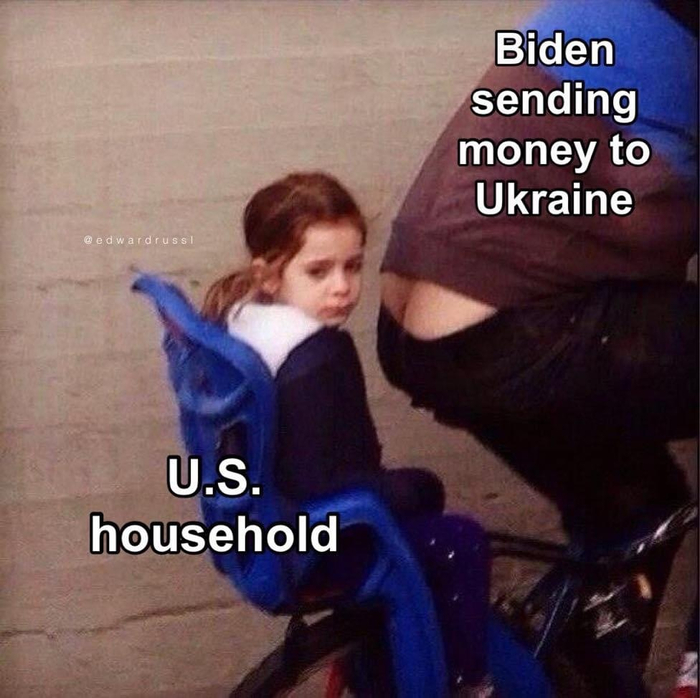
Biden Admin Gives $820 Million More in Military Aid to Ukraine, Including 2 Surface-to-Air Missile Systems

The Biden administration announced new security assistance to Ukraine on July 1 in a package worth about $820 million in total.

The assistance comprises an authorization of a Presidential Drawdown (PDA) of security assistance valued at up to $50 million, as well as $770 million in Ukraine Security Assistance Initiative (USAI) funds. The PDA is the 14th drawdown of arms and equipment from the Pentagon’s inventories since August 2021.

Since Russia invaded Ukraine on Feb. 24, the United States has committed a total of about $6.92 billion in military aid to Ukraine to fight Russian forces. Prior to the invasion, since 2014, the United States had committed some $1.8 billion in weapons and military training to Ukraine, $700 million of which came from the Biden administration.

The latest $820 million aid package was broadly announced by President Joe Biden at a news conference on Thursday in Madrid, which was the third and final day of the NATO summit focused on the Russia-Ukraine war.

“We are going to support Ukraine as long as it takes,” Biden said, adding that the United States is giving Ukrainians “the capacity” so that “they can continue to resist the Russian aggression.”

Keep reading

US families should suffer high gas prices to protect ‘the liberal world order’, Biden’s economic advisor Brian Deese says when asked what he would say to Americans who can’t afford $4.85 a gallon

Biden economic advisor Brian Deese said that Americans should ‘stand firm’ on paying record-high gas prices because the ‘future of the liberal world order’ is more important. 

‘What do you say to those families that say, ‘listen, we can’t afford to pay $4.85 a gallon for months, if not years?’ the director of the National Economic Council was asked on CNN Thursday.  

‘What you heard from the president today was a clear articulation of the stakes. This is about the future of the Liberal World Order and we have to stand firm,’ he replied. 

Deese added: ‘At the same time, what I would say to that family and Americans across the country is you have a president and an administration that is going to do everything in its power to blunt those price increases and bring those prices down.’

The U.S. cut off all Russian gas after Vladimir Putin invaded Ukraine, and the European Union followed suit, driving up gas and energy prices the world over. 

After breaching $5 a gallon for the first time ever, gas prices have fallen back to an average of $4.84 as of Friday.

Inflation has also reached a 40-year high at 8.6 percent with prices surging while the Ukraine war has also compounded food shortages and made grocery shopping more expensive.

Keep reading