Pandemic analyst finds herd immunity could be slowing COVID spread — yet Dr. Fauci still warns against it

At the moment, nobody knows exactly what the threshold of population infection needs to be at to attain herd immunity. Mike Ryan, executive director of the World Health Organization’s health emergencies program, said most scientists believe 60% to 80% of the population needs to be vaccinated or have natural antibodies to achieve herd immunity.

Researchers from Stockholm University in Sweden and the University of Nottingham in Britain published a new study in the journal Science on Friday.The scientists estimate that herd immunity could be achieved at a population-wide infection rate of approximately 40%.

Youyang Gu, a computer scientist whose coronavirus projections are one of 34 pandemic models tracked by the CDC, believes that herd immunity could help in the fight against COVID-19.

“Immunity may play a significant part in the regions that are declining,” Gu told MIT Technology Review. Gu estimates that approximately 35 million Americans have now been infected, which is more than 10% of the country’s population.

Keep reading

The Reaction of the Left to Lockdown

That those countries which didn’t lockdown — such as Sweden and Japan — did absolutely fine (while New Zealand — a more isolated country on earth you cannot find — would have done fine, but chose instead to push 70,000 children into poverty). That the wealthiest people in the world become much, much richer, that we’ve taken a massive lurch towards a techno-dystopian world controlled by an ever shrinking cartel of IT companies and that lockdown has destroyed and will continue to destroy the lives of millions upon millions of poor people (the UN predicts a ‘biblical famine,’ possibly as many as 300,000 deaths a day), all for no good reason.

Keep reading

The Strange Theory of Coronavirus from Space

The space virus theory has been the work of a group of researchers, notably Edward J. Steele and N. Chandra Wickramasinghe. This group has published ten papers on the topic since the pandemic began, but this paper from July 14th offers the most detailed argument.

Steele et al. suggest that COVID-19 arrived on a meteor which was spotted as a bright fireball over the city of Songyuan in North East China on October 11, 2019.

They propose that the meteor might have been “a fragile and loosely held carbonaceous meteorite carrying a cargo of trillions of viruses/bacteria and other primary source cells.”

The authors admit that the Songyuan meteor was spotted over 2,000 km northeast of Wuhan, where the first cases of COVID-19 were reported, but they deal with this discrepancy with the hypothesis that a different fragment of the meteor arrived in the Wuhan area:

A much larger original meteoroid could easily have been fragmenting and dispersing its contents before the ignition of the fireball event. A reasonable assumption is that the fireball which struck 2,000 km north of Wuhan may have been part of a wide tube of debris the bulk of which was deposited in the stratosphere to fall over Wuhan.

Needless to say, this is not a theory with any evidence for it. There is no evidence that viruses or bacteria (or any other life) exist in space, and Steele et al. provide no direct evidence that the coronavirus arrived from the heavens.

But it turns out that the theory of life (and disease) from space isn’t new. The theory is called panspermiaand a handful of researchers, including Steele and Wickramasinghe, have been advocating it for decades.

Keep reading

Sweden: The One Chart That Matters

Sweden has been harshly criticized in the media for not imposing draconian lockdowns like the United States and the other European countries. Instead, Sweden implemented a policy that was both conventional and sensible. They recommended that people maintain a safe distance between each other and they banned gatherings of 50 people or more. They also asked their elderly citizens to isolate themselves and to avoid interacting with other people as much as possible. Other than that, Swedes were encouraged to work, exercise and get on with their lives as they would normally even though the world was still in the throes of a global pandemic.

The secret of Sweden’s success is that its experts settled on a strategy that was realistic, sustainable and science-based. The intention was never to “fight” the virus which is among the most contagious infections in the last century, but to protect the old and vulnerable while allowing the young, low-risk people to circulate, contract the virus, and develop the antibodies they’d need to fight similar pathogens in the future. It’s clear now that that was the best approach. And while Sweden could still experience sporadic outbreaks that might kill another 2 to 300 people, any recurrence of the infection in the Fall or Winter will not be a dreaded “Second Wave”, but a much weaker flu-like event that will not overwhelm the public health system or kill thousands of people.

Keep reading

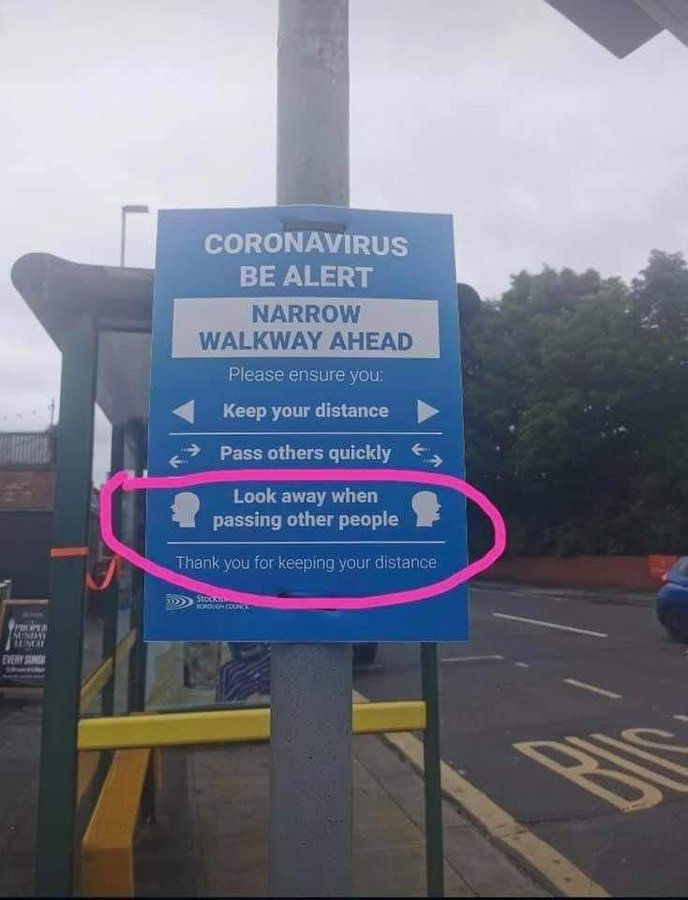
Why The Price Of Face Masking Is Not As Small As It Seems

“There are no solutions, only trade-offs,” Thomas Sowell famously said. When government takes action, even if that action is desperately needed, we still give something up. In the case of the Wuhan virus — with the endless mask mandates, social restrictions, and shutdowns it has ushered in — that something is our precious freedom.

The American founders recognized this conundrum. According to James Madison in Federalist 37, one of the greatest challenges of the Constitutional Convention was to find the right combination, the right proportions, of government power and individual liberty. The more we ask from our government, the more freedom it takes from us in exchange.

These days, as government takes more and more of our freedom, including mandating in many places that we must mask ourselves, it is time to ask serious questions about these trade-offs.

Keep reading