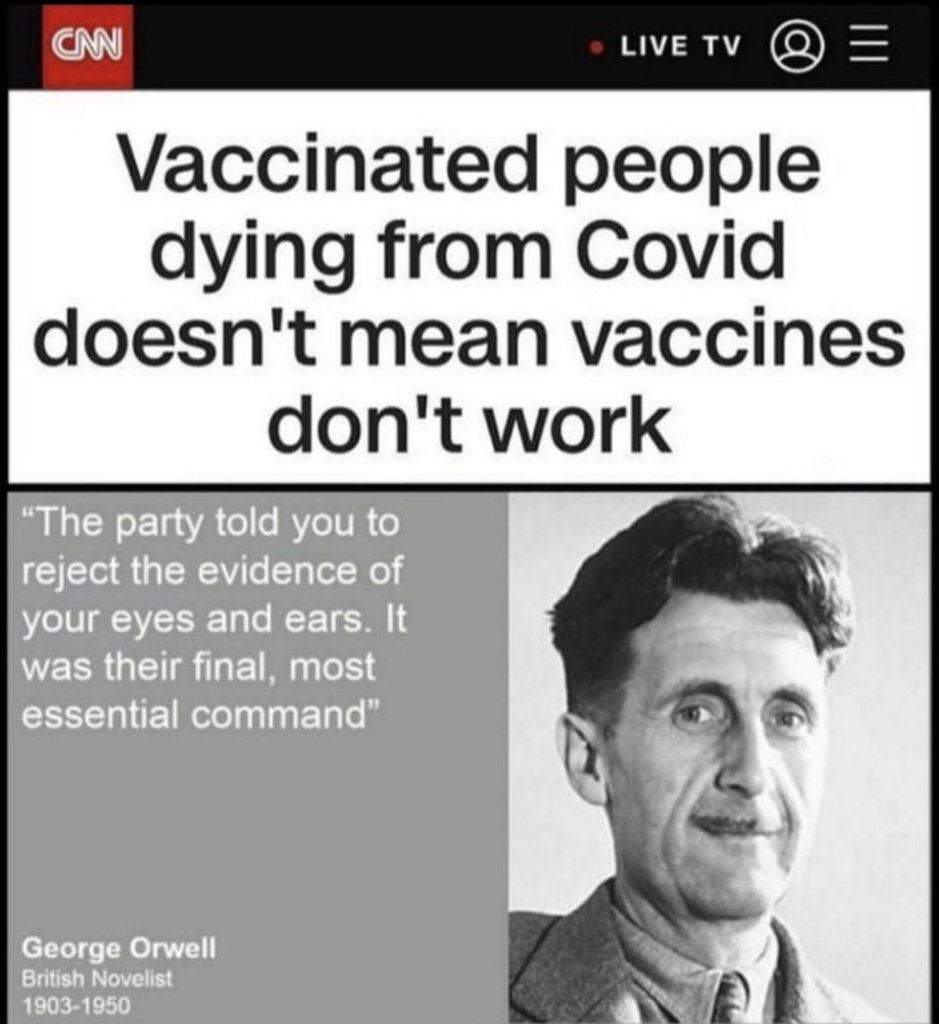
Do you see?

What has been written off by multiple “fact-checkers” over the past year as conspiracy theory or unfounded claims has reportedly been discovered by scientists at Cardiff University. Researchers discovered that a protein in blood likes to bind to part of the AstraZeneca covid-19 vaccine, which can lead to dangerous clotting.
When AstraZeneca’s vaccine rolled out earlier this year, its release was shrouded in claims that it was causing blood clots in individuals. However, the fact checkers rushed to the press to claim otherwise with outlets like USA Today claiming “No definitive link between AstraZeneca’s COVID-19 vaccine and blood clot incidents.”
Reuters also came to the defense of the vaccine in an article the same month claiming “Fact Check-Experts say the Oxford AstraZeneca COVID-19 vaccine is safe and that its benefits far outweigh possible risks.”
But deadly risks are possible and according to the new research, scientists have found a direct link between blood clots and vaccines, referring to this link as a “smoking gun.”
“We’ve been able to prove the link between the key smoking guns of adenoviruses and platelet factor four,” Alan Parker, a co-author of the new paper who studies virotherapies at Cardiff University in Wales, told BBC News. But he added that uncovering exactly how that binding causes clumps to form will require further research—“what we have is the trigger, but there’s a lot of steps that have to happen next.”
Unlike Pfizer’s mRNA jab, the AstraZeneca vaccine encapsulates coronavirus genetic material inside a weakened version of the common cold virus – known as an adenovirus, which infects chimpanzees.
Last month, disgraced Maui police officer, Brandon Saffeels, was sentenced to 30 months in federal prison for arresting a woman and later demanding sexual favors in exchange for his beneficial testimony at her trial. During the course of Saffeels’ trial, other victims came forward and this cop’s sadistic ways were exposed.
According to court documents, Saffeels arrested a woman for DUI in 2019. Apparently, the sick wheels in his head started spinning after her arrest, so he contacted her after the fact and told her that if she allowed him to have his way with her, he would throw his testimony at her trial.
The woman, a single mother, was scared to go to police with the story as she feared they would cover it up. So, she took her case straight to the media. She had the officer’s text messages and even recorded his calls in which he told her to come to his home where he would carry out his “bad intentions.”
After this mother of three made her case public on Hawaii News Now, Saffeels was arrested on numerous charges. After his arrest, other victims came forward alleging that Saffeels made similar advances toward them, including one woman who was the victim of a crime.
A total of four of them are now suing MPD.
In November, Saffeels took a plea deal and his first victim took the stand at his sentencing hearing to let him know how she felt.
“Am I still scared? Very. Do I worry about retaliation still? Yes,” said the woman, adding that Saffeels going to jail gave her some solace.
“I do feel like I’ve gotten a little of my power back. I feel like I can breathe again,” she said after hearing he’d be carrying out his 30 month sentence in another state. “I just encourage everyone else out there going though something like this to take a stand. Be brave. You’re not alone.”
Saffeels was not ordered to immediately report to jail and instead his sentencing was deferred until January 7, 2022 where he would be sent to a federal facility in Oregon. That plea will likely be thrown out now, however, as this cop is unable to control his sick desires.
After his conviction, while waiting to serve his prison sentence, this disgraced cop was busted again — this time, trying to have sex with a 13-year-old girl. Apparently, he wanted to create one more victim before being locked up. Luckily, however, that 13-year-old girl was actually an undercover agent with Operation Keiki Shield — a joint operation by county, state and federal agencies to track down child predators.

A Black Lives Matter leader said Tuesday that the movement will continue to support Jussie Smollett regardless of the outcome of his trial, which she described as a “white supremacist charade.”
Melina Abdullah, a former California State University professor and police abolitionist who co-founded BLM Los Angeles, said Smollett — who is accused of faking a racist, homophobic hate crime against himself — “has been courageously present, visible, and vocal in the struggle for Black freedom.”
“As abolitionists, we approach situations of injustice with love and align ourselves with our community. Because we got us,” Abdullah said in a statement on the website for the BLM movement’s national arm, the Black Lives Matter Global Network Foundation.
“So let’s be clear: we love everybody in our community. It’s not about a trial or a verdict decided in a white supremacist charade, it’s about how we treat our community when corrupt systems are working to devalue their lives,” said Abdullah, who is currently director of BLM Grassroots, a “Defund the Police” group.
CNN’s John Avlon joined CNN Tonight host Michael Smerconish on Tuesday for another of of his pretentious “reality check” segments. This particular instance involved using the 80th anniversary of the attack on Pearl Harbor to hype the possibility of a second civil war.
Coming out of a commercial, Smerconish suggested that 2021 is not that different than 1941, “Today marks 80 years since the infamous surprise attack on Pearl Harbor, a day that would change the course of our nation’s history. Just as the strength of our democracy was tested then, we find ourselves yet again in a different but just as dangerous war on truth and democracy and science.”
He then tossed things over to Avlon, who continued with this theme, and without any self-awareness declared:
Over the past six years, America has endured sustained assaults on truth, democracy, and science. Leading to reduced trust in our institutions and each other. Those breaches don’t heal overnight. It has a downstream effect, tainting a rising generation with a sense of pessimism. And perhaps the most stark snapshot of that came from a new poll of young people age 18 to 29 conducted by the Harvard Institute of Politics. It shows that a majority believe that our democracy is at risk. And who could blame them, after seeing a president lie about election results, incite an insurrection, and then see one party follow him into la la land.
Getting further and further away from any credible Pearl Harbor analogy, Avlon reported: “…when it comes to the science of confronting climate crisis, Republicans are clearly on the back foot when it comes to young Americans. A solid 55% say that the federal government is not doing enough to combat climate change, which includes 68% of folks with a college degree and 50% without. A small slice, just 14%, think the feds are doing too much. Which lines up with the do-nothing climate change denial of Donald Trump.”
Wade into Reddit and you’ll discover conspiracy theories claiming that Tom Hanks is a pedophilia kingpin, Bill Gates inserted microchips into coronavirus vaccines, and the CIA invented Bitcoin.
Well, as it turns out, the CIA is involved in cryptocurrency after all—even if it didn’t invent Bitcoin.
During the Wall Street Journal‘s CEO Summit yesterday, Central Intelligence Agency Director William Burns admitted that the CIA has multiple projects to keep track of cryptocurrencies.
Responding to a question about whether the intelligence agency was able to constrain ransomware attacks emanating from abroad, Burns said his predecessor “had set in motion a number of different projects focused on cryptocurrency and trying to look at second- and third-order consequences as well and helping with our colleagues in other parts of the U.S. government to provide solid intelligence on what we’re seeing.”
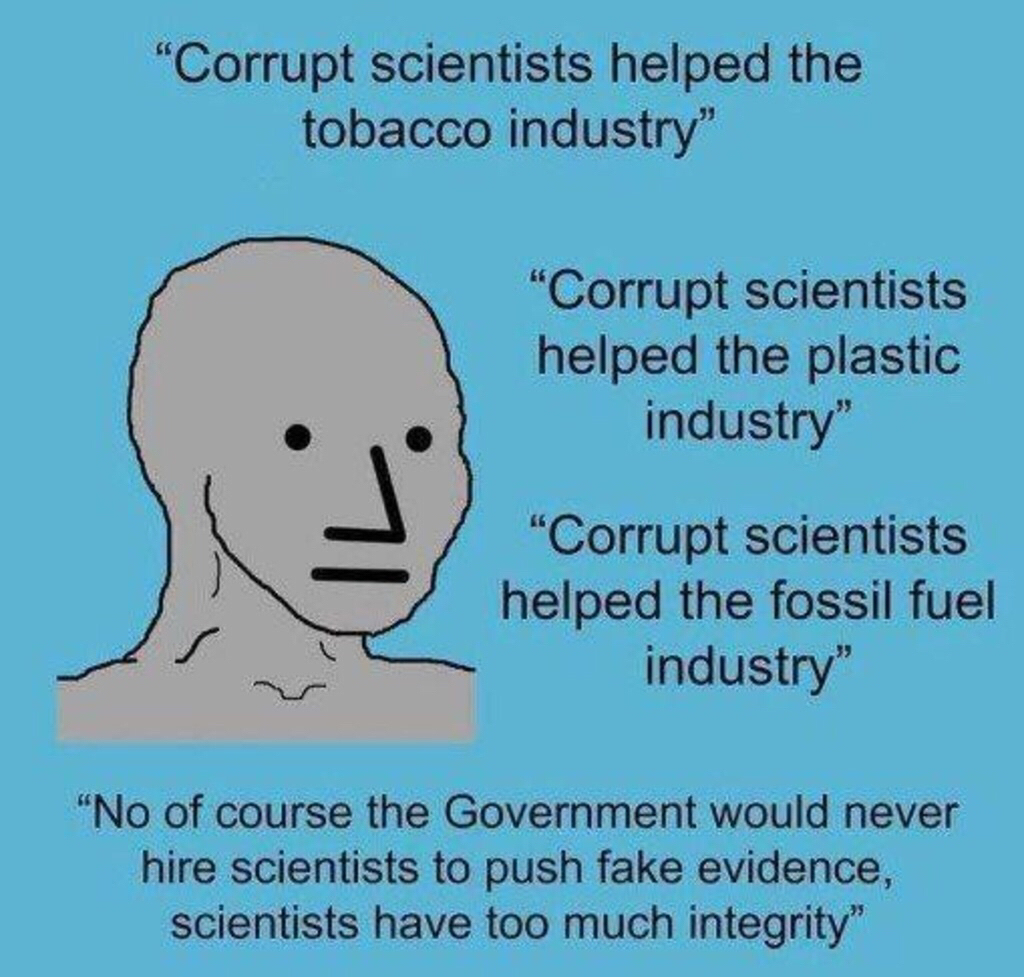
A climate change scientist has complained to YouTube for appearing to promote what he suggests is climate change denial content. The scientist told the platform that it should treat climate change “misinformation” the same way it has been treating COVID-19 “misinformation.”
Prof. Michael Mann, the director of the Earth System Science Center at Pennsylvania State University, tweeted: “Hey @Youtube. It’s good you’re taking down COVID denial videos. Now it’s time for you to remove climate denial videos. They pose an even greater threat to humanity in the long term.”
His tweet was in response to another user who tweeted that he has been getting recommendation of a 2013 climate change denial video too often.
The video, titled “Why has Global Warming Paused? – William Happer,” featuresPrinceton University physics professor and Trump appointee to the National Security Council William Happer.
“He sees you when you’re sleeping
He knows when you’re awake
He knows when you’ve been bad or good
So be good for goodness’ sake!”
—“Santa Claus Is Coming to Town”
Santa’s got a new helper.
No longer does the all-knowing, all-seeing, jolly Old St. Nick need to rely on antiquated elves on shelves and other seasonal snitches in order to know when you’re sleeping or awake, and if you’ve been naughty or nice.
Thanks to the government’s almost limitless powers made possible by a domestic army of techno-tyrants, fusion centers and Peeping Toms, Santa can get real-time reports on who’s been good or bad this year. This creepy new era of government/corporate spying—in which we’re being listened to, watched, tracked, followed, mapped, bought, sold and targeted—makes the NSA’s rudimentary phone and metadata surveillance appear almost antiquated in comparison.
Consider just a small sampling of the tools being used to track our movements, monitor our spending, and sniff out all the ways in which our thoughts, actions and social circles might land us on the government’s naughty list.


You must be logged in to post a comment.