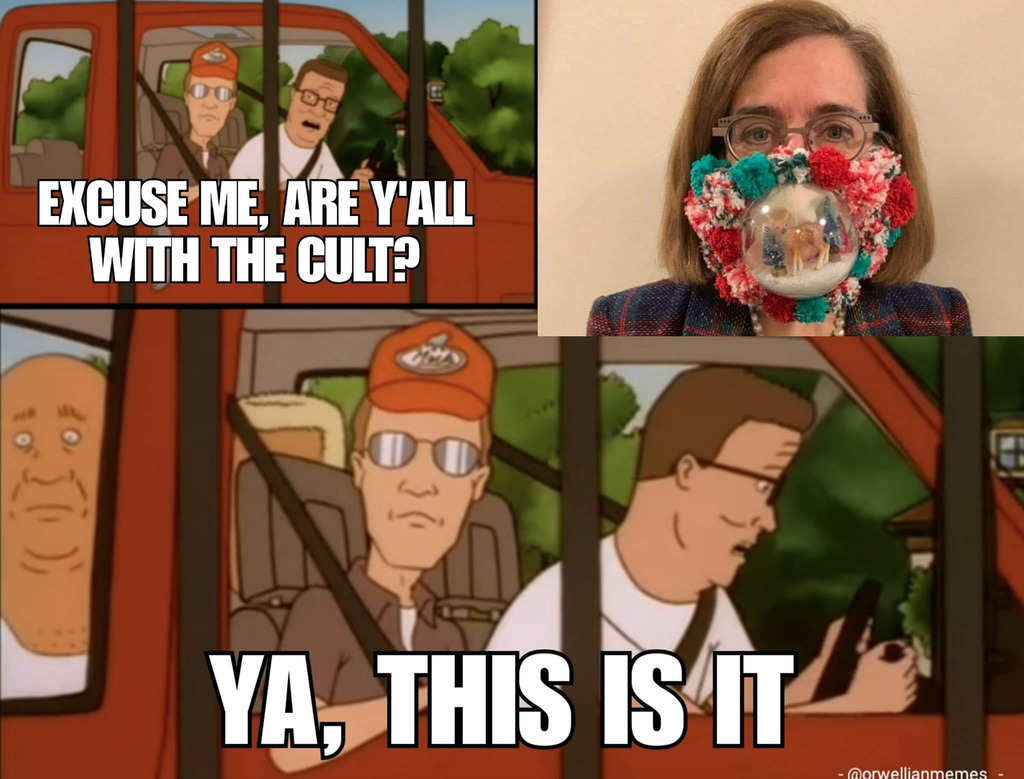
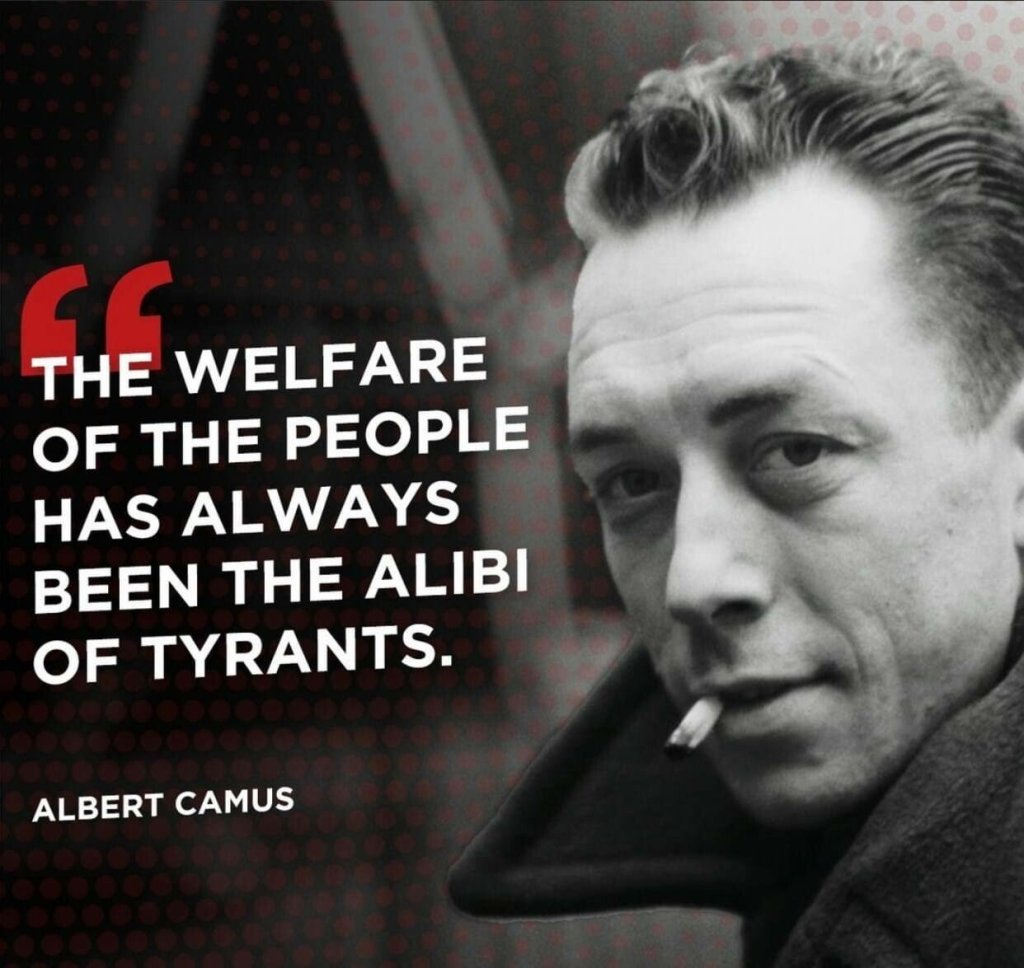
A message to anyone who feels like ‘Winston’ in Orwell’s 1984

“The ideal set up by the Party was something huge, terrible, and glittering . . . all thinking the same thoughts and shouting the same slogans, perpetually working, fighting, triumphing, persecuting– three hundred million people all with the same face.”

That was a quote from George Orwell’s seminal work 1984— a masterpiece that describes life in a totalitarian state that demands blind obedience.

The ‘Party’ controlled everything– the economy, daily life, and even the truth. In Orwell’s 1984, “the heresy of heresies was common sense.”

“Every record has been destroyed or falsified, every book rewritten, every picture has been repainted, every statue and street building has been renamed, every date has been altered.”

“And the process is continuing day by day and minute by minute. History has stopped. Nothing exists except an endless present in which the Party is always right.”

If you were ever caught committing a thoughtcrime— dissenting from the Party for even an instant– then “your name was removed from the registers, every record of everything you had ever done was wiped out, your one-time existence was denied and then forgotten.”

Now, our world obviously hasn’t become quite as extreme as Orwell’s dystopian vision. But Big Tech, Big Media, and Big Government certainly seem to be giving it their best effort.

Keep reading

Germany to Put COVID Rulebreakers in ‘Detention Camp’

Germany is set to put COVID dissidents who repeatedly fail to properly follow the rules in what is being described as a ‘detention camp’ located in Dresden.

Yes really.

In order to try to increase compliance, violators are told that if they receive both a warning and then a fine, a court will decide whether they should be punished with a stint in the camp.

“We don’t assume that there will be very many, but in the event that a court decides that way, there will be a facility to accommodate them,” a spokesperson told RT.

Camps. For dissidents. In Germany.

What could possibly go wrong?

Keep reading

11 of the Most Memorable Acts of Civil Disobedience in History

Civil disobedience” evokes a range of reactions when people hear the term. Some instinctively wince, regarding it as anti-social or subversive.

Others, like me, want to know more before we judge. What is prompting someone to engage in it? Who will be affected and how? What does the “disobedient” person hope to accomplish? Are there alternative actions that might be more effective?

One of my earliest memories from childhood was an act of civil disobedience. My family resided near Beaver Falls, Pennsylvania, about 11 miles from the Ohio border town of Negley. At the time, Pennsylvania prohibited the unauthorized introduction and sale of milk from Ohio. On many a Saturday in the late 1950s and early 1960s, my father and I would drive over to Negley and fill the back seat of our car with good, cheap milk. During the drive back home, he would caution me to “keep it covered and don’t say anything if the cops pull us over.”

For me, milk smuggling was a thrill ride. It was downright exciting to evade a stupid law while keeping an eye out for a cop who might have nothing better to do than bust a couple of notorious dairy dealers. I know my dad made a few bucks when he re-sold the milk to happy neighbors. We never had any regrets or pangs of conscience for committing this victimless crime. We were simply supporting a cause that even Abraham Lincoln may have endorsed when he said, “The best way to get a bad law repealed is to enforce it strictly.”

Government officials hate civil disobedience because it’s a disgruntled citizen’s way of thumbing his nose. If we’re unhappy with laws or policies that are stupid, destructive, corrupt, counterproductive, unconstitutional, or in other ways indefensible, they advise us to do the “democratic” thing—which means hope for the best in a future election, stand in line to be condescended to at some boring public hearing, or just shut up.

My go-to expert on the issue is not a politician or a preacher or an academic. It’s Henry David Thoreau, who famously asked, “Must the citizen ever for a moment, or in the least degree, resign his conscience to the legislator? Why has every man a conscience then? I think that we should be men first, and subjects afterward.”

If the choice is obedience or conscience, I try my best to pick conscience.

Historically, civil disobedience—the refusal to comply with a law or command of a political authority—is exceedingly common. Sometimes it is quiet and largely unnoticeable. Other times it is boisterous and public. For an act to be one of civil disobedience, it must be accompanied by principled or philosophical objections to a law or command (to exclude such acts as simple theft, fraud, and the like).

Some political theorists argue that to qualify as civil disobedience, an act must be peaceful; others allow for violence in their definition of the term. Revolutions are certainly acts of disobedience, though because they tend to be accompanied by violence they often aren’t very “civil.” In any event, the indefensible violence this week in Washington should not blind us to the very honorable history of genuine civil disobedience and its loftier motivations.

Here’s a short list of what I call “great moments in civil disobedience.” There’s no particular order other than chronological, and I wouldn’t even claim these are all among the “top” examples in history. They are, at the least, interesting food for thought. See how many of them you could endorse.

Keep reading

New Laws Grants ‘Protected Class’ Status to Cops, Allows Them to Sue People for Harassment

As if blue privilege in the form of qualified immunityspecial treatment under the law, ability to break laws they enforce, get out of jail free cards“blue lives matter” laws, and every other perk that comes from wearing a badge, wasn’t enough, cops in Georgia have granted themselves yet another benefit.

As of January 1, 2021, a new law went into effect with the Orwellian title of “Bias Motivated Intimidation of First Responders Prosecution Act.” On top of granting cops the ability to sue citizens for harassment, it also criminalizes said harassment.

Given the subjective nature of what can be defined as “harassment,” this new law is worrisome as it can land a person in prison for up to five years. The law is worded like it was written by the very personification of the American police state.

Keep reading

Why physicist Avi Loeb thinks there’s a “serious possibility” that ‘Oumuamua was an alien spacecraft

Are we alone in the universe?

It’s a question humans have been asking for thousands of years—but when a bizarrely fast, cigar-shaped interstellar object jetted past Earth on its trip through our solar system, Harvard professor Avi Loeb believes scientists weren’t ready to seriously consider that it was of artificial origin. But Loeb is beyond consideration — he says it’s very possible that ‘Oumuamua (pronounced “oh moo ah moo ah”) was an interstellar spacecraft. 

Back in October 2017, a postdoctoral researcher named Robert Weryk at the University of Hawaii was sifting through the usual data stream from the Pan-STARRS astronomical survey of the sky when he noticed an unexpected object. It appeared to be highly elongated, like a stick, with a long axis 10 times longer than its short axis — unprecedented for an asteroid. Some hypothesized that ‘Oumuamua swung towards our solar system as a result of a gravitational slingshot of a binary star system; others, that it might be an odd comet, though no tail was evident. Thus the search began to collect and analyze as much data as possible before it left our solar system.

Immediately upon discovering its physical properties, researchers realized its shape — which would minimize abrasions from interstellar gas and dust — would be ideal for an interstellar spacecraft. The idea understandably sent shockwaves through the scientific community and stoked controversy. Ultimately, scientists coalesced behind the idea that it was of natural origin, rather than artificial.  But Loeb, who is the former chair of astronomy at Harvard University, remains certain that it was something akin to a light sail — a form of interstellar propulsion — spacecraft created by an extraterrestrial civilization. So much so that he wrote a whole book about it.

That book would be “Extraterrestrial: The First Sign of Intelligent Life Beyond Earth,” in which Loeb argues that the scientific community’s resistance to discussing the possibility of extraterrestrial life has hindered taking seriously his hypothesis that ‘Oumuamua was an alien light sail. Loeb reflects on how what happened with ‘Oumuamua was a bit of a missed opportunity, and that academia must invest more in the search for life in our universe to better prepare us for another interstellar visitor. But perhaps, most importantly, in a time when Earth faces an urgent global warming crisis, Loeb says that it could be finding extraterrestrial life that saves us from ourselves.

Keep reading