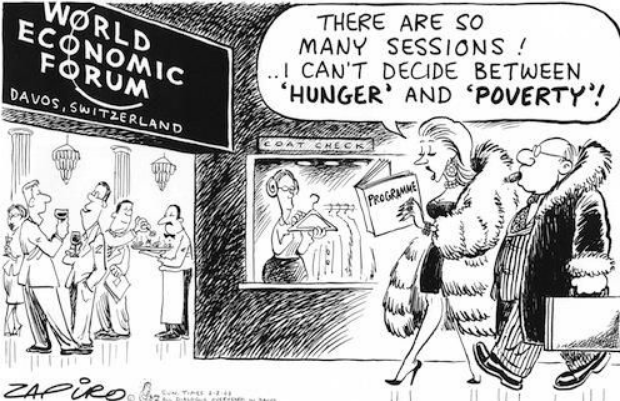
Decisions, decisions…

Top House Republicans are demanding answers from the FBI after court-ordered information came to light showing that the federal agency had collected the information of over 3 million Americans without a warrant.
In a May 25 letter to FBI Director Christopher Wray, Reps. Jim Jordan (R-Ohio) and Mike Turner (R-Ohio) asked Wray to explain why his agency had wiretapped and gathered personal information on over 3.3 million Americans without a warrant (pdf).
Limited authority to gather foreign intelligence information is granted by the Foreign Intelligence Surveillance Act (FISA).
Specifically, section 702 of the bill says: “the Attorney General (AG) and the Director of National Intelligence (DNI) may jointly authorize the targeting of (i) non-U.S. persons (ii) who are reasonably believed to be outside of the United States (iii) to acquire foreign intelligence information.”
However, this power can grant an expanding circle of possible searches to the FBI and other intel agencies, who can use the same power against American citizens who had any interaction with targeted foreigners.
Historically, insight into how FISA has been used against American citizens has been limited and hidden behind classified reports.
After two-and-a-half years of COVID-19, we’re all moving on. Sure, the virus is still there, albeit generally less dangerous with the Omicron variant, but many Americans no longer don masks and regular life has mostly returned.
The whole “moving on” thing has one serious effect on vaccine makers.
“It’s sad to say, I’m in the process of throwing 30 million doses into the garbage because nobody wants them,” Moderna CEO Stéphane Bancel said this week. “We have a big demand problem.”
Speaking to an audience at the World Economic Forum, Bancel also said efforts to contact various governments have failed.
“We right now have governments – we tried to contact … through the embassies in Washington. Every country, and nobody wants to take them,” he said.
“The issue in many countries is that people don’t want vaccines,” he added.
After World War II, the possibility of gaining control over a person’s mind became one of the top pursuits for intelligence services. Amid never-ending spy games, the capacity to make someone tell the full truth during an interrogation, or to wipe out a subject’s personality and impose another – perhaps, a controlled one – became quite attractive to secret services.
In 1979, former US State Department officer John Marks published a book called “The Search for the ‘Manchurian Candidate’,” which focused on the CIA’s mind-control experiments and is based on agency documents released under the Freedom of Information Act.
The term ‘Manchurian Candidate’ emerged from a title of a novel by Richard Condon, first published in 1959, which tells the story of a US soldier brainwashed and turned into an assassin by the Communists. Back then, the fear that America’s rivals might use such techniques was not only a fictional fantasy, but a matter of very serious concern.
This is how John Marks describes it: “In 1947 the National Security Act created not only the CIA but also the National Security Council – in sum, the command structure for the Cold War. Wartime [Office of Strategic Services] leaders like William Donovan and Allen Dulles lobbied feverishly for the Act. Officials within the new command structure soon put their fears and their grandiose notions to work. Reacting to the perceived threat, they adopted a ruthless and warlike posture toward anyone they considered an enemy – most especially the Soviet Union. They took it upon themselves to fight communism and things that might lead to communism everywhere in the world.”

At the World Economic Forum Annual Meeting for 2022, an event where powerful CEOs and world leaders meet to “find solutions to the world’s most urgent challenges,” YouTube CEO Susan Wojcicki committed to persistent censorship of “misinformation” and praised YouTube’s existing censorship efforts.
Wojcicki made the comments after Alyson Shontell Lombardi, the Editor-in-Chief of Fortune Magazine, asked her whether YouTube’s efforts to censor misinformation will always be a “work in progress.”
“I think there’ll always be work that we have to do because there will always be incentives for people to be creating misinformation,” Wojcicki said. “The challenge will be to keep staying ahead of that and make sure that we are understanding what they are and the different ways that people may use to try to trick our systems and make sure that our systems are staying ahead of what’s necessary to make sure that we are managing that.”
Wojcicki continued by praising YouTube’s 5-6 year initiative of cracking down on content that’s deemed to be misinformation and said that users who look at YouTube search results or the homepage will see content from “authoritative sources” (mainstream media outlets that YouTube designates as authoritative) for “sensitive topics.”
The House of Representatives, on May 10, approved President Biden’s $33 billion package for the war in Ukraine, and then, on its own initiative, added $7 billion on top of it. That brought the new war spending authorization to $40 billion, on top of the $14 billion already spent just 10 weeks into this war, which U.S. officials predict will last years, not months. The House vote in favor was 368-57. All 57 NO votes were from GOP House members. All House Democrats, including the Squad, voted YES.
A similar scene occurred when the Senate, “moving quickly and with little debate,” overwhelmingly approved the same war package. All eleven NO votes were from Senate Republicans. All Senate Democrats, including Sen. Bernie Sanders (I-VT), voted in favor, seemingly in direct contradiction to Sanders’ February 8 op-ed in The Guardian warning of the severe dangers of bipartisan escalation of the war. Efforts by Sen. Rand Paul (R-KY) to delay passage of the bill so that some safeguards and accountability measures could be included regarding where the money was going and for what purposes it would be used were met with scorn, particularly from Paul’s fellow Kentucky GOP Senator, Minority Leader Mitch McConnell, who condemned Paul as an “isolationist.” Following the Senate vote, a jet was used to fly the bill across the world to President Biden in South Korea, where he signed it into law.
But the lack of any safeguards over the destination of the money and weapons prompted close to two dozen House Republicans, led by Rep. Yvette Herrell (R-NM), to send a letter to the Biden White House on Monday demanding greater specificity and assurances about legal requirements on how weapons are used. The letter urges a public reckoning on the dangers of the U.S.’s bankrolling of the war in Ukraine: “We write today to express grave concern about the lack of oversight and accountability for the money and weapons recently approved by Congress for Ukraine,” it began.
US Senator Joe Manchin said at the World Economic Forum on Monday that he opposes any kind of peace agreement between Ukraine and Russia.
Manchin, who at the moment is one of the most powerful elected officials in Washington, added that only the complete forcible ejection of Russia from all of Ukraine is acceptable, that the war should ideally be used to remove Putin from power, and that he and the strategists he talks to see this war as an “opportunity”.
“I am totally committed, as one person, to seeing Ukraine to the end with a win, not basically with some kind of a treaty; I don’t think that is where we are and where we should be,” Manchin said.
“I mean basically moving Putin back to Russia and hopefully getting rid of Putin,” Manchin added when asked what he meant by a win for Ukraine.
Manchin clarified that he did not mean pushing Putin back to “pre-February”, ostensibly meaning with Russia still controlling the largely Moscow–loyal Crimea and supporting separatist territories in the Donbass, but with Kyiv fully reclaiming all parts of the nation.
“Oh no, I think Ukraine is determined to take their country back,” Manchin said when asked to clarify, further clarifying that he wants his call for regime change in Russia to be carried out by “the Russian people.”
“I believe strongly that I have never seen, and the people I talk strategically have never seen, an opportunity more than this, to do what needs to be done,” Manchin later added. “And Ukraine has the determination to do it. We should have the commitment to support it.”
HERE is the full list of attendees to this year’s conference.
The Home Office has proposed a new Public Order Bill that includes “serious disruption prevention orders.” The bill would give the police the ability to electronically tag disruptive protesters and limit where they can go, who they can meet, and what they can do online and in real life, regardless of whether they have committed a crime.
We obtained a copy of the bill for you here.
The bill would also make locking-on (where protesters lock themselves onto parts of buildings) a criminal offense. Also, disrupting transport works and national infrastructure would be a criminal offense.
The UK’s proposals came months after Canada used extreme emergency powers on Freedom Convoy protesters, including freezing bank accounts, earlier this year, and ahead of a cost of living crisis in the UK that many feel could spur protests.


You must be logged in to post a comment.