
It’s time to break the conditioning…

If you only get your news from the mainstream media, you would be tempted to believe that global conditions are relatively stable right now.
Yes, there is a war between Russia and Ukraine, but the mainstream media is assuring us that Ukraine is winning that war.
Other than that, the mainstream media seems to think that everything is just fine.
Of course the truth is that our planet is facing a whole host of extremely challenging problems at the moment. The UN has warned that we are entering the worst global food crisis since World War II, inflation has started to spiral out of control all over the world, the war in Ukraine is making our supply chain nightmares even worse and an absolutely horrifying bird flu plague is killing millions upon millions of chickens and turkeys.
But if you flip on one of the corporate news channels tonight, they will be focusing on other things.
And you probably won’t even hear them talk about the food riots that have suddenly begun erupting around the world at all.
For example, a “curfew” has just been imposed on the capital of Peru after a series of extremely passionate protests that were sparked by rapidly rising fuel and food prices…
Peruvian President Pedro Castillo announced a curfew for Tuesday in the capital Lima and neighboring port city Callao, after demonstrations across the country over fuel prices caused roadblocks and “acts of violence”.
Protests had erupted across Peru in recent days due to a hike in fuel prices and tolls, during a time of rising food prices.
Is this the first time that you have heard about this?
For many of you it will be, and that is because the mainstream media in the U.S. is largely ignoring this.
In Sri Lanka, severe shortages of “food, medicine and fuel” have caused a full-blown economic collapse and tremendous chaos in the streets…
In Sri Lanka, where an economic crisis is growing, more than 40 lawmakers walked out of the ruling coalition today. That leaves the government of President Gotabaya Rajapaksa in the minority in Parliament. There have been new calls today for both the president and prime minister to step down after the entire Cabinet resigned on Sunday. Shortages of food, medicine and fuel have sparked countrywide protests, and security forces have fired tear gas and water cannons at protesters marching on the president’s home.
Most of you have probably not heard about that either, and that is because our largest news outlets are being really quiet about it.
But USA Today wants to make sure that you know about a new promotion that McDonald’s is running: “McDonald’s brings back Spicy Chicken McNuggets to select restaurants for a limited time”.
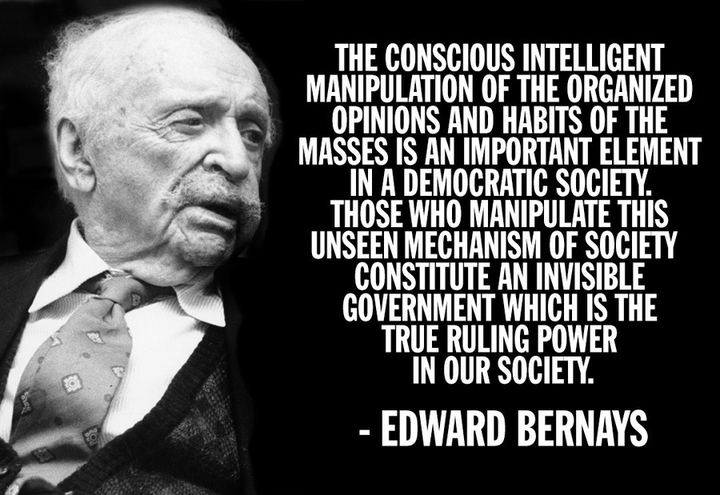
More than ever before, our perception of the world around us is shaped by the corporate elite. Americans get more than 90 percent of the “television news” that they consume from just five giant media corporations, and so that gives those corporations an incredible amount of influence over how our society views reality.
For example, far more Americans are talking about “the slap” at the Academy Awards than about the fact that North Korea just threatened South Korea with nuclear war…


A viral tweet that remains unchecked by “fact checkers” claims to show a Russian-operated ‘mobile crematorium’ in Mariupol, but the image is taken from an 8-year-old YouTube video.
Whoops.
The tweet was posted by news outlet NEXTA, which boasts nearly a million followers on Twitter. The tweet has received over 7,000 retweets and almost 11,000 likes.
“Mobile crematoria in #Mariupol,” states the tweet.
“Mayor of Mariupol Vadim Boychenko said today that #Russian mobile crematoria have started operating in the city.”
“According to him, tens of thousands of people could have died in Mariupol and the cremation, “covering up the traces of crimes”.
Except a simple reverse image search reveals the ‘mobile crematorium’ to be a screenshot from an 8-year-old YouTube video.
In 1987, 41-year-old Vicki Heath was working at the Super 8 Motel just off I-65 in Elizabethtown, Kentucky, in order to make some extra money. She had recently gotten engaged, and was looking forward to this new chapter in her life as her two kids were reaching adulthood. That all tragically ended on February 21, 1987, when police received a call about a “complete mess” in the lobby of the motel. The caller worried that the front desk clerk was missing. Police arrived and found Heath’s body behind a nearby dumpster.
Two more women – Margaret “Peggy” Gill and Jeanne Gilbert – were killed two years later, each while working at different Days Inn motels in Indiana. A final woman, referred to only as Jane Doe, was sexually assaulted at the Columbus, Indiana, Days Inn in 1990.
More than 30 years went by without police being able to charge a suspect, whom they referred to as either the “Days Inn Killer” or the “I-65 Killer,” since the motels were off the highway.
On Tuesday, however, Indiana State Police (ISP) announced that they had finally identified the serial killer as Harry Edward Greenwell, who died in 2013 at the age of 68. He had been living in New Albin, Iowa and had an “extensive criminal history ranging from 1963 to 1998,” the ISP announced.

The Food and Drug Administration (FDA) bypassed many of its own protocols to speed through the authorization of Pfizer’s second booster dose of the COVID-19 vaccine last week.
Multiple medical experts, including some who sit on the FDA’s top vaccine advisory committee, said they had no idea why the agency skipped over its normal approval process to authorize the fourth vaccine dose for Americans aged 50 and older. The authorization was even broader than the drug company requested, which was that it be greenlit for those aged 65 and older.
That FDA vaccine panel, the Vaccines and Related Biological Products Advisory Committee (VRBPAC), is meeting Wednesday, and part of the agenda will be to discuss the fourth vaccine dose and the Israeli studies which are being used to exhibit its effectiveness. Typically, the vaccine authorization process would involve a meeting and vote by VRBPAC on whether to recommend authorization, followed by the FDA head granting that authorization. Then, the Centers for Disease Control and Prevention’s (CDC) vaccine committee would vote on how to recommend the vaccine, which would then be determined by the CDC director.
Dr. Paul Offit, a co-inventor of the rotavirus vaccine and member of VRBPAC, said he couldn’t explain why the FDA didn’t present its data to the committee first before moving ahead with authorization: “The way it’s working here is that the government basically just declares that this is what they’re going to do.”
The UK’s latest attempt to clamp down on free speech online, the 225 page Online Safety Bill, will give sweeping new censorship powers to the UK’s Secretary of State and its communications regulator, the Office of Communications (Ofcom), if passed.
It gives the UK Culture Secretary the power to decide on and designate “priority content that is harmful.”
Once the Secretary of State has designated this content, social media platforms and search engines that fall under the scope of the bill’s regulations have to “use proportionate systems and processes” to prevent children from encountering this priority content.
These platforms are also required to specify in their terms of service how they’ll tackle priority content that’s deemed to be “harmful to adults” and apply these measures consistently.
Additionally, the Culture Secretary gets the power to decide the user number and feature thresholds that determine whether a company falls under the scope of these requirements to remove and tackle priority content.
Collectively, these provisions give the Culture Secretary unprecedentedly broad powers to not only choose the types of speech that is allowed but to also set the rules around which platforms have to censor content.
Under the bill, Ofcom will be granted the power to issue harsh punishments to platforms that fail to meet the Secretary’s censorship demands.
These punishments include applying for court orders that restrict access to platforms in the UK and fining platforms up to £18 million ($23.78 million) or 10% of their revenue (whichever is higher).
In another authoritarian turn, if Ofcom decides that a platform is failing to comply with any aspect of the Online Safety Bill, it can also demand information from the platform via an “information notice” and require the platform to name a senior manager who can be fined or imprisoned for up to two years if they’re found guilty of failing to comply with the requirements.


You must be logged in to post a comment.