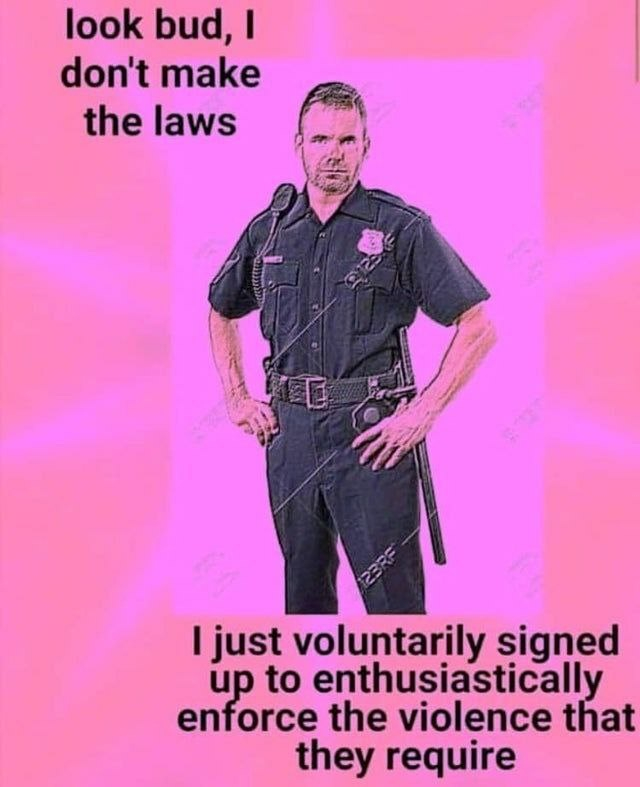
Thin blue line or something…

Protests erupted across the country following the Supreme Court overturning Roe v. Wade. In major U.S. cities, pro-abortion protesters violently clashed with law enforcement on Friday.
Antifa-linked pro-abortion group Jane’s Revenge vowed to undertake a “night of rage” after the Supreme Court’s ruling on allowing states to make the final call about abortion. Black bloc protesters wielding umbrellas marched through the streets of Washington, D.C.
The group chanted slogans such as, “If abortion ain’t safe, neither are you,” “If we don’t get it, burn it down,” “Every city, every town, burn the precinct to the ground,” and “F*** the church, f*** the state, we won’t let them decide our fate.” The protesters burned American flags.
If the recent assassination attempt targeting Supreme Court Justice Brett Kavanaugh weren’t sufficient proof that a divided America is tiptoeing toward violent conflict, a research firm released a “disturbing poll” showing that nearly half of male Democrats under the age of 50 believe it acceptable to assassinate a politician “who is harming the country or our democracy.” Given that James Hodgkinson nearly succeeded in assassinating an entire baseball field of Republican members of Congress just a few years ago, the appetite for continued political violence shows no sign of abating.
Sen. Rand Paul, who has suffered two violent, politically motivated attacks in recent years, called out the White House and congressional Democrats for “ginning up and encouraging” violence. However, in a country that increasingly eschews rational debate and embraces the vituperative soundbites of reality TV, it can be no surprise that the political stakes in America are tending toward bloodshed.
It was once widely understood in the United States that vociferous debate and vigorous policy disagreement were features of a healthy American society. Hashing out arguments over contested issues in the public square had two immediate salubrious effects: it allowed the average American to appreciate the “pros” and “cons” of consequential policy decisions, and it provided those whose viewpoints did not win the day to nonetheless speak their minds.
As a testament to how vital debate and disagreement are to the process of creating good public policy, it has often been the case throughout American history that the well-articulated arguments of the “losing side” eventually rise to guide future generations.
The professor nominated at Emerson College to be its new dean of graduate and professional studies is a woman who has fantasized about killing white people. Lots of white people.
After all, her writings confirm that she believes black woman and white women never will be involved in “true friendships.”
It is Sam Neves, a correspondent for Campus Reform, who has written at the Federalist about Kim McLarin, a “racially divisive professor” who has been nominated by college chief William Gilligan.
The report noted that it was in an article published only a few weeks before her nomination in which went into a fantasy:
“If a civil war breaks out, I say, if violent white mobs begin roaming the country as they have done in the past, I will not worry about precision shooting. I intend to sit on my porch with my legally acquired handgun and as much ammunition as I have and perhaps a bottle of Scotch and take them as they come,” she wrote.
That followed her article in the Washington Post in which she charged black women and white women never will have “true friendships.”
The article was, in fact, headlined, “Can Black Women and White Women be True Friends?”
“Generally speaking, it’s not that I dislike white women. Generally speaking, it’s that I do not trust them. Generally speaking, most black women don’t,” she charged.

An utterly horrifying tragedy unfolded this week in Uvalde, Texas as yet another deranged psychopath entered a school full of children and began indiscriminately killing. This 18-year-old monster barricaded himself in a single classroom where he had his way with two teachers and 19 students, executing all of them in cold blood. The security force paid for by taxpayer dollars did nothing to stop him and only after he murdered the entire classroom was a SWAT team sent in to take him out.
Predictably, political blowhards didn’t even wait for the bodies to cool before they began exploiting the deaths of innocent children to score political points. Rabid partisan hacks have been frothing at the mouths for 48 hours now as they put forth their “solutions” to the problem of mass shootings that involve about as much depth and nuance as a kiddie pool full of piss.
“Guns are the problem!” screams the rabid anti-gun left. “We need more teachers with guns!” screams the pro-gun right. Yet neither of the two sides have been able to do a damn thing to stop or prevent these horrific events.
If it is a gun problem, why is it that other countries with well armed citizens don’t see the same frequency of mass shootings? If it’s solely a mental health issue, why don’t other countries with higher rates of mental disorders see the same mass murders?
The United States spends roughly a quarter of a trillion dollars every year on mental health care but none of that money goes to psychological research. Instead, psychological research is funded by the nation’s $66 billion annual research fund and and a portion, 1.5 percent, goes to actual psychological research.
Nevertheless, billions of taxpayer dollars flow into the mental health industry’s coffers and most mental health issues go untreated as the country’s mental health problem gets worse. Hundreds of billions of tax dollars are making lots of industry insiders and big pharma players rich yet we’re nowhere close to figuring out what triggers these lunatics to carry out such horrors.
Perhaps we need to look deeper than the two talking points offered up by politicians every time this happens. Perhaps we need to look at the ones offering up the solutions in the first place.
The Department of Homeland Security is preparing for an increase in political violence after the Supreme Court hands down its official ruling on Roe v. Wade in the coming weeks, according to a leaked memo reported Wednesday.
First Axios and then Fox News published details from a May 13 memo revealing that federal law enforcement is investigating threats made on social media to “burn down or storm” the Supreme Court building. Pro-abortion-rights activists began making such threats earlier in the month when a draft majority opinion leaked to Politico indicated the court had voted to uphold Mississippi’s 15-week abortion ban and overturn the landmark Roe decision.
Pro-abortion protesters have called for a “summer of rage,” with the expectation that the court will roll back abortion rights. Republican-appointed Supreme Court justices have already endured potentially illegal protests outside their private homes, and the headquarters of a pro-life organization was attacked with a Molotov cocktail in Madison, Wisconsin.
Supreme Court justice Sonia Sotomayor wrote a dissent on Monday arguing that anyone who is familiar with FBI crime stats must be banned from Capital case juries for “racial bias.”
She was backed in her dissent by Justice Kagan and retiring Justice Breyer.
Steve Sailor posted highlights from Sotomayor’s dissent as shared by the Supreme Court:
Cite as: 596 U. S. ____ (2022) 1
SOTOMAYOR, J., dissenting
SUPREME COURT OF THE UNITED STATES
KRISTOPHER LOVE v. TEXAS
ON PETITION FOR WRIT OF CERTIORARI TO THE COURT OF CRIMINAL APPEALS OF TEXAS
No. 21–5050. Decided April 18, 2022
The petition for a writ of certiorari is denied.JUSTICE SOTOMAYOR, with whom JUSTICE BREYER and
JUSTICE KAGAN join, dissenting from the denial of summary vacatur.[…] The seating of a racially biased juror, therefore, can never be harmless. As with other forms of disqualifying bias, if even one racially biased juror is empaneled and the death penalty is imposed, “the State is disentitled to execute the sentence,” Morgan v. Illinois, 504 U. S. 719, 729 (1992).
In this case, petitioner Kristopher Love, a Black man, claims that one of the jurors in his capital trial was racially biased because the juror asserted during jury selection that “[n]on-white” races were statistically more violent than the white race. […]
“You’ll notice that Justice Sotomayor capitalizes ‘black’ but uses lower case for ‘white,’ which proves she’s not racially biased,” Sailor commented.
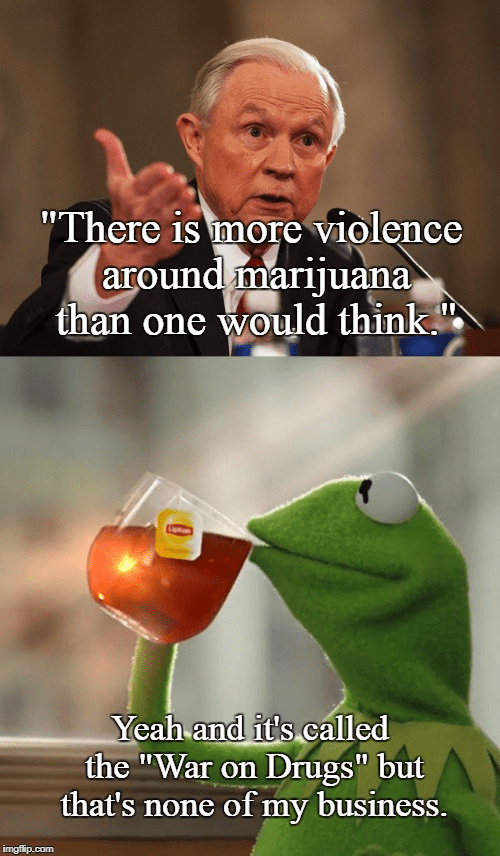
Users of Facebook and Instagram in certain countries will be temporarily allowed to call for and threaten violence against Russian citizens and Russian troops, according to a new report.
In a change to Meta‘s hate speech policy, users in these countries will be able to make such posts only in the context of Russia’s war in Ukraine, according to Reuters, citing internal emails.
“The social media company is also temporarily allowing some posts that call for death to Russian President Vladimir Putin or Belarusian President Alexander Lukashenko in countries including Russia, Ukraine and Poland,” the report from Reuters says. “These calls for the leaders’ deaths will be allowed unless they contain other targets or have two indicators of credibility, such as the location or method.”
 Hellbound and Down
You must be logged in to post a comment.