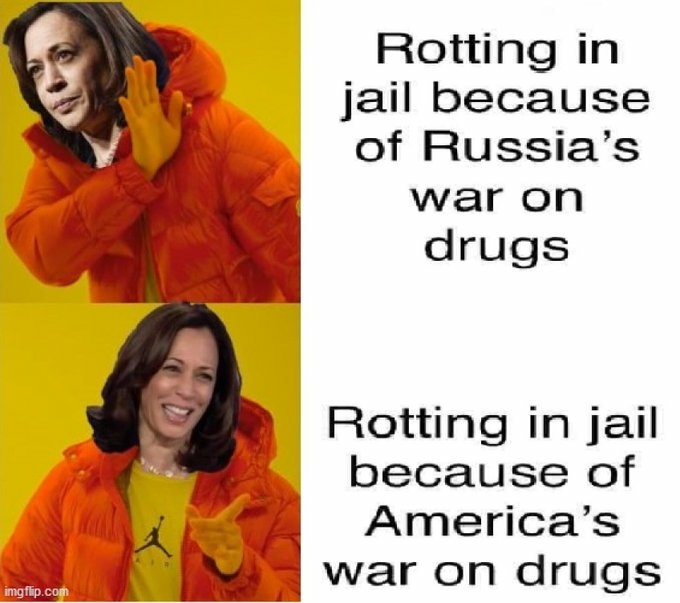
Seems legit…

Ed Rosenthal is a legend in cannabis known for bucking the rules. The longtime cultivation author went up against the feds for providing marijuana to medical patients in 2003 and was ultimately sentenced to a single day in prison, time served. Rosenthal’s devoted his life promoting cannabis—he’s responsible for proliferating the classic South African landrace Durban Poison, partnered with at least 50 European seed companies for multiple books in his Big Book of Buds series, and even has a cultivar, Ed Rosenthal Super Bud, named after him—but he’s never released his own genetics. That is, until now. Back in April, the DEA quietly acknowledged that cannabis seeds are legal. Rosenthal began releasing seed packs alongside his books in May. Since then, rapper and Cookies clothing mogul Berner has also embraced the idea, offering seed packs along with his recent From Seed to Sale album release.
The DEA’s reasoning behind the affirmation that cannabis seeds are legal in the U.S. had to do with the 2018 Farm Bill that legalized hemp, defining and separating it from the pot we smoke as Cannabis sativa with less than .03% delta-9 THC. When questioned about the legality of seeds, tissue culture, and “other genetic material” the agency response was that marihuana (yes, they still spell it like that) seeds that contain less than .03% delta-9 THC meet the definition of hemp and are therefore, not a controlled substance under the Controlled Substances Act.
Starting on January 1, 2023, the state says records of approximately 44,000 residents will have cases cleared, including some that date back more than 30 years ago.
Two very different reasons were provided by Governor Ned Lamont as to why the convictions will be erased, the first and most obvious being that the state legalized recreational marijuana in July 2021, allowing adults over 21 to carry 1.5 ounces on their person or five ounces in a locked container or locked glove compartment or trunk.
“On January 1, thousands of people in Connecticut will have low-level cannabis convictions automatically erased due to the cannabis legalization bill we enacted last year,” the governor commented.
The other reason, according to Gov. Lamont, is the state’s job market, which seeks to fill “hundreds of thousands” of open positions.

WNBA star Brittney Griner was released from a Russian prison Thursday as part of an exchange for notorious international arms dealer Viktor Bout, almost ten months after she was arrested on drug charges at a Moscow airport.
“She’s safe, she’s on a plane, she’s on her way home,” President Biden said in remarks from the White House, where he was joined by Griner’s wife, Cherelle. The two spoke with the Phoenix Mercury center over the phone, according to senior White House officials.
“She’s on her way home, after months of being unjustly detained in Russia, held under intolerable circumstances,” Biden said. “Brittney will soon be back in the arms of her loved ones and she should have been there all along. This is a day we’ve worked toward for a long time. We never stopped pushing for her release.”
It was a Tuesday in early November when federal agents from the Drug Enforcement Administration paid a visit to the office of Dr. David Bockoff, a chronic pain specialist in Beverly Hills. It wasn’t a Hollywood-style raid—there were no shots fired or flash-bang grenades deployed—but the agents left behind a slip of paper that, according to those close to the doctor’s patients, had consequences just as deadly as any shootout.
On Nov. 1, the DEA suspended Bockoff’s ability to prescribe controlled substances, including powerful opioids such as fentanyl. While illicit fentanyl smuggled across the border by Mexican cartels has fueled a record surge in overdoses in recent years, doctors still use the pharmaceutical version during surgeries and for soothing the most severe types of pain. But amid efforts to shut down so-called “pill mills” and other illegal operations, advocates for pain patients say the DEA has gone too far, overcorrecting to the point that people with legitimate needs are blocked from obtaining the medication they need to live without suffering.
One of Bockoff’s patients who relied on fentanyl was Danny Elliott, a 61-year-old native of Warner Robins, Georgia. In March 1991, Elliott was nearly electrocuted to death when a water pump he was using to drain a flooded basement malfunctioned, sending high-voltage shocks through his body for nearly 15 minutes until his father intervened to save his life. Elliott was never the same after the accident, which left him with debilitating, migraine-like headaches. Once a class president and basketball star in high school, he found himself spending days on end in a darkened bedroom, unable to bear sunlight or the sound of the outdoors.
“I have these sensations like my brain is loose inside my skull,” Elliott told me in 2019, when I first interviewed him for the VICE News podcast series Painkiller. “If I turn my head too quickly, left or right, it feels like my brain sloshes around. Literally my eyes burn deep into my skull. My eyes hurt so bad that it hurts to blink.”
Against all odds, Jim Harris was walking. It was exhausting, and he thought he looked like Frankenstein’s monster—stepping forward with his left leg, then throwing his unresponsive right leg around to meet it. But there he was, at a music festival, getting around with the assistance of a walker, eight months out from a spinal-cord injury that left him paralyzed from the chest down.
In November 2014, a snowkiting accident in Chile changed how the mountaineering instructor turned adventure photographer moved through the world. His days, once spent exploring the alpine, were now filled with rehabilitation exercises in a gym. So when a friend and former physical therapist invited him to the High Sierra Music Festival in Quincy, California, he jumped at the chance to feel like a regular 33-year-old again.
Yet as he settled in to listen to the show, in a grassy field surrounded by tall trees and gentle peaks, he didn’t feel regular. He couldn’t drink alcohol, because it seemed to weaken his remaining nerve connections, and although he’d decorated his walker with LED lights in an attempt at festivity, it didn’t really work. “The disability made me feel like an outsider,” he says. Then someone offered him magic mushrooms, which are packed with the psychoactive compound psilocybin, and he took them, thinking he might finally be able to have fun.
The legalization of recreational cannabis in the state of California has reportedly neither led to a downturn in illegal business nor has it relieved stress on law enforcement.
As it turns out, illegal cannabis growers have only thrived since California legalized the recreational use of the drug in 2016, stealing business from legal sellers at half the price due to the lack of regulation or taxation.
“The illegal industry is competing with the legal industry and essentially putting them out of business,” Sgt. James Roy of the Riverside County Sheriff’s Department told Fox News.
Roy, who heads the department’s cannabis eradication team, had recently raided an illegal farm in Riverside County that had four massive white tents, colloquially known as “hoop houses,” containing $1.5 million in illegal cannabis.
“This place is no different than thousands of others we hit this year confiscating about a half-million plants in Riverside County alone,” Roy told the outlet.
“It’s definitely profitable for the illegal market,” Roy later said. “They’re selling greenhouse marijuana by the pound of anywhere from $500 to $2,000 here on the West Coast. But if they take that same exact product and ship that back east, it’s going for two and three times that amount.”

José Irizarry accepts that he’s known as the most corrupt agent in U.S. Drug Enforcement Administration history, admitting he “became another man” in conspiring with Colombian cartels to build a lavish lifestyle of expensive sports cars, Tiffany jewels and paramours around the world.
But as he used his final hours of freedom to tell his story to The Associated Press, Irizarry says he won’t go down for this alone, accusing some long-trusted DEA colleagues of joining him in skimming millions of dollars from drug money laundering stings to fund a decade’s worth of luxury overseas travel, fine dining, top seats at sporting events and frat house-style debauchery.
The way Irizarry tells it, dozens of other federal agents, prosecutors, informants and in some cases cartel smugglers themselves were all in on the three-continent joyride known as “Team America” that chose cities for money laundering pick-ups mostly for party purposes or to coincide with Real Madrid soccer or Rafael Nadal tennis matches. That included stops along the way in VIP rooms of Caribbean strip joints, Amsterdam’s red-light district and aboard a Colombian yacht that launched with plenty of booze and more than a dozen prostitutes.
“We had free access to do whatever we wanted,” the 48-year-old Irizarry told the AP in a series of interviews before beginning a 12-year federal prison sentence. “We would generate money pick-ups in places we wanted to go. And once we got there it was about drinking and girls.”


You must be logged in to post a comment.