Nuclear Scientists to Examine Potential Earhart Evidence for New Clues

A pair of nuclear scientists in Pennsylvania is applying their expertise to a piece of metal that may have come from Amelia Earhart’s doomed aircraft in an attempt to glean new insights into the legendary pilot’s disappearance. Director of the Penn State Radiation Science and Engineering Center, Daniel Beck reportedly had his interest piqued when he saw a cable TV documentary on the case last year and, on the program, they showcased some intriguing potential debris from the aviatrix’s plane and mused that perhaps someday modern science could unlock clues hidden in the material. “I realized that technology exists,” he recalled, “I work with it every day.”

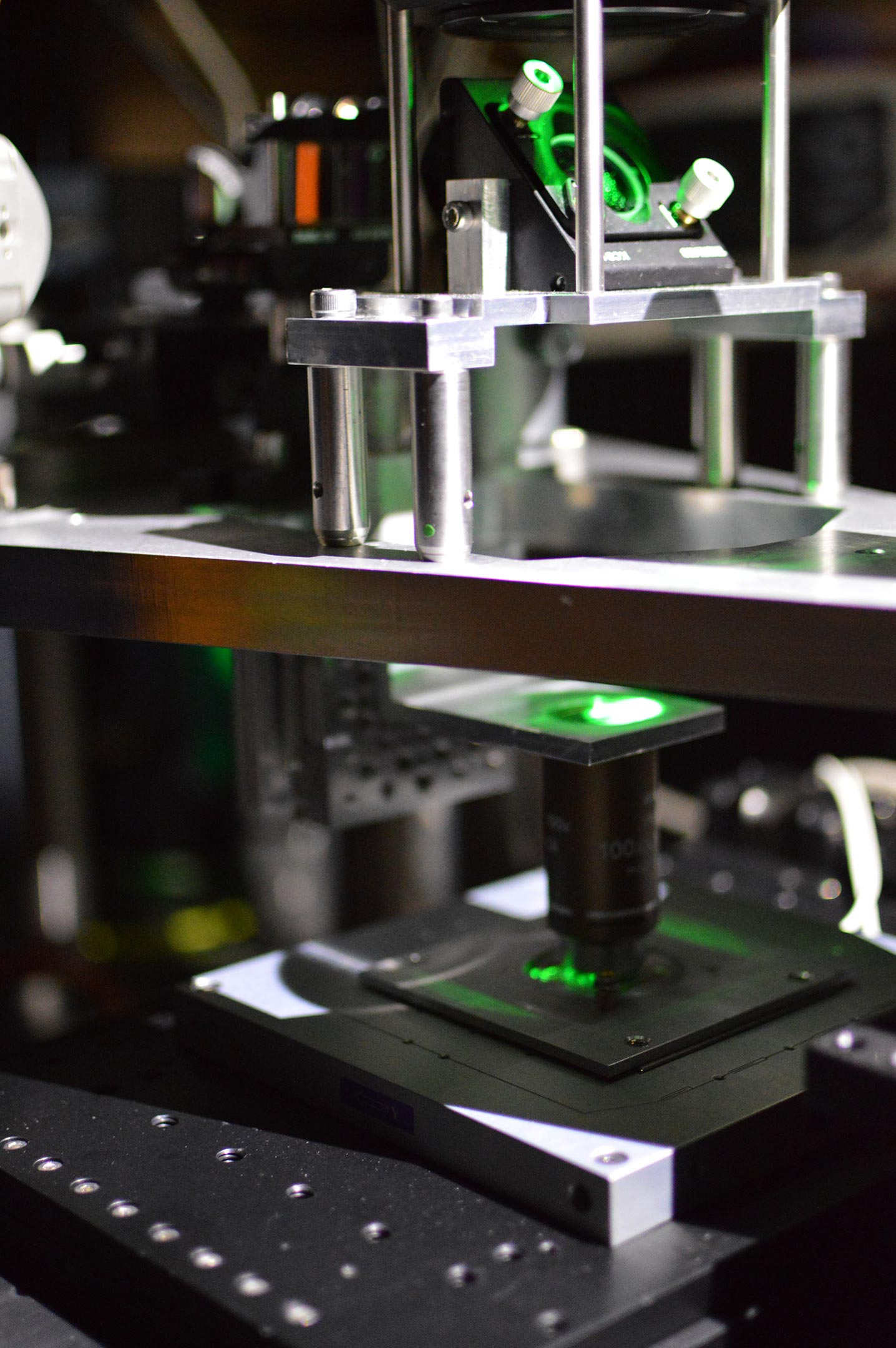
With that in mind, Beck connected with Earhart researchers who were intrigued by the possibility that neutron radiography could detect critical details in the metal that might otherwise not be visible. His colleague Kenan Unlu, who is working with him on the project, explained that scanning the piece with a neutron beam may reveal “paint or writing or a serial number” that have been largely worn away over time to the point that they can’t be seen with the naked eye. Additionally, the duo subjected the metal to a “neutron activation analysis,” which “helps precisely identify the make-up of material” down to the “parts-per-billion level.”

Keep reading

Suddenly Opposing the CDC and Ignoring Science Is Not a Crisis When it Is the Biden Administration

It was a common theme heard throughout 2020 — Donald Trump would dispute recommendations from the Center for Disease Control, and in the course of ‘’ignoring science’’ put lives at risk. As far back as February Trump was said to have discounted advice from the CDC regarding flying American citizens back from Asia. Frequently we were told how the administration would discard recommendations from the agency on matters such as initial quarantine ordersreopening the economy, how he would listen to administration officials first, and refused to follow guidance on opening schools and churches

According to Bloomberg News, ‘’Ordinarily, presidents listen to experts because it serves their own political interests. That’s not happening this time.’’ These issues, of course, caused consternation and accusations he was ignoring science, elevating things to scandal levels, we were told. It then becomes rather telling how changing the curtains in the oval office makes these exact same actions far less serious and grave for the nation.

For two consecutive days this week we have seen bright and shiny new White House Press Secretary Jen Psaki at the podium during her daily press briefings contradicting the CDC, directly. While her words were reported what is notable is the distinct lack of wailing to be heard from the press corps. 

Keep reading

Earth’s Climate is ‘Cyclical’ – New Study Show How Earth is Cooling, Not Warming

Geologist and earth scientist Professor Ian Plimer says the “climate is cyclical” as a new study claims Earth is heading to an ice age.

“We are getting towards the end of the warm period, the peak of the warmth was about 5,000 years ago and we are heading for the next inevitable ice age,” he told Sky News host Cory Bernardi.

Professor Plimer says every occurrence of icebergs expanding and shrinking happened with “more carbon dioxide in the atmosphere than now”.

Keep reading

MIT Engineers Create Spinach That Act as Sensors and Wirelessly Send Emails. No Mention of Hacking or Other Risks.

All wireless and/or “Smart” technology is vulnerable to hacking (see 12345) and other significant mishaps (see 12).  Serious warnings about Internet of Things (IoT) technology’s high failure rate and enormous vulnerability to hackers have been ongoing for years.  Last August, IBM warned about a security flaw in millions of IoT devices including “Smart” Meters and medical implants.

In December, President Trump signed IoT Cybersecurity Improvement Act of 2020 to create standards and guidelines on the use and management of IoT devices by federal agencies.

Nevertheless, sensors that operate and transmit wirelessly are still being used and/or considered for critical tasks including sewage maintenance. Scientists at MIT have taken this even farther.

Keep reading

Scientists propose putting nanobots in our bodies to create ‘global superbrain’

A team has proposed using nanobots to create the ‘internet of thoughts’, where instant knowledge could be downloaded just by thinking it.

An international team of scientists led by members of UC Berkeley and the US Institute for Molecular Manufacturing predicts that exponential progress in nanotechnology, nanomedicine, artificial intelligence (AI) and computation will lead this century to the development of a human ‘brain-cloud interface’ (B-CI).

Writing in Frontiers in Neuroscience, the team said that a B-CI would connect neurons and synapses in the brain to vast cloud computing networks in real time.

Such a concept isn’t new with writers of science fiction, including Ray Kurzweil, who proposed it decades ago. In fact, Facebook has even admitted it is working on a B-CI.

However, Kurzweil’s fantasy about neural nanobots capable of hooking us directly into the web is now being turned into reality by the senior author of this latest study, Robert Freitas Jr.

Keep reading

World’s First ‘Living Robot’ Invites New Opportunities And Risks

A team of researchers from the University of Vermont and Tufts University has succeeded in developing robots composed exclusively of living biological cells. Dubbed “xenobots,” these living robots can perform a range of basic functions, from locomotion and object manipulation to collective behavior. Their creation promises to deliver significant advances in biology and in medicine, in particular. However, it also potentially carries serious risks, insofar as the researchers themselves admit that experimenting with living cells creates the scope for unforeseen consequences.

Putting such risks aside for one moment, the team’s development of “xenobots” is impressive. First, the scientists at Vermont simulated possible configurations of individual biological cells on a supercomputer. They used what’s called an evolutionary algorithm to test thousands of possibilities and find the best candidates, ‘best’ in terms of the known biophysics of biological cells, which in this case were frog cells.

Keep reading