Could it be…

Have you ever had the bizarre experience of seemingly waking up inside your own dream? You can tell you’re not fully conscious—there’s a dreamscape all around you, after all—but you’re aware enough to be able to control parts of the phantasm.
These so-called “lucid dreams” can be extremely meaningful and transformative moments for the roughly half of adults who report having them at least once in their lifetime. That’s why a new tech startup, Prophetic, aims to bring lucid dreams to a much wider audience by developing a wearable device designed to spark the experience when desired.

Prophetic is the brainchild of Eric Wollberg, its chief executive officer, and Wesley Louis Berry III, its chief technology officer. The pair co-founded the company earlier this year with the goal of combining technologies, such as ultrasound and machine learning models, “to detect when dreamers are in REM to induce and stabilize lucid dreams” with a device called the Halo according to the company’s website.
“It’s an extraordinary thing to become aware in your own mind and in your own dreams; it’s a surreal and spiritual-esque experience,” said Wollberg, who has had lucid dreams since he was 12, in a call with Motherboard. “Recreationally, it’s the ultimate VR experience. You can fly, you can make a building rise out of the ground, you can talk to dream characters, and you can explore.”
“The list of benefits of lucid dreaming is long,” noted Berry in the same call. “There’s everything from helping with PTSD, reducing anxiety, and improving mood, confidence, motor skills, and creativity. The benefits are really outstanding.”
Comb through enough nutrition research, and you can find a study confirming or rebutting nearly every belief you may hold about how specific nutrients affect your health. “Meat Increases Heart Risks, Latest Study Concludes,” reported The New York Times in 2020. A year earlier, the Times ran this headline: “Eat Less Red Meat, Scientists Said. Now Some Believe That Was Bad Advice.”
Pick a different food group and find a similar contradiction. “Moderate Drinking Has No Health Benefits, Analysis of Decades of Research Finds,” reported the Times in April 2023. Two months later, Forbes declared: “Light And Moderate Drinking Could Improve Long-Term Heart Health Study Finds—Here’s Why.”
These headlines were not misrepresentations. Nutritional epidemiology is, by and large, what Stanford University biostatistician John Ioannidis calls a “null field”: one where there is nothing genuine to be discovered and no genuinely effective treatments exist.
“I think almost all nutrition studies that pertain to the effects of single nutrients on mortality, cancer, and other major health outcomes are null or almost null,” says Ioannidis. “Even the genuine effects seem to have very small magnitude in the best [and] least biased studies.”

Unidentified flying objects, or UFOs, have captured the imagination of Americans for decades. But much of the conversation has been confined to science fiction movies and novels.
In the absence of government commentary on the topic, conspiracy theories have run rampant. A big one suggests the U.S. has been concealing alien life and technology in secret compounds like Area 51 in Nevada. A 2019 poll found 68% of respondents believed the U.S. government knows “more about UFOs than it is telling us.”
The government is trying to change the narrative. In an attempt to be more transparent and address potential national security questions, Washington, D.C. has taken up the charge to publicize and legitimize the study of unidentified anomalous phenomena, or UAPs, as the military has rebranded UFOs.
An initial analysis of the sample collected from the asteroid Bennu has yielded some promising results.Back in September 2016, NASA sent a spacecraft, OSIRIS-REx, to rendez-vous with Bennu – a huge 500-meter-wide asteroid with the potential to strike the Earth sometime in the future.
After arriving there in 2018, it spent over two years investigating the asteroid and collecting sample material before heading back home. Following a further two-year journey through the solar system, it finally arrived back on Earth last month, much to the delight of NASA’s science team.
Now, at last, an initial analysis of the sample it collected has provided some preliminary results.
Most notably, the material appears to contain water and large amounts of carbon – a prime indicator that Bennu may be carrying the building blocks of life.It has long been theorized that asteroids and comets may have played a key role in delivering the necessary materials needed for life to develop on Earth billions of years in the past.
“The OSIRIS-REx sample is the biggest carbon-rich asteroid sample ever delivered to Earth and will help scientists investigate the origins of life on our own planet for generations to come,” said NASA Administrator Bill Nelson.
WITH ITS ELECTRORECEPTOR-SPOTTED BILL, HORNED pads where you might expect teeth, and status as one of only five species of mammals that lay eggs, the platypus was already one of the most unique creatures on Earth. And now researchers in the U.S. and Australia have found the animal exhibits another curious characteristic: fluorescence.
This intrigued Kenny Travouillon, the curator of mammalogy at the Western Australian Museum, and his colleagues, including research associate Linette Umbrello. “It was the first Australian mammal found to be fluorescent,” Travouillon says. Science has already uncovered how frogs light up the night and birds glow under a blacklight, but this discovery entered new animal territory. They decided to shine a UV light on their museum’s mammal collection (including preserved and frozen specimens), to see if any others glowed in the dark. The platypus wasn’t the odd one out, after all—they found the majority fluoresced.
“In some ways, this study confirms what’s been long suspected: fluorescence is the rule rather than the exception,” says Lisa Gershwin, the founder of Glow Show Tasmania and a marine biologist who’s conducted research on fluorescence. She says others, including herself and zoologist Linda Reinhold, have published papers about the topic, “but this study shows it on a massive scale.”
Darryl Nieves’s wrongful prosecution began as many Shaken Baby Syndrome cases do—with a call for help.
On February 10, 2017, Nieves’s 11-month-old son, D.J., appeared to be having a seizure, Nieves told The Appeal. He called 911. The paramedics arrived, administered oxygen, and D.J. regained consciousness. They took him to St. Peter’s University Hospital in New Brunswick, New Jersey, the same hospital where D.J. had been born prematurely, at just 25 weeks gestation, according to a brief filed by Nieves’s attorneys with the Office of the Public Defender. (The Appeal is using the child’s nickname to protect his privacy.)
Despite D.J.’s well-documented medical conditions—he’d spent the first seven months of his life hospitalized and had already undergone two cardiac surgeries—a child abuse pediatrician at the hospital diagnosed him with abusive head trauma, or AHT, “as occurs with a shaking event with or without impact.” This diagnosis is often known as Shaken Baby Syndrome.
Nieves was arrested and charged with aggravated assault and child endangerment. He was released after about four days in jail but was not allowed to have any contact with his son, he said. It would be more than four years until he could see D.J. again.
“I was thinking the government fails everyone, especially Black African Americans, so I felt it was going to fail me,” Nieves told The Appeal.
Prosecutors offered him probation if he pleaded guilty, according to Danica Rue, a member of Nieves’s legal team at the public defender’s office. Nieves turned it down.
The then-26-year-old father appeared to be on the same catastrophic path that has sent many parents and other caregivers to prison based solely on a doctor’s “shaken baby” diagnosis.
“Detectives were saying the doctor has proof; the doctors are never wrong,” Nieves said. “That’s what they were saying to me. Basically trying to scare me into admitting something I didn’t do.”
But then something happened that changed the course of Nieves’s case and future Shaken Baby Syndrome prosecutions in New Jersey.
On January 7, 2022, after years of delays, a trial judge sided with Nieves’s defense and ruled that prosecutors could not introduce testimony on Shaken Baby Syndrome in the case. The judge declared the controversial theory “akin to junk science” and, a few weeks later, dismissed the indictment against Nieves.
The Middlesex County Prosecutor’s Office appealed to the Superior Court of New Jersey. In a decision last month, the superior court affirmed the trial judge’s ruling.
“The very basis of the theory has never been proven,” Judge Greta Gooden Brown wrote in the court’s opinion. “The State has not demonstrated general acceptance of the SBS/AHT hypothesis to justify its admission in a criminal trial.”
Australian researchers have developed a molecular-sized, more efficient version of a widely used electronic sensor, in a breakthrough that could bring widespread benefits.
Piezoresistors are commonly used to detect vibrations in electronics and automobiles, such as in smartphones for counting steps, and for airbag deployment in cars. They are also used in medical devices such as implantable pressure sensors, as well as in aviation and space travel.
In a nationwide initiative, researchers led by Dr. Nadim Darwish from Curtin University, Professor Jeffrey Reimers from the University of Technology Sydney, Associate Professor Daniel Kosov from James Cook University, and Dr. Thomas Fallon from the University of Newcastle, have developed a piezoresistor that is about 500,000 times smaller than the width of a human hair.
Dr. Darwish said they had developed a more sensitive, miniaturized type of this key electronic component, which transforms force or pressure to an electrical signal and is used in many everyday applications.
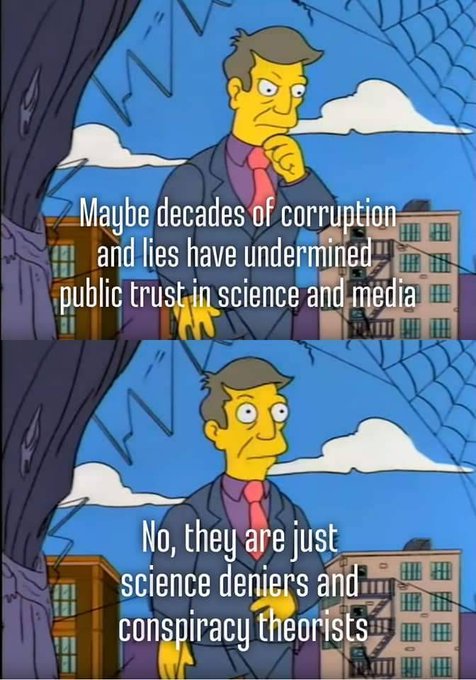
In relation to abuses of science, tailor-made corporate-sponsored pseudoscience has been used as a cover arm for profits that tie in with advancements of dictated political agendas. Like the political agendas the shady science can be decided before any real scientific research begins.
Remember, however, no scientist, scientific, academic or related corporate institution or politician regardless of monied interests has a monopoly on truth. With this approach, how could integrity be maintained, using science for “ownership” by its scientific overlords, abusing their powers along the way?


You must be logged in to post a comment.