
Did you know there’s a searchable archive of the last 12 years of TV news? Or that every moment of all of the major news network’s broadcasts from the week of 9/11 are available for free online? Well, you do now! Go forth and research!
Tag: research
Judge rules Michigan’s storing of babies blood, use for research is unconstitutional
It happens when every baby is born in Michigan, blood sample is taken from the newborn.
But a judge has ruled the way the state of Michigan does this, is most likely unconstitutional.
Its a complicated legal ruling, but it may pave the way for changes in the newborn health screening process.
“They don’t tell the parents, they don’t explain it to the parents, they just do it,” says Saginaw County attorney Phil Ellison.
He is talking about the state of Michigan’s program where it takes a sample of blood from every newborn shortly after birth.
The blood is taken to test for diseases. He represents four parents and nine children, who claim the parents didn’t consent to have those blood samples stored and used in research.
A lawsuit was filed in 2018, claiming their constitutional rights were violated and recently a federal judge, in part, agreed.
“He ruled that the two parents of the two children who were born before May 1st 2010, had their constitutional substantive due process rights violated, basically your right to be a parent was violated when the government, being the state of Michigan, kept, retained without permission or consent the blood spots or blood samples of children that they had taken during the newborn screening process,” says Ellison.
The judge also ruled the process for blood taken from babies born after that May 2010 date, when consent forms for storage and research were in put in place, may also be unconstitutional, but wants to hear from the state on why blood samples are stored and exactly how many.
Millions of blood samples are stored in bio banks in Detroit and Lansing. Ellison says the health screening is important and should be done, but parents should be better informed about the whole process, including how the blood is stored and who has access to it.
“What starts out as a good, probably noble public policy idea of testing children early for diseases, now has turned into, we are going to keep the data, we are going to keep the blood samples , we are going to sell the blood samples, we are going to trade the blood samples, now law enforcement is accessing these samples, we have found out,” says Ellison.
Looks like you’ve had a bit too much to think…
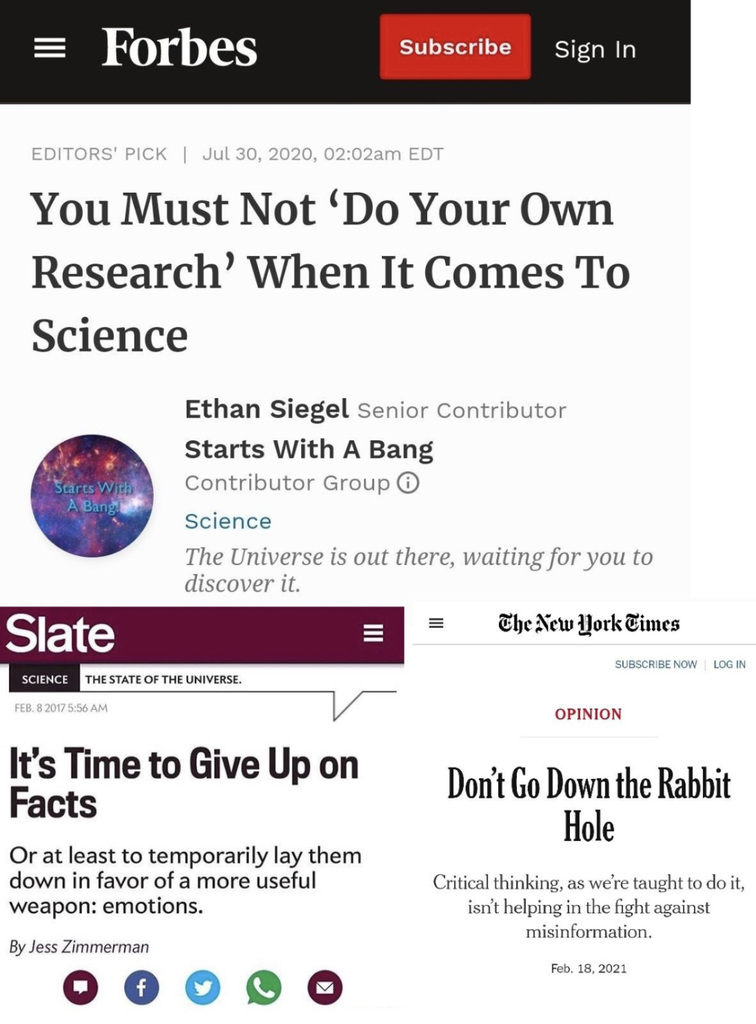
Time to assume that health research is fraudulent until proven otherwise?
Health research is based on trust. Health professionals and journal editors reading the results of a clinical trial assume that the trial happened and that the results were honestly reported. But about 20% of the time, said Ben Mol, professor of obstetrics and gynaecology at Monash Health, they would be wrong. As I’ve been concerned about research fraud for 40 years, I wasn’t that surprised as many would be by this figure, but it led me to think that the time may have come to stop assuming that research actually happened and is honestly reported, and assume that the research is fraudulent until there is some evidence to support it having happened and been honestly reported. The Cochrane Collaboration, which purveys “trusted information,” has now taken a step in that direction.
As he described in a webinar last week, Ian Roberts, professor of epidemiology at the London School of Hygiene & Tropical Medicine, began to have doubts about the honest reporting of trials after a colleague asked if he knew that his systematic review showing the mannitol halved death from head injury was based on trials that had never happened. He didn’t, but he set about investigating the trials and confirmed that they hadn’t ever happened. They all had a lead author who purported to come from an institution that didn’t exist and who killed himself a few years later. The trials were all published in prestigious neurosurgery journals and had multiple co-authors. None of the co-authors had contributed patients to the trials, and some didn’t know that they were co-authors until after the trials were published. When Roberts contacted one of the journals the editor responded that “I wouldn’t trust the data.” Why, Roberts wondered, did he publish the trial? None of the trials have been retracted.
Later Roberts, who headed one of the Cochrane groups, did a systematic review of colloids versus crystalloids only to discover again that many of the trials that were included in the review could not be trusted. He is now sceptical about all systematic reviews, particularly those that are mostly reviews of multiple small trials. He compared the original idea of systematic reviews as searching for diamonds, knowledge that was available if brought together in systematic reviews; now he thinks of systematic reviewing as searching through rubbish. He proposed that small, single centre trials should be discarded, not combined in systematic reviews.
Clueless…

Let’s not get it twisted…

The Massive Infiltration of U.S. Virus Research by China’s Military
The following is one example of a much larger problem, not just at this institution, but all across the United States involving billions of taxpayer dollars in knowledge, skills and research grants being fed into China’s virus research laboratories, no doubt, some going to its biowarfare program.
The University of Texas Medical Branch (UTMB) in Galveston is a major virus research center heavily funded by the National Institutes of Health, especially Dr. Anthony Fauci’s National Institute of Allergy and Infectious Diseases.
In August 2020, UTMB was designated by Anthony Fauci as one of the ten Centers for Research in Emerging Infectious Diseases and newly funded by a NIAID grant totaling $82 million.
Perhaps not coincidentally, Fauci also designated Peter Daszak’s EcoHealth Alliance, a long-time collaborator with the Wuhan Institute of Virology, as another Center for Research in Emerging Infectious Diseases, awarding it $7.5 million.
UTMB is also the home of the Department of Defense-funded Center for Biodefense and Emerging Infectious Diseases.
UTMB has one of the few Biosafety Level 4 facilities for containing and conducting research on the world’s most dangerous viruses.
One does not need to dig very deeply to find that UTMB has been infiltrated by scientists of People’s Liberation Army, some believed to be linked to China’s biowarfare program.
Teach your children well…
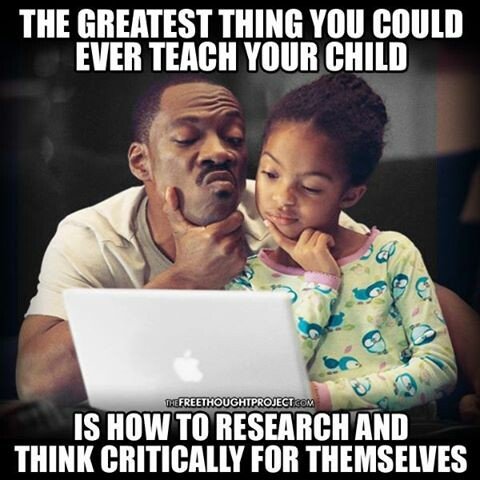
Doing their research…
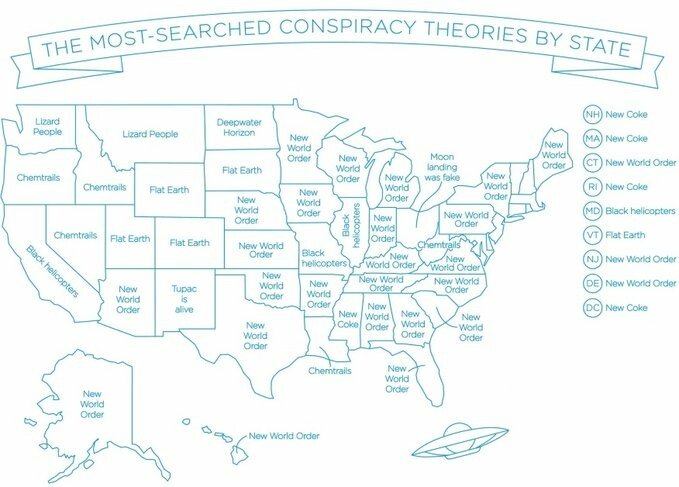
Research!

 Hellbound and Down
You must be logged in to post a comment.