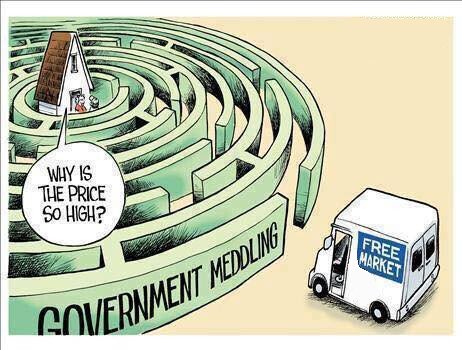
Biden Admin Unveils New Restrictions On Air Conditioners Despite Backlash Over Gas Stove Restrictions

Energy Secretary Jennifer Granholm unveiled new climate and efficiency restrictions on air conditioners despite widespread criticism the Biden administration received after officials recently announced restrictions on gas stoves.

The new energy efficiency standards, which will apply to room air conditioners and portable air cleaners, will enter into effect next year. The Energy Department contended that the new rules will assist with “tackling the climate crisis,” as well as save consumers $25 billion over the next three decades. Room air conditioners are more commonly called window air conditioners.

“Today’s announcement builds on the historic actions President Biden took last year to strengthen outdated energy efficiency standards, which will help save on people’s energy bills and reduce our nation’s carbon footprint,” Granholm said in a press release. She added that the Energy Department will “continue to engage with our public and private sector partners to finalize additional proposals like today’s that lower household energy costs and deliver the safer, healthier communities that every American deserves.”

The rules are the first federal standards for portable air cleaners. The Energy Department asserted that the regulations mark a consensus among “manufacturers, the manufacturing trade association, efficiency advocates, consumer advocacy groups, states, and utilities.”

The policies come weeks after multiple senior officials in the Biden administration repeatedly backtracked on new energy efficiency standards for gas stoves amid mounting criticism. Controversy over the potential regulations emerged earlier this year when Consumer Product Safety Commission Commissioner Richard Trumka Jr. said in an interview that gas stoves are a “hidden hazard” and declared that “any option is on the table” for a nationwide ban. Consumer Product Safety Commission Chairman Alex Hoehn-Saric later posted a statement asserting that neither he nor the agency planned to outlaw gas stoves.

Keep reading

Bacon may disappear in California once pig rules are enforced

Thanks to the reworked menu and a long time, Jinny Kim was able to keep the San Francisco restaurant alive during the coronavirus pandemic.

So I’m worried that breakfast-focused diners will be ruined within a few months by new rules that can make it difficult to get bacon, one of California’s top menus. increase.

“Our number one sellers are bacon, eggs and hash browns,” said Kim, who has been running SAMS American Eatery for 15 years on the city’s bustling market streets. “It may be devastating to us.”

California will begin implementing animal welfare proposals overwhelmingly approved by voters in 2018 early next year. This requires more space for the breeding of pigs, laying hens and calves. Veal and egg producers across the country are optimistic that they can meet the new standards, but currently only 4% of pig breeding complies with the new rules. California has lost almost all of its pork supply, much of it from Iowa, and pork production, unless courts intervene or the state temporarily permits the sale of non-compliant meat in the state. Face higher costs to regain major markets.

Animal welfare organizations have sought more humane treatment of livestock for years, but California rules could be a rare case where consumers clearly pay a price for their beliefs. I have.

Keep reading

Florida city fines woman more than $100K for parking incorrectly in her own driveway

Sandy Martinez and the Institute for Justice announced the lawsuit in a news conference Thursday, notifying the public that Martinez had been slapped with over a year’s worth of daily fines for the minor offense of parking her car partially on her front lawn in violation of town codes, WPTV-TV reported.

According to Section 6-30 of the Code of Ordinances of the Town of Lantana, “all off-street parking spaces, including driveways but not including parking spaces located in swale areas as permitted by section 17-34, shall be asphalt, concrete or block and shall be hard surfaced and in good repair in compliance with town codes.”

Martinez reportedly lives with her mother, her sister, and her three children — two of whom are now adults. Given the fact that, in total, the household contains four drivers, it is often the case that four vehicles need to be squeezed into the driveway as best they can. That predicament resulted in one of the four vehicles being parked partially on grass.

Martinez claimed that after she was first cited for the violation, she called the city, but an inspector never came to her residence. Then, more than a year later, she learned that she had been fined $250 a day for 407 days for the offense, totaling $101,750. On top of that, the city fined Martinez $65,000 more in fines for cosmetic violations, such as cracks in the driveway and a broken fence.

“I’ve been living here for 17 years now and I’m being fined over $160,000 for parking on my own property,” Martinez said during the press conference.

Keep reading

When There Wasn’t Enough Hand Sanitizer, Distilleries Stepped Up. Now They’re Facing $14,060 FDA Fees.

For many American craft distillers, 2020 was already one of their worst years ever. The COVID-19-related closure of tasting rooms and cocktail bars, loss of tourism, and inability to offer in-store sampling slashed their sales revenue and cut them off from their customers. Then this week, just as it seemed they’d made it through the worst of a terrible year, the Food and Drug Administration (FDA) had one more surprise in store: The agency delivered notice to distilleries that had produced hand sanitizer in the early days of the pandemic that they now owe an unexpected fee to the government of more than $14,000.

“I was in literal disbelief when I read it yesterday,” says Aaron Bergh, president and distiller at Calwise Spirits in Paso Robles, California. “I had to confirm with my attorney this morning that it’s true.” The surprise fee caught distillers completely off guard, throwing the already suffering industry into confusion.

Keep reading

A woman who parked her tiny house on her parents’ property in New Hampshire was forced to move out after the local government said it was illegal

On August 22, 2019, O’Brien presented her case to the Hampton Falls Zoning Board of Adjustment. But the board denied her request, blocking her path to legalizing her tiny house.

The meeting notes said the board denied her request for a variance because it “would be contrary to the public interest because the structure is currently existing, therefore the modifications are not in compliance and should have been discussed prior to the particular building of the structure.”

Additionally, the board felt that the tiny house could diminish property values.

Keep reading