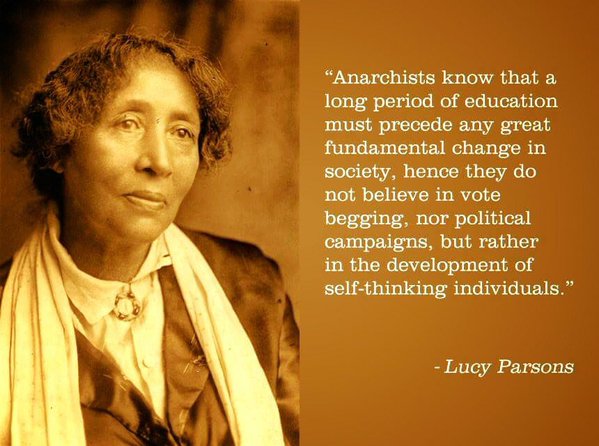
Lucy Parsons on education

It is a language that is alive and well in our world today.
Doublespeak can refer to terms that are euphemisms (mild expressions designed to hide harsher or more direct ones), deliberately ambiguous (expressions designed to hide the truth) or actual inversions (outright lies which state the opposite of the truth).
Although he never used the term doublespeak in his book 1984, many associate doublespeak with George Orwell.
After all, it was Orwell who famously wrote that the motto of the totalitarian ruling party in 1984 was “War is Peace, Freedom is Slavery, Ignorance is Strength” – an example of an inversion.
Orwell did however use the term newspeak to refer to a new kind of language which drastically reduced the scope of available words and terms, so as to concurrently reduce the scope of possible free thought among the ruled population.
Many doublespeak terms in the following list are oxymorons, meaning that the term itself is contradictory.
Many hide the truth because it is too raw, unpalatable, uncomfortable or outright horrifying. It is vitally important we watch our language, because it plays a great part in how we shape our world and in how we create our reality.
In many ways, by unconsciously using these terms instead of more accurate or truthful ones, we are quietly lying to ourselves, or at a minimum acquiescing to the process of being lied to and programmed.
Political correctness is a great example of how language control, thought control and doublespeak can be introduced to an entire population without people realizing they are being deceived and manipulated.
Below is list of the top 20 modern Orwellian doublespeak terms, with the first half focusing on military and geopolitical terms.
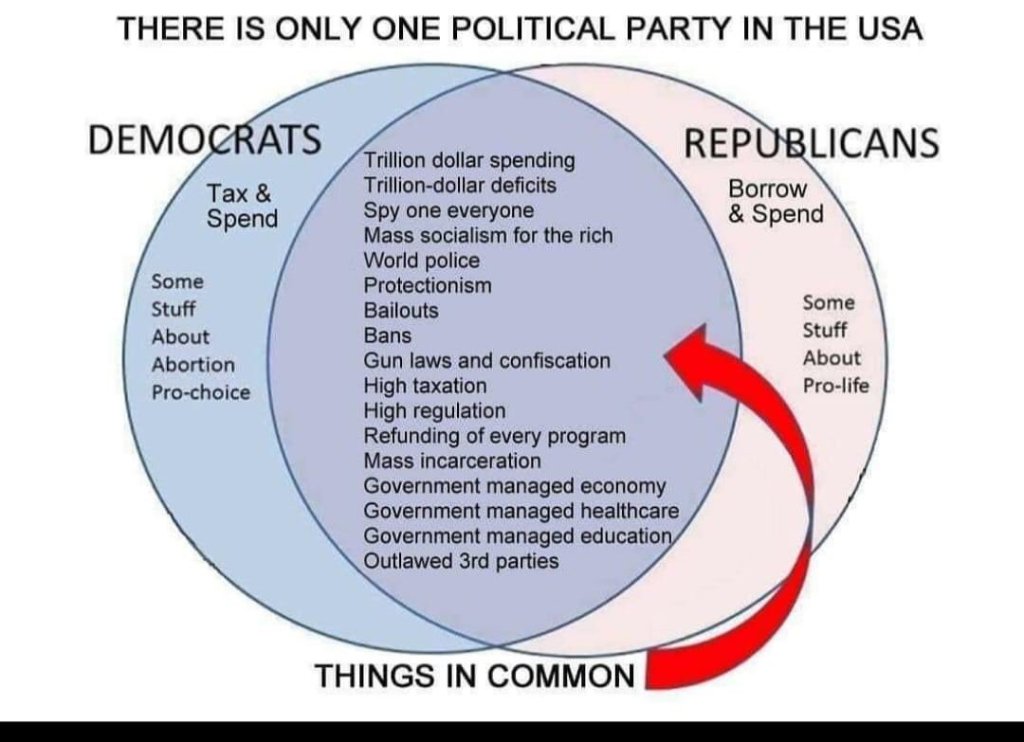

“Being allowed to choose between the political “left” and the political “right” provides the people with exactly as much power and freedom as allowing them to choose between death by hanging and death by firing squad.”
Larken Rose

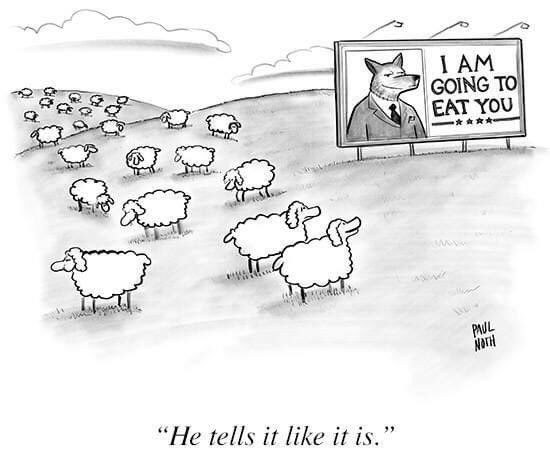
Wikipedia is the most widely used source of information in the world, and a great deal has been written about its impact on public perception of certain topics. Wikipedia shapes both scientific research and real-world economic outcomes, and is the top source of medical information for both doctors and patients. The widespread reliance on Wikipedia would not be a problem if it were a neutral and authoritative source, but earlier this year Wikipedia’s co-founder Larry Sanger declared that “Wikipedia’s ‘NPOV’ (neutral point of view) is dead.” Is Sanger’s statement correct?

 Hellbound and Down
You must be logged in to post a comment.