On Irreverence, or, Why the Left Can’t Meme.

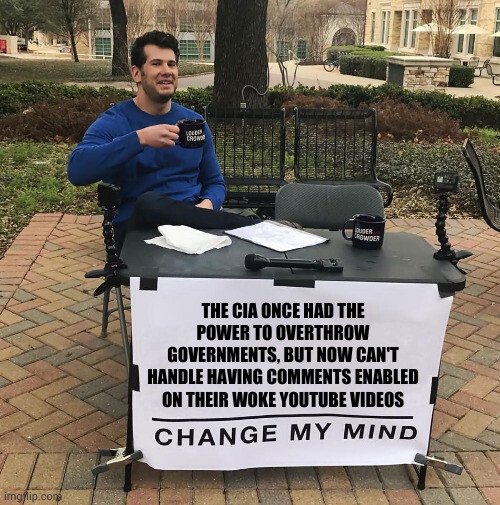
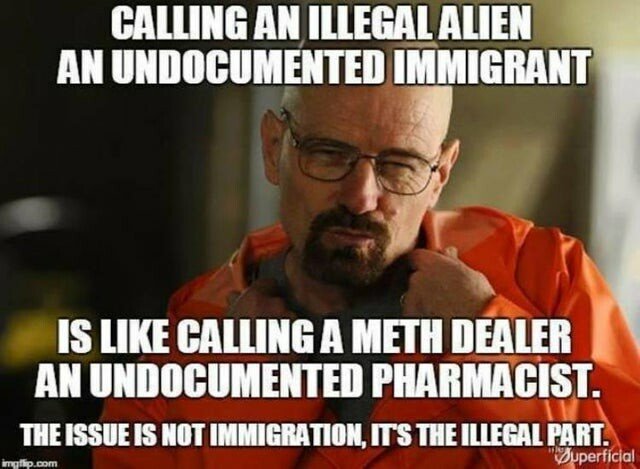
At Urban Dictionarya user named Dankulous Memeulon plumbs the wisdom of the ancient truism that the political left tends to generate inept, insipid internet memes. He describes this phenomenon as “an absolute fact: Leftists and their shills CANNOT meme, and any attempt by them to do so ends up as either cringe-worthy and biased propaganda, or [as] cancerously inaccurate.” But Memeulon goes a step further and posits an explanation as to why this is true: “a possible cause […] is perhaps a leftist’s despicable attempts to stay politically correct, like all cucks, and thus they cannot, by their very nature, produce memes without fear of offending a minority who couldn’t care either way.”

I must confess that as a bald, cis-gendered, white, monogamous, conservative, heterosexual, Christian, male, English professor in his early 40s, I am too square to claim any expertise in creating dope-ass memes. But I do study them, along with the ongoing meme war that continues to intensify. Look no further than the WallStreetBets crowd over at Reddit, who have now learned how to burn hedge fund managers by pumping “meme stocks.”

Many scholars have demonstrated the academic relevance of meme culture to understanding how digital communication helped to bring right-wing populism to a new prominence in American politics. But the circulation of political memes (and their resulting formalization as a genre of public discourse) hints at why it is that as mainstream culture moves further left, the culture also grows more ossified, more staid, and more rigid in its demands that people conform to a particular set of puritanical expectations regarding political speech.

Distilled to its essential rhetorical function, the purpose of the political meme is to expand the range of topics that are eligible for public scrutiny. Generally, this is achieved through an imagistic, minimalist lampooning of our culture’s prevailing pieties and the supposedly unquestionable assumptions that undergird them. In short, the key pathos of meme culture is irreverence: a disrespectful attitude toward the things that polite society holds sacred. Understanding how irreverence has operated in modern American life, and how the objects of American reverence have recently changed, not only sharpens the contours of the political realignment that is unfolding, it also explains why the left exhibits such inferior skill when it comes to creating internet memes.

Keep reading

Academics Push ‘Chestfeeding’ Term for Inclusivity, Claim ‘Breastfeeding…May be Ethically Problematic’

Controversy has erupted online this month after a hospitals began issuing guidance to midwives to concentrate less on the term breastfeeding in order to be more supportive of transgender and nonbinary parents. Midwives are being instructed to use terms like “chestfeeding” and “chest milk.”

According to a report from the UK Times, Brighton and Sussex University Hospitals NHS Trust is the first in the country to formally implement a gender inclusive language policy for its maternity services department, which will now be known as “perinatal services”.

Staff have been instructed that “breastmilk” should be replaced with the phrases “human milk”, “breast/chestmilk” or “milk from the feeding mother or parent.”

Other changes include replacing the use of “woman” with “woman or person” and “father” with “parent”, “co-parent” or “second biological parent”, depending on the circumstances.

“BSUH always aims to meet the needs of our local populations and provide the best possible, individually tailored care for every person. By adding to the language we use we will support more inclusive care and ensure that people who identify in a different way feel the service includes and represents them,” reads a statement on the hospital’s website.

“Adding to the language we use is something people who use our services have been asking for, for some time. Our aim will always be to treat everyone who uses our services as an individual, providing care that is personal to them, that meets their needs and uses language they are comfortable with,” said BSUH Chief Nurse, Carolyn Morrice.

This is not a trend reserved solely for the UK either as several universities in the United States are on the same page.

Keep reading

With Trump Gone, The Media No Longer Cares About ‘Kids In Cages’

A new administration and a new party in power has had a significant effect on how the media covers family separations at the U.S.-Mexico border.

Now that President Donald Trump is out of office, the media won’t even use the phrase “kids in cages” as they did during the Trump years, when the topic of migrant children at the border was treated as the greatest human rights issue of a generation (even though China is actually imprisoning people for slave labor).

Children who illegally cross the border with their parents but aren’t given immediate citizenship or a comfy hotel room – or kept with their parents in prison – have lost their victimhood status under President Joe Biden.

Now, instead of “kids in cages,” the media is referring to them as “migrant children” or “migrant families.”

The Washington Free Beacon’s Thaleigha Rampersad put together a supercut of the difference, showing the media’s repeated use of the phrase “kids in cages” when Trump was president versus the new, softer phrases, “migrant children” or “migrant families.”

Keep reading

Three Wise Monkeys Are Racist Now, Says Woke University of York

Academics at the University of York removed a depiction of the three wise monkeys from their website after they determined it could be seen as an insult to ethnic minorities.

The Three Wise Monkeys, which embody the Japanese proverb “see no evil, hear no evil, speak no evil” and are often used to describe those turning a blind eye to wrongdoing, have become the latest victims of the Black Lives Matter iconoclastic movement in the United Kingdom.

The organisers of an upcoming art history conference at the University of York in England have apologised for their use of the three monkeys in their call for submissions and removed it from their website.

“Upon reflection, we strongly believe that our first poster is not appropriate as its iconology promulgates a longstanding visual legacy of oppression and exploits racist stereotypes,” the organisers wrote in comments reported by The Times.

“We bring this to your attention, so that we may be held accountable for our actions and, in our privileges, do and be better.”

Experts in Japanese history and culture were shocked by the academics insistence on likening the three monkeys to racist iconography.

The former curator of the British Museum’s Japanese collections, Tim Clark, said that he had “no idea” why they would be seen as offensive.

Keep reading