I’m terrified my 18 XL Bully puppies will be put down after Government ban: Owner says it would be ‘soul destroying’ if they are put to sleep

The owner of an XL Bully said he is ‘terrified’ that 18 of his dog’s puppies will be put down after Prime Minister Rishi Sunak announced a ban on the breed. 

Jamie, from North Lanarkshire in Scotland, said he owns a three-year-old female XL Bully which just gave birth to a litter of pups despite having no plans for her to be bred. 

He said that his dog mated with his sister’s pet, who is also an XL Bully, and gave birth to a ‘rather large litter’ which he says he will now struggle to find homes for. 

Jamie said it would be ‘absolutely heartbreaking’ to have to give away the dogs to a rescue centre and is even more fearful that they might be put down, which would be ‘soul destroying’ for him. 

It comes as Rishi Sunak yesterday announced a ban on the dangerous dog breed by the end of the year following a series of horrific attacks. 

Jamie told LBC: ‘I’m an owner of a female XL Bully who wasn’t planned to be bred but my sister’s dog – also a Bully – mated with her and resulted in a rather large litter.

‘My plan was to neuter her and I actually enquired about it but it was too close to her season.

Keep reading

Court Orders Facebook To Comply With Subpoena For Data On All Users That Broke “Covid-19 Misinformation” Rules

The District of Columbia (DC) Court of Appeals has rejected Meta’s appeal to quash a sweeping subpoena that demanded it hand over “documents sufficient to identify all Facebook groups, pages, and accounts that have violated Facebook’s COVID-19 misinformation policy with respect to content concerning vaccines” to the DC government.

Millions of users, many of whom made truthful statements that challenged the government’s Covid narrative, are likely to be swept up in this government data grab due to the scope of Facebook’s “Covid-19 misinformation” rules and the number of users that were impacted by them.

Facebook’s Covid-19 misinformation rules prohibited many truthful statements during the pandemic. For example, at one point claiming that “vaccines are not effective at preventing the disease they are meant to protect against” was banned — an assertion that health officials have now reluctantly admitted is true.

Even Meta CEO Mark Zuckerberg has acknowledged that Facebook censored truthful information.

And millions of people were impacted by these far-reaching censorship rules. In some quarters, Facebook censored over 100 million posts for violating these rules. Some of the groups Facebook took down under these rules also had hundreds of thousands of users.

Meta had challenged the subpoena on free speech and privacy grounds, arguing that it violated the First Amendment and that a warrant was required to compel disclosure of the requested data.

Specifically, Meta argued that the subpoena violated Meta’s own First Amendment rights by “prob[ing] and penaliz[ing]” its ability to exercise editorial control over content on its platform and also violated Meta users’ First Amendment rights because it would deter them from engaging in future online discussions of controversial topics.

Additionally, Meta cited the warrant requirements in the Stored Communications Act (SCA) — a law that sought to provide Fourth Amendment-like privacy protections by statute to communications held by third party service providers.

However, the DC appeals court rejected Meta’s arguments.

The court stated that Meta had not shown the subpoena will result in its free speech or associational rights being chilled. Additionally, it said Meta users’ First Amendment rights wouldn’t be chilled because “the users who made those posts have already openly associated themselves with their espoused views by publicly posting them to Facebook.”

The court also insisted that the warrant requirement in the SCA does not apply to public posts and that the subpoena “does not require Meta to ‘unmask’ any anonymous Users.”

Furthermore, the court characterized this mass request for user data as “reasonably relevant” to the DC’s investigation and said the subpoena is “narrowly tailored to the government’s asserted interest.”

We obtained a copy of the opinion for you here.

Keep reading

Dr. Robert Redfield Comes Clean On Government Censorship

“My position was just tell the American public the truth. There are side effects to vaccines. Tell them the truth and don’t try to package it.”

That was Dr. Robert Redfield, director of the Centers for Disease Control during the administration of Donald Trump.

Dr. Redfield recently went on record that the government health bureaucracy tried to quash discussion about the ineffectiveness of Covid vaccines.

“There was such an attempt to not let anybody get any hint that maybe vaccines weren’t foolproof, which, of course, we now know they have significant limitations,” said Redfield, who co-founded the University of Maryland’s Institute of Human Virology and served as the Chief of Infectious Diseases and Vice Chair of Medicine at the University of Maryland School of Medicine.

“I think we should have really confidence and not be afraid to debate the issues that we think are in the public’s interest and just tell the public the truth,” said the former CDC director. This wasn’t the first time Dr. Redfield had been at odds with the government health establishment.

“I’m of the point of view that I still think the most likely etiology of this pathology in Wuhan was from a laboratory, you know, escaped,” Redfield told CNN in 2021.

“Other people don’t believe that. That’s fine. Science will eventually figure it out.”

After these statements, as Vanity Fair reported, “death threats flooded his inbox,” some from prominent scientists.

“I was threatened and ostracized because I proposed another hypothesis,” Redfield explained.

“I expected it from politicians. I didn’t expect it from science.”

The people might expect the FBI to investigate death threats against a public official, but reports of any such investigation are hard to find.

Keep reading

DIA Releases Heavily Redacted Documents on COVID-19 Origin: Raises More Questions than Answers

In a recent revelation through the Freedom of Information Act (FOIA), The Black Vault has procured documents from the Defense Intelligence Agency (DIA) relating to investigations into the origins of the Covid-19 novel SARS-2 Coronavirus. But the excessive redactions and withheld information have only intensified the mystery around the pandemic’s inception.

The original FOIA request specifically sought “all reports, papers, memos, etc. from the Armed Forces Medical Intelligence Center during 2019, 2020 or 2021 evaluating the origin of the Covid-19 novel SARS-2 Coronavirus and/or whether the Covid-19 novel SARS-2 Coronavirus was created in a laboratory.” The DIA’s response: “A search of DIA’s systems of records located one document (32 pages) responsive to your request.”

But the catch? Hefty redactions. Out of the 32 pages found responsive, 18 pages were “withheld in part” while a staggering 14 pages were “withheld in full.” The few visible headers include hints at what was being withheld like “China: Emergence of a Novel Coronavirus in Wuhan” and “Analysis of Alternatives: 2019-nCoV Outbreak Caused by Leak at WIV.” Yet, substantial portions of content, entire paragraphs, and even entire pages remain obscured from view.

Keep reading

California To Drop ‘Medical Misinformation’ Law After Judge Blasts ‘Dramatic Examples’

California has quietly announced it’s ditching Gov. Gavin Newsom’s draconian ‘Covid-19 medical misinformation’ law, which would threaten the licenses of doctors who don’t agree with “scientific consensus” on various issues.

The law, AB 2098, was signed into law by Newsom last year. In response, five doctors alleged it to be unconstitutional under the First and Fourteenth Amendments of the US constitution.

The five doctors, Tracy Hoeg, Ram Duriseti, Aaron Kheriaty, Pete Mazolewski, and Azadeh Khatibi, argued that the law prevents them from providing information to their patients that may contradict what the law permits or prohibits. They also alleged the law was used to intimidate and punish physicians who disagreed with prevailing views on COVID-19.

Keep reading

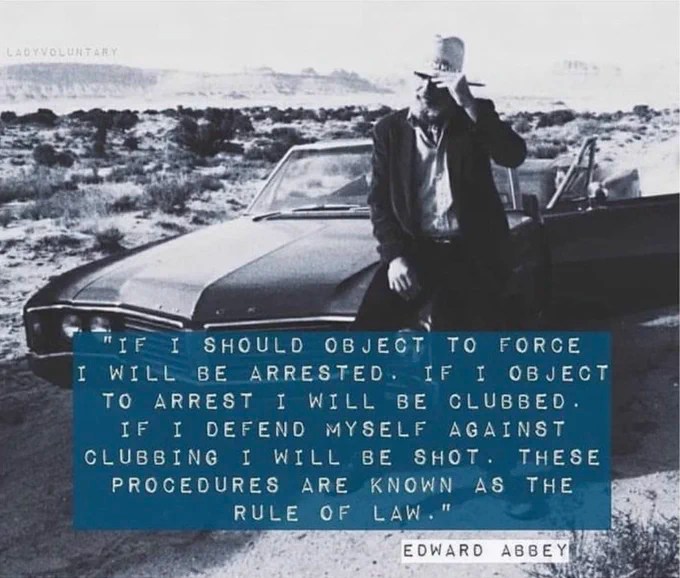
Three Met Police officers who strip-searched 15-year-old schoolgirl wrongly accused of possessing cannabis could be sacked as watchdog announces misconduct hearing over scandal

Three Metropolitan Police officers could be fired after allegations of gross misconduct by carrying out a strip search on a 15-year-old schoolgirl wrongly accused of cannabis possession.

The Independent Office for Police Conduct (IOPC) said on Thursday that the officers will face a misconduct hearing, and a fourth lesser misconduct meeting, over the treatment of Child Q.

The girl was strip-searched while on her period with no appropriate adult present, at a school in Hackney, east London in December 2020, after being accused of carrying drugs.

No drugs were found in her bags or outer clothing, and she was then strip-searched by two female officers with two male officers standing outside. Again no drugs were found.

Met bosses have been told by the IOPC that they should consider writing formal letters of apology to Child Q and her mother.

Keep reading

Ninth Circuit rebukes lawmakers, grants injunction against California law targeting gun marketing

A California law ostensibly aimed at restricting the marketing of firearms to minors infringes on the free speech rights of adults, according to a three-judge panel on the Ninth Circuit Court of Appeals. In its ruling handed down on Thursday morning, the panel vacated a lower court decision denying an injunction against the law’s enforcement and delivered a resounding win for both First and Second Amendment advocates.

Writing for the majority, Judge Kenneth Lee ruled that the law forbidding marketing and advertising firearms that “reasonably appear to be attractive to minors” is likely to infringe on the First Amendment, given that the statute is so broadly written that advertisements aimed at adults who can lawfully purchase a firearm would be swept up in its provisions.

While California has a substantial interest in reducing gun violence and unlawful use of firearms by minors, its law does not “directly” and “materially” further either goal. California cannot straitjacket the First Amendment by, on the one hand, allowing minors to possess and use firearms and then, on the other hand, banning truthful advertisements about that lawful use of firearms. There is no evidence in the record that a minor in California has ever unlawfully bought a gun, let alone because of an ad. Nor has the state produced any evidence that truthful ads about lawful uses of guns—like an ad about hunting rifles in Junior Sports Magazines’ Junior Shooters—encourage illegal or violent gun use among minors. Simply put, California cannot lean on gossamers of speculation to weave an evidence-free narrative that its law curbing the First Amendment “significantly” decreases unlawful gun use among minors. The First Amendment demands more than good intentions and wishful thinking to warrant the government’s muzzling of speech.

California’s law is also more extensive than necessary, as it sweeps in truthful ads about lawful use of firearms for adults and minors alike. For instance, an advertisement directed at adults featuring a camouflage skin on a firearm might be illegal because minors may be attracted to it.

While the state of California had argued that the statute didn’t violate the First Amendment given the broader latitude given to regulations on commercial speech, the panel was unswayed, with Lee writing that even under a lowered standard of intermediate scrutiny the law fails to pass constitutional muster in light of the fact that the “state has made no showing that broadly prohibiting certain truthful firearm-related advertising is sufficiently tailored to significantly advance the state’s goals of preventing gun violence and unlawful firearm possession among minors.”

Keep reading

Federal judge blocks suspension of right to carry firearms in public ordered by New Mexico governor

A federal judge has blocked part of a public health order that suspended the right to carry guns in public across New Mexico’s largest metro area, as criticism mounted over the actions taken by the governor and political divides widened.

The ruling Wednesday by U.S. District Judge David Urias marks a setback for Democratic New Mexico Gov. Michelle Lujan Grisham as she responds to several recent shootings that took the lives of children, including an 11-year-old boy as he left a minor league baseball game in Albuquerque.

Lujan Grisham imposed an emergency public health order Friday that suspended the right to open or concealed carry of guns in public places based on a statistical threshold for violent crime that applied only to Albuquerque and the surrounding area. The governor cited recent shootings around the state that left children dead, saying something needed to be done.

U.S. District Judge Urias agreed Wednesday with plaintiffs in several lawsuits who said the order violates constitutional rights and he granted a temporary restraining order to block the governor’s suspension of gun rights. It’s in place until an Oct. 3 court hearing.

Speaking of Lujan Grisham’s actions, Urias said “I don’t blame her for wanting to take action in the face of terrible acts.” But he said he was faced with a much more narrow question regarding the rights afforded to citizens.

State police had authority under the order to assess civil penalties and a fine of up to $5,000. The local sheriff and Albuquerque’s police chief had refused to enforce the firearms ban.

The rest of the public health order, including directives for monthly inspections of firearms dealers statewide, reports on gunshot victims at New Mexico hospitals and wastewater testing for illicit substances, remains intact.

Advocates for gun rights filed a barrage of legal challenges to the order in U.S. District Court in Albuquerque alleging infringement of civil rights under the Second Amendment of the U.S. Constitution. Republicans in the legislative majority have called for impeachment proceedings against the governor.

Keep reading

Biden’s Gun Control Law Will Radically Change U.S. Gun Ownership

President Joe Biden keeps telling Americans that the Bipartisan Safer Communities Act (BSCA), the gun control bill he signed last year, is the most significant gun control legislative accomplishment in nearly 30 years. He is right, but it will do nothing to improve safety. The innocuous-sounding BSCA will radically change gun ownership.

Americans are only now learning that the act prohibits federal funding for “training in the use of a dangerous weapon.” In July, the Biden Department of Education announced it would end funding to schools with riflery or archery teams or hunter safety classes. Federal funding for public schools is substantial and hard to ignore, typically accounting for about eight percent of education spending. This prohibition effectively spells the end of classes or sports pertaining to shooting or archery in public schools. It is an attempt to end the American culture of legal gun ownership.

Federal law explicitly prohibits the creation of a federal firearm registry, but through a proposed 108-page set of regulations published at the end of August by the Bureau of Alcohol, Tobacco, Firearms, and Explosives (BATF), the Biden administration is trying to use the BSCA to implement universal background checks on all gun purchases and to track virtually everyone who obtains a gun.

Keep reading