
Get one for yourself, HERE!

Get one for yourself, HERE!

Get one HERE!
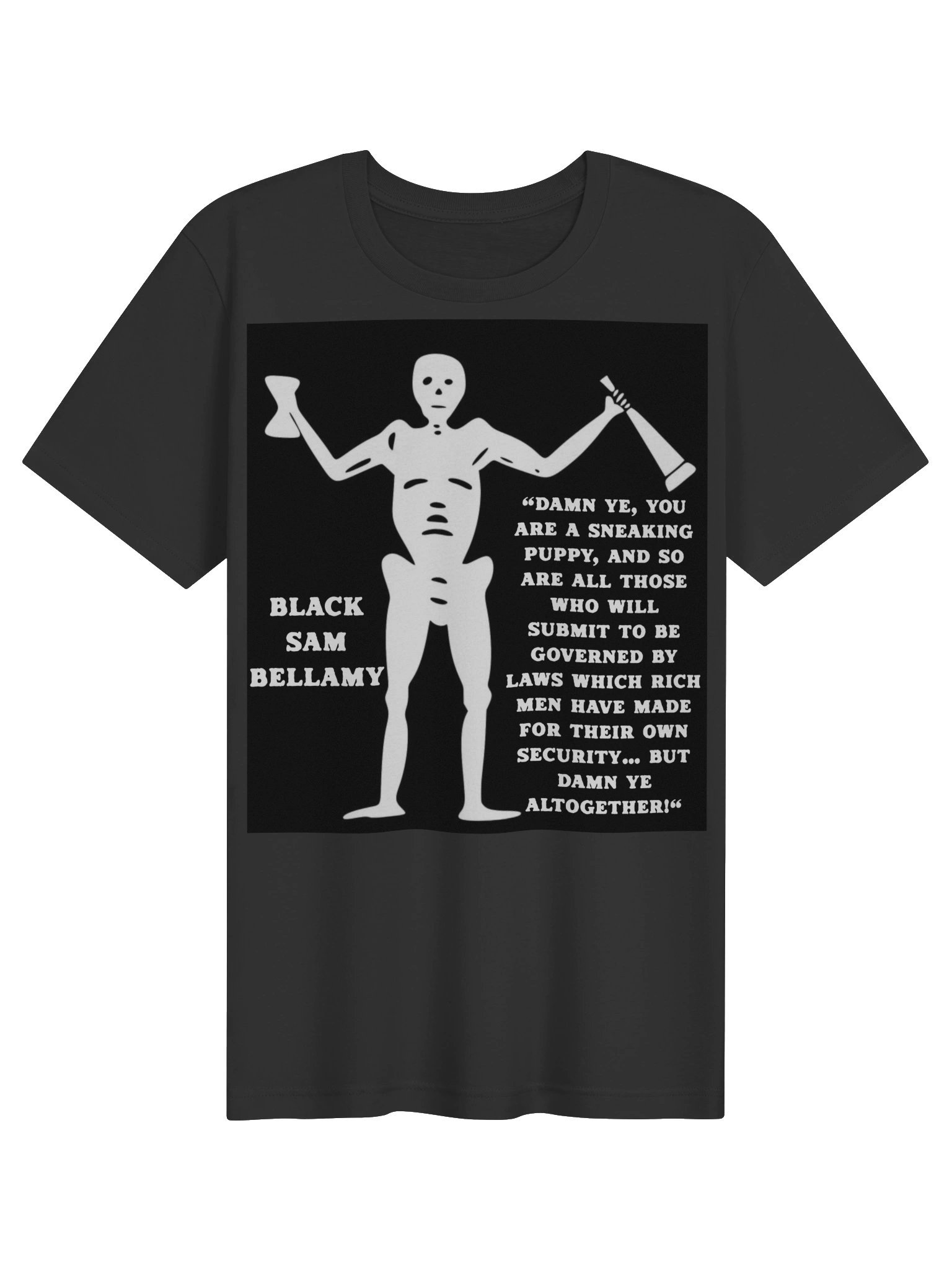
Get one while you still can HERE!
The European Union (EU) continues to be a major world player in the war on copyright infringement, and the next salvo is the EU’s updated Counterfeit and Piracy Watch List.
Rights holders have been busy submitting their input, and the European Commission (EC) published their contributions on September 24. Some of the suggestions are an open source tool, four major VPN companies, and several internet infrastructure firms.
The Commission says the list “will identify and describe the reportedly most problematic online services and marketplaces in order to encourage their operators and owners, as well as the responsible local authorities and governments to take the necessary actions and measures to reduce the availability of IPR infringing goods or services.”
However, the same page is at pains to explain that the list “does not purport to make findings of legal violations.” It’s not clear how the EC expects to prove that a site or service is “problematic” without establishing whether it is in fact breaking the law, but this is not the first time that the EU has tried to have its cake and eat it, too, on copyright.
The consultation opened on June 11 and closed on September 21. Those who wish to react to what has been submitted can do so until October 28, and the next Watch List is due in the second quarter of 2027.
One of the submissions came from the International Federation of the Phonographic Industry (IFPI), which represents the recorded music industry globally. On September 11, IFPI asked the EC to include yt-dlp, a command-line program used to download videos and audio from sites like YouTube, in the Watch List.
In fact, it is the openness of the project, and the fact it is maintained by a community of developers that makes it difficult to control, IFPI said in its submission. The document also reveals that the music industry has been keeping a close eye on the project’s development, and knows that it was originally created by a developer using the username “pukkandan”, and that the current maintainers are “coletdjnz”, “bashonly” and “Grub4K.”
IFPI also names several infrastructure companies as being “problematic” – Cloudflare, Njalla, GoDaddy, and Verisign.
On Verisign, IFPI notes that the company “is the registry for the .com and the .net top-level domains.”
Meanwhile, Spain’s top football league LaLiga has asked that four VPN providers – NordVPN, ProtonVPN, ExpressVPN, and Surfshark – be included in the Watch List.
The football league does not object to VPNs as such, but to the way they are marketed by affiliates. The submission says that these affiliates publish guides on how to use the VPNs to watch LaLiga matches for free, and that the VPN companies are aware of this and profit from it through their affiliate programs.
In fact, the guides are written by third parties who have affiliate deals with the VPNs, and who earn a commission when they sell subscriptions. The “guides” rank VPNs and link to their discounted offers.
LaLiga’s submission puts it this way: “The conduct that takes these services beyond neutral technical provision is the deliberate marketing of circumvention, conducted at arm’s length through affiliate programmes.”
LaLiga does not name or link to a single one of these guides, nor does it say that the VPN companies are behind them.
In the past, LaLiga tried to get NordVPN to pay a fine for not blocking IP addresses that were accessing its content, but a Spanish court refused the request.
The nature of the submissions made by IFPI and LaLiga also shows that the targets are now no longer only sites accused of piracy and their operators, but also perfectly legitimate and lawful technology and services – such as VPNs and open source software – that happen to be used in ways that cut into the profits of the entertainment and sports industries.
This latest attack is the second in just four days.
In the game of ‘proxy groups in the Middle East’, Iran arms and equips the Yemeni Houthis, who in turn arm and equip the Somali pirates.
This has transformed the crude attacks of a decade ago into much more dangerous affairs, with pirates much better armed and reportedly using satellite tracking intel to chase their prey.
In this latest incident, they hijacked an oil products tanker in their usual hunting ground, the Gulf of Arden off Yemen.
Associated Press reported:
“Six armed pirates hijacked the Eritrean-flagged M.T. Sibu 1 on Thursday about 136 nautical miles (252 kilometers) east of al-Mukalla, Yemen, and took it toward Somalia’s Puntland coast.
[…] The Sibu 1, managed by the UAE-based Qatrat Alnada Almasi Ship Management, was sanctioned by the U.S. Treasury Department last year for allegedly belonging to an Iranian ‘shadow fleet’ used to transport petroleum products seeking to evade U.S. sanctions.”
The effective closure of the Strait of Hormuz has forced hundreds of commercial ships onto longer routes around Africa, and Somali pirates are moving quickly to exploit the sudden increase in traffic off the continent’s eastern coast. Oil tankers MT Honour 25, MT Eureka and MT Asana were hijacked in the Gulf of Aden and off Puntland between April and July 2026, the largest attacks by Somali pirates in years. The Iran war has now delivered these groups more targets, spread across thousands of miles of ocean, while diverting naval resources to the Persian Gulf and Red Sea.
Somali piracy peaked in 2011 before an international crackdown reduced attacks to a fraction of their former levels. The first major revival came in late 2023, when Houthi attacks in the Red Sea forced hundreds of vessels away from the Suez Canal and around the Cape of Good Hope. And with U.S. forces all diverted to the war against Iran in the Persian Gulf, it’s largely a free-for-all for Somali pirates. Unlike the disorganized bands of the early 2000s, today’s Somali pirates are ranging much farther from shore, and their operations have become much more sophisticated. And perhaps even more concerning, according to reports from a UN panel of experts, there is now direct coordination between Yemeni militants and Somali networks.
In exchange for creating maritime chaos to keep Western navies distracted, the Houthis have supplied Somali pirate cells with advanced weaponry, military training and precision GPS tracking devices to pinpoint commercial hulls. Al-Shabaab–one of the most lethal terrorist groups in Africa–provides onshore logistical backing along parts of the Somali coast where pirate gangs launch operations or hold hijacked vessels. Intelligence reports indicate the group receives a generous cut of up to 30% from successful maritime ransom payouts.
According to a joint study by Interpol, the World Bank and the United Nations Office on Drugs and Crime (UNODC), Horn of Africa piracy generated over $400 million in ransom payments from 179 hijacked ships between 2005 and 2012, averaging roughly $2.23 million per ship. The money follows a structured economy, with pirate crews receiving a standard 10% to 15% fee, local financiers claim 30% to 50% for funding food, fuel and weapons, while the rest is laundered into legitimate businesses, according to the study. And it’s only becoming more lucrative with time.
A June 30, 2026, analysis by the Global Initiative Against Transnational Organized Crime (GI-TOC) reports that ransom demands have been made for all three commercial vessels hijacked in the current wave.
The demand for Eureka was reportedly $10 million.
Separately, the pirates holding Honour 25 have demanded $3 million for the tanker, cargo and crew.
GI-TOC says pirates received $1.2 million-$1.5 million for the release of the Chinese fishing vessel Liao Dong Yu 578 in March this year. The same vessel had reportedly generated another $2 million ransom in 2024. GI-TOC says counter-piracy officials believe the latest payment helped catalyze the current wave of attacks.
The Gulf of Guinea is yet another piracy hotspot in Africa thanks to the region’s riches in oil and gas as well as a well-trained militia due the Delta’s secessionist movement. While local law enforcement and naval forces have managed to curb attacks in shallower waters, pirates are highly adaptable to new environments. Now, they are using heavily armed mother ships to strike targets well outside state jurisdictions and exclusive economic zones. The region’s pirate networks now operate with military-grade weapons, an intricate shipping intelligence network and complicated financial backing.
War-risk insurance premiums for commercial shipping transiting the Strait of Hormuz and the Persian Gulf spiked by over 1,000%–surging from pre-conflict levels of roughly 0.15%–0.25% of a vessel’s value up to 7.5% and 10% per voyage shortly after the closure of the Strait of Hormuz in March.
With African maritime zones highly vulnerable due to a lack of equipment and manpower, and with American forces diverted to the Persian Gulf indefinitely, piracy sees its biggest opportunity yet. It means an African diversion isn’t necessarily going to avoid risk premiums.
A federal judge has approved a $1.5 billion copyright settlement in which artificial intelligence company Anthropic will pay thousands of authors about $3,000 per book after using pirated copies of their works to train its Claude chatbot.
District Judge Araceli Martínez-Olguín said in a Monday ruling that the class-action settlement provides “meaningful relief” to affected authors and publishers.
About 91% of the more than 482,000 books covered by the ruling have been claimed by authors or publishers who are now due payment.
Plaintiff attorney Justin Nelson said in a statement that the settlement was “the largest known copyright recovery in history. We look forward to making distributions to the Class as promptly as possible.”
U.S. District Judge William Alsup issued the preliminary approval in San Francisco federal court last September and has since retired. Alsup had dealt the case a mixed ruling last summer, finding that training AI chatbots on copyrighted books wasn’t illegal but that Anthropic wrongfully acquired millions of books through pirate websites.
Bestselling thriller novelist Andrea Bartz first brought the suit with two other authors in 2024.
An alliance of Somali pirates and Houthi militias?
The oceans have become increasingly more dangerous, with military conflicts targeting cargo ships in the Black Sea, Red Sea, Arabian Sea, the Strait of Hormuz… and around the Horn of Africa, where there’s an ongoing resurgence of activity by Somali Pirates.
Yesterday (2), an oil tanker was hijacked off the coast of Yemen and diverted toward Somalia’s waters.
The attack was reportedly carried out by armed Somali pirates, but some Yemenis with ties to armed groups – and even to the Houthi militia – were also suspected of participating in the attack.
The New York Times reported:
“Since April, at least three vessels have been hijacked by Somali pirates off the country’s coast. The United Kingdom Maritime Trade Operations center, run by the British Navy, recently raised the threat level around the coast of Somalia to ‘substantial’ and urged ships to proceed with caution.
Yemen’s Coast Guard said that the tanker, the Togo-flagged Eureka, was subjected to an armed robbery by ‘unidentified’ people, who boarded the ship and directed it through Yemen’s Gulf of Aden toward Somalia’s coast. Efforts to monitor and recover the vessel were underway, it said.”
The Supreme Court on Tuesday sharply curtailed when internet service providers can be held liable for copyright infringement committed by their subscribers, handing a major victory to broadband companies and dealing a setback to Sony Music Entertainment and other major labels seeking to combat online piracy.
In a 7-2 decision (with Justices Sotomayor and Jackson concurring only in the judgment), the justices ruled that Cox Communications Inc. cannot be held liable for the actions of customers who illegally downloaded and shared songs using its network, even after the company received more than 163,000 infringement notices from copyright holders. The ruling reverses a $1 billion jury verdict against the Atlanta-based cable and internet giant and clarifies long-standing uncertainties about secondary liability under U.S. copyright law.
The case stemmed from a 2018 lawsuit in which the labels accused Cox of willful contributory and vicarious infringement for failing to terminate repeat offenders. A federal jury in Virginia sided with the labels on both theories and awarded $1 billion in statutory damages. The Fourth Circuit upheld the contributory-liability finding but tossed the vicarious-liability verdict, leading to the Supreme Court appeal on the contributory issue alone.
Writing for the majority, Justice Clarence Thomas said a service provider is liable for a user’s infringement only if it intended its service to be used for that purpose. “The provider of a service is contributorily liable for a user’s infringement only if it intended that the provided service be used for infringement, which can be shown only if the party induced the infringement or the provided service is tailored to that infringement,” he wrote.
Such intent exists only when the provider actively induces infringement – such as by marketing a product as a tool for piracy – or offers a service that is “not capable of ‘substantial’ or ‘commercially significant’ noninfringing uses,” the opinion stated, citing the court’s landmark 1984 decision in Sony Corp. of America v. Universal City Studios Inc. and the 2005 ruling in Metro-Goldwyn-Mayer Studios Inc. v. Grokster Ltd.
“Mere knowledge that a service will be used to infringe is insufficient to establish the required intent to infringe,” Thomas emphasized, rejecting the broader “material contribution” standard applied by the U.S. Court of Appeals for the Fourth Circuit.
The decision rejects the Fourth Circuit’s holding that Cox could be liable simply by continuing to provide internet service to subscribers whose accounts were linked to repeated violations. “The Fourth Circuit’s holding went beyond the two forms of liability recognized in Grokster and Sony,” the opinion states.
Cox, which serves about six million subscribers, had argued it took reasonable steps to address piracy, including sending warnings, suspending service and terminating accounts after multiple notices. The company contractually prohibits subscribers from using its network for infringing activity. Sony Music Entertainment and other major labels countered that Cox’s efforts were insufficient.
Tuesday’s ruling is expected to have ripple effects across the telecom and entertainment industries – with industry executives long warning that expansive secondary-liability rules could force providers to monitor and police all user activity, raising costs and privacy concerns. Copyright owners have argued that without stronger accountability for intermediaries, online piracy remains rampant.
For Cox, the ruling caps years of litigation. The company has said it will continue to cooperate with copyright holders through the Digital Millennium Copyright Act’s notice-and-takedown process, though the court noted that the statute creates defenses rather than new causes of action.
Police have launched a fresh crackdown on dodgy Amazon Fire TV sticks, with eight new areas across the UK being targeted.
Illegal Amazon Fire Sticks and ‘dodgy boxes’ are streaming devices that have third-party software installed in them, allowing users to watch premium content from providers such as TNT Sports, Sky Sports and Disney+ for free.
The use of these devices is deemed a ‘serious crime‘, and police forces across the UK and Ireland, alongside the Federation Against Copyright Theft (FACT), have been targeting individuals who continue to watch unauthorised content. Sky, who pay billions to the Premier League to show matches, also have their own in-house piracy team.
The latest swoop is part of ‘Operation Eider’, a campaign led by FACT, with 14 more cases identified on November 14, 2025.
The eight areas targeted were: London, South West, North West, North East, Scotland, Wales, Yorkshire and Humber, West Midlands.
Of the 14 cases, 12 individuals received cease-and-desist (C&D) notices, while two were served with C&Ds via knock-and-talk enforcement.


You must be logged in to post a comment.