
UKRAINE BLOCKS JOURNALISTS FROM FRONT LINES WITH ESCALATING CENSORSHIP

AFTER UKRAINIAN FORCES regained control of the port city of Kherson last November, following eight months of Russian occupation, some journalists entered the liberated city within hours. Without formal permission to be there, they documented the jubilant crowds welcoming soldiers with hugs and Ukrainian flags. Ukrainian officials, who tightly control press access to the front lines, responded by revoking the journalists’ press credentials, claiming that they had “ignored existing restrictions.” 

In the months since then, as Ukraine has sought to liberate more territory occupied by Russia, the Ukrainian government has intensified its efforts to control the narrative of the war by tightening journalists’ access to the conflict. “After that, things started getting worse. … They have tried to place more control on journalists,” Katerina Sergatskova, editor-in-chief of Zaborona Media, an independent Ukrainian publication, told The Intercept. “Now it’s really hard to make reports from Kherson, for example.”

Since Russia launched its full-scale invasion last year, Ukrainian authorities have threatened, revoked, or denied press credentials of journalists working for half a dozen Ukrainian and foreign news outlets because of their coverage, the news outlet Semafor reported earlier this month. In one recent example, Ukraine’s Ministry of Defense did not renew the press credentials of a Ukraine-based photographer who accused the country’s security services of subjecting him to interrogations, a lie detector test, and accusations that he was working against Ukraine’s “national interest.” Government officials restored Anton Skyba’s accreditation last week, following a pressure campaign by colleagues and press freedom advocates, who have been denouncing tightening restrictions on media access to the front lines. But the episode put a spotlight on tensions between Ukrainian authorities and the journalists covering the conflict that have quietly escalated in recent months. Veteran war correspondents, for their part, are accusing Ukrainian officials of making reporting on the reality of the war, with rare exceptions, nearly impossible.
Keep reading

BLACKROCK RECRUITER SAYS $10K ‘CAN BUY A SENATOR,’ CALLS UKRAINE WAR ‘GOOD FOR BUSINESS’

A recruiter for BlackRock said that the asset management firm is able to “buy a senator” for $10,000 and that Russia’s invasion of Ukraine is “good for business,” according to a video recorded by an undercover journalist. 

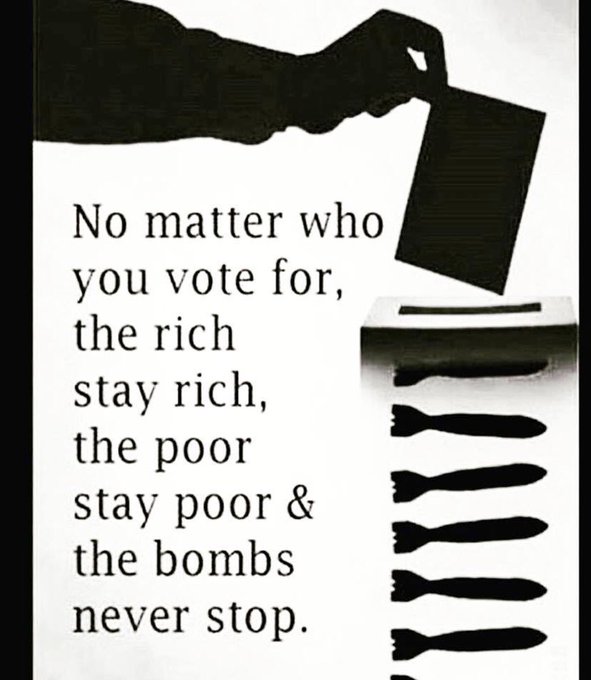
“You could buy your candidates. First, there is the senators. These guys are f***ing cheap. Got 10 grand? You can buy a senator. I’ll give you 500k right now. It doesn’t matter who wins, they’re in my pocket,” BlackRock Recruiter Serge Varlay said in a video published Tuesday by the O’Keefe Media Group, which was founded by guerilla journalist James O’Keefe.

BlackRock, the world’s largest asset management firm, can “run the world,” he also said in the video.

BlackRock is also financially benefitting from the war in Ukraine, according to Varlay.

“Ukraine is good for business, you know that right? Russia blows up Ukraine’s grain silos and the price of wheat is going to go mad up. The Ukrainian economy is tied very largely to the wheat market. The price of bread, literally everything goes up and down. This is fantastic if you’re trading,” Varlay also said. “Volatility creates opportunity to make profit. War is real f***ing good for business. It’s exciting when s*** goes wrong, right?”

Keep reading

Pentagon accounting error provides extra $6.2 billion for Ukraine military aid

The Pentagon said Tuesday that it overestimated the value of the weapons it has sent to Ukraine by $6.2 billion over the past two years — about double early estimates — resulting in a surplus that will be used for future security packages.

Pentagon spokeswoman Sabrina Singh said a detailed review of the accounting error found that the military services used replacement costs rather than the book value of equipment that was pulled from Pentagon stocks and sent to Ukraine. She said final calculations show there was an error of $3.6 billion in the current fiscal year and $2.6 billion in the 2022 fiscal year, which ended last Sept. 30.

As a result, the department now has additional money in its coffers to use to support Ukraine as it pursues its counteroffensive against Russia. And it come as the fiscal year is wrapping up and congressional funding was beginning to dwindle.

Keep reading

HOW US AND UK GOVERNMENT PROPAGANDA SPECIALISTS COLLABORATED WITH NAZIS IN UKRAINE

AMintPress investigation has found that a host of Western government officials, intelligence agents and assets have been directly involved in intimate collaboration with Nazi groups and individuals since at least 2014. This has included involvement in creating and operating the Nazi-run kill list in Ukraine, which MintPress revealed recently.

While Western media have belatedly been forced to concede that there are Nazi influences in Ukraine, many journalists have insisted that the visible fascist patches on uniforms are only there to troll Russians and that they are insignificant and a gift to Russian propaganda. Still, other journalists admit to asking Ukrainian service members to cover up their Nazi symbols. Yet, as we shall see, this collaboration goes much further.

Perhaps a good place to start is with the ongoing role of a key intelligence-linked official who has taken on a propaganda role on behalf of Ukraine since the launch in February 2022 of what the Russian government calls its “Special Military Operation.” Meet Cormac Smith, a member of the first Irish bobsleigh team to qualify for the Winter Olympics in 1992.  He has appeared in scores of news reports passing on Western propaganda talking points about the role of Russia in Ukraine. But who is Smith working for?

According to his own account, he is a “private citizen” supporting “Ukraine/global freedom.” Yet until December 2018, he was the deputy director of communications for the British Cabinet Office – the official body responsible for supporting the prime minister. He was also previously attached to the UK Foreign Office as the strategic communications advisor to the foreign minister of Ukraine.

Keep reading

Best-Selling US Author Cancels Her Own Book In Response To Anti-Russian PR Campaign

Elizabeth Gilbert, the best-selling American author, announced last week that she would soon be publishing a novel set in Russia. In light of a Russo-phobic public relations campaign unleashed against her, the Eat, Pray, Love author has since rescinded those plans.

In a “massive outpouring of reactions,” Ukrainian readers expressed “anger, sorrow, disappointment and pain,” over the book’s setting, Gilbert said. This led the author to make a self-described “course correction,” shelving the novel indefinitely.

Originally slated for a February 2024 release, Gilbert’s The Snow Forest is set in Siberia during the 20th century. It follows “a group of individuals who made a decision [in the 1930s] to remove themselves from society to resist the Soviet government and to try to defend nature against industrialization,” says Gilbert. For 44 years, they manage to live undetected but in 1980, they are discovered by a Soviet geological team. According to the Guardian, “a scholar and linguist is sent to the family’s home to bridge the chasm between modern existence and their ancient, snow forest life.”

Gilbert reported that, over the weekend, she was flooded with messages from Ukrainians telling her it was unacceptable to publish her work. “The fact that I would choose to release a book into the world right now, any book, no matter what the subject of it is, that is set in Russia,” is beyond the pale. That was the consensus amidst the deluge.

Absurd accusations were levied against Gilbert, including that her book would be akin to a novel “glorifying” the “brave Germans” during the Second World War.

According to The Atlantic, “Gilbert’s unpublished book garnered a slew of one-star reviews, all from commenters who hadn’t seen the text. Even though her book doesn’t seem to remotely venerate Russian nationalism, Gilbert committed the sin of setting her narrative in Russia – and for some of her readers, that was a deeply insensitive, borderline-treacherous act.”

The author concluded shortly after her announcement, “It is not the time for this book to be published.” Adding “I do not want to add any harm to a group of people who have already experienced and who are all continuing to experience grievous and extreme harm.” Further, she insisted to her fans that anybody who pre-ordered the book will be “fully refunded.”

Since she announced her decision to pull the book from the publication schedule, Gilbert has been criticized by authors and other writers who feel that caving to the pressure is “setting a terrible precedent.” Even vehement supporters of escalated US involvement in the Ukraine war have admonished Gilbert for participating in her own modern-day book burning.

In meekly complying with the angriest voices, she accepted their argument that setting a book in Russia is an act of collusion, even though that’s an entirely nonsensical argument. In effect, she’s allowing the irrational feelings of her readers to set the terms of acceptable discourse. For a group to block a book, it just needs to clog the comments on Instagram with hurt feelings,” Franklin Foer, staff writer at The Atlantic, said. This was after he recommended the protesters’ energy would be better spent lobbying their governments to send Kiev F-16 fighter bombers instead.

Keep reading

Senior Russian Official: Putin Has Green Light To Sever Undersea Commo Cables

Following reports attributing the September destruction of Russia’s Nord Stream gas pipelines to the Ukrainian or US government, the deputy chairman of the Russian Security Council has declared that President Vladimir Putin should feel free to sever undersea communication cables of the country’s “enemies.” 

“If we proceed from the proven complicity of Western countries in blowing up the Nord Streams, then we have no constraints – even moral – left to prevent us from destroying the ocean floor cable communications of our enemies,” said Dmitry Medvedev on Telegram. Medvedev was Russia’s president from 2008 to 2012 and is a close ally of Putin. 

Last month, NATO intelligence chief David Cattler warned of a rising risk of just such a move. “There are heightened concerns that Russia may target undersea cables and other critical infrastructure in an effort to disrupt Western life, to gain leverage against those nations that are providing security to Ukraine,” he told reporters. Naturally, the NATO intel officer’s list of potential motivations omitted retaliation-in-kind in the wake of the severing of the Nord Stream pipelines. 

“The Russians are more active than we have seen them in years in this domain,” Cattler told reporters, noting a higher pace of Russian patrols all across the Atlantic and in the Baltic and North seas. “Russia is actively mapping allied critical infrastructure both on land and on the seabed.”

The oceans are a target-rich environment. More than 400 undersea cables carry more than 95% of international internet traffic. “Altogether, they carry an estimated 10 trillion U.S. dollars worth of financial transactions every day, so these cables really are an economic linchpin,” said Cattler. 

Keep reading

Killing The Story – Bakhmut, Nick Cohen, Kakhovka, Nord Stream and Piers Morgan

The late writer, broadcaster and wit Clive James formulated what he called the ‘Barry Manilow Law’:

‘Everyone you know thinks Barry Manilow is absolutely terrible. But everyone you don’t know thinks he’s great.’ (James, cited Martin Amis, ‘Inside Story,’ Vintage, 2020, e-book, p.74)

A Media Lens version of this might read:

‘Everyone you know thinks BBC News is absolutely terrible. But everyone you don’t know thinks it’s great.’

The BBC wasn’t always quite this bad. When we started out in 2001, people like Director of News Richard Sambrook and Newsnight editor Peter Barron sent us long, respectful replies to our analysis. We were invited to appear on BBC One, BBC Two and BBC radio (we were interviewed by BBC Radio Five Live). Barron even blogged about us positively on the BBC website.

All of this has gone. Our criticisms, now, are met with paranoid silence. And there is much for BBC journalists to be paranoid about, for they are now clearly operating as de facto agents of state.

When the US targeted Syria for ‘regime change’ in 2011, a flood of anti-Assad atrocity claims and pro-‘rebel’ propaganda washed across the BBC’s news pages. The BBC’s campaign ended the moment the US campaign for regime change ended. When Iran, Venezuela and Libya fell under the US crosshairs, the same BBC propaganda machine cranked into action. Similarly, anyone measuring BBC performance 2022-2023 will find hundreds of reports and comment pieces favouring the Ukraine/Nato version of events, against one or two favouring the Russian version of events. This, even though our country is technically not at war with Russia – certainly Russia is not attacking us. It couldn’t be more obvious that when the green light for war and ‘regime change’ is on, the BBC is expected to host daily propaganda pieces to generate public support.

In his superb book, ‘Falsehood in Wartime: Propaganda Lies of the First World War’, published in 1928, Lord Arthur Ponsonby analysed the key propaganda techniques that had been used to deceive the public during the catastrophic war of 1914-1918:

  1. We do not want war.
  2. The opposite party alone is guilty of war.
  3. The enemy is inherently evil and resembles the devil.
  4. We defend a noble cause, not our own interests.
  5. The enemy commits atrocities on purpose; we make ‘mistakes’.
  6. The enemy uses forbidden weapons.
  7. We suffer small losses, those of the enemy are enormous.
  8. Recognised artists and intellectuals back our cause.
  9. Our cause is sacred.
  10.  All who doubt our propaganda are traitors.

Most BBC, Guardian and other ‘mainstream’ war coverage is a cocktail of these ten forms of bias.

Keep reading

CIA Knew Ukraine Was Planning To Bomb Nord Stream Pipelines

Several Western media outlets reported Tuesday that the CIA warned Ukraine last year not to bomb the Nord Stream natural gas pipelines that connect Russia and Germany.

In recent months, US and other Western officials speaking to the media have suggested Ukraine was behind the Nord Stream sabotage. Most reports on the issue have ignored or dismissed the fact that journalist Seymour Hersh has sources who said President Biden ordered the bombing of the Nord Stream pipelines.

According to unnamed US officials speaking to The New York TimesDutch intelligence officials told the CIA in June 2022 that they learned of a Ukrainian military plot to attack the pipelines. The CIA then warned Ukraine not to carry out the attack, and US officials now believe it was postponed to September 2022.

A European official told the Times that Ukraine’s original plan involved Ukrainian special forces renting a submersible vessel to attack the pipelines. The CIA was also said to warn Germany about a potential plot to sabotage Nord Stream.

The latest Nord Stream allegations were first reported by the news outlet Die Zeit and NOS, a Dutch broadcaster. They claimed that the Ukrainian plot was overseen by Valery Zaluchny, the commander-in-chief of Ukraine’s armed forces.

For his part, Ukrainian President Volodymyr Zelensky denied Kyiv was involved in the destruction of the pipelines. “I am president, and I give orders accordingly,” he said. “Nothing of the sort has been done by Ukraine. I would never act that way.”

The idea that the US suspected Ukrainian involvement in the Nord Stream bombings first surfaced in a New York Times report that was published on March 7. Sources told Seymour Hersh that the report was a cover-up planted in the paper by the CIA to discredit his story that points the finger at President Biden.

Hersh’s reporting on the Nord Stream plot hasn’t been confirmed, but the US is still a prime suspect as it had a clear motive and US officials made threats against the pipelines. On February 7, 2022, President Biden vowed to “bring an end” to the Nord Stream 2 pipeline if Russia invaded Ukraine.

Keep reading

The Government Keeps Lying to Us About Ukraine. Where Is the Outrage? 

On June 4, a group referring to itself as the “Polish Volunteer Corps” issued a boastful announcement confirming its participation in a series of cross-border ground offensives into Russia. News of these audacious raids was jarring enough, given the many prior assurances of U.S. and Ukrainian war planners, who insisted no attacks would be carried out inside Russian territory. It was all the more conspicuous that the incursion units were apparently comprised of Polish soldiers.

Poland, of course, is not only a NATO member state, but the NATO member state with which the U.S. has most assiduously aligned itself since Russia’s February 2022 invasion of Ukraine (Polish government officials deny any formal connection to the “Polish Volunteer Corps”). So the raids raised an obvious, yet oft-neglected question: Just what the hell is U.S. policy in Ukraine?

If you turn on the TV, you’ll find pundits on every channel loyally reciting from memory the broad parameters of the U.S. mission—at least as it’s being conveyed in daily rhetorical flourishes by Biden Administration officials, assorted Congressional chest-thumpers, and brave think tank warriors. Freedom and autocracy are locked in a great cosmic battle of good versus evil, or so goes the usual storyline—most often narrated with a degree of moral complexity that can be generously compared to a lower-tier Marvel Movie.

But apart from this steady stream of heavily recycled platitudes, was it ever plainly disclosed to Americans—the chief financial sponsors of the Ukraine war effort, after all—that the scope of the war effort they’ve found themselves subsidizing would eventually expand to include platoons of Polish soldiers marching straight into Russia? Did anyone back in Washington, D.C. sign off on this, or was there ever an opportunity granted for public consideration of its potentially foreboding implications?

Keep reading