
Are you really, though?

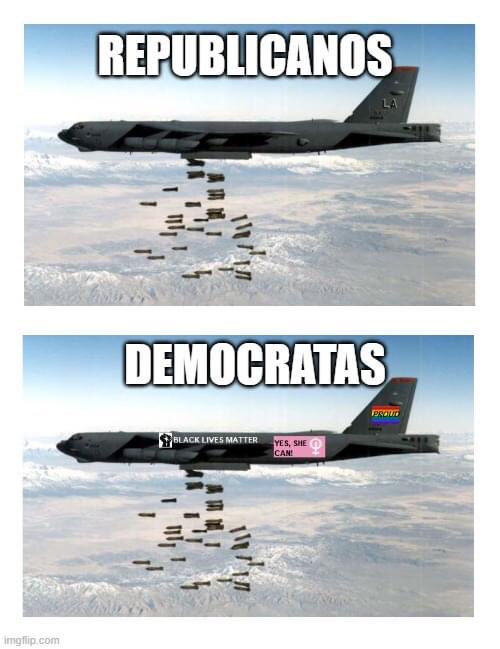

The National Defense University is a higher-learning facility run by the Pentagon that offers graduate programs mostly to members of the US military. “I also tasked the military services to make the People’s Liberation Army [China’s military] the pacing threat in our professional schools, programs and training,” the Pentagon chief said.
Esper also warned of the threat China and Russia pose to US global hegemony. “Our strategic competitors China and Russia are attempting to erode our hard-earned gains,” he said.
The former Raytheon lobbyist also touted a new plan to increase the fleet of the US Navy that Esper has dubbed “Battle Force 2045.” The plan calls for the Navy to have a 500 ship fleet by 2045. Currently, the US Navy has just under 300 battle-ready ships.
The Pentagon released its annual report on China’s military in September. The report says China has the world’s largest navy and has “an overall battle force of approximately 350 ships and submarines.”
Despite having more ships, China’s navy is vastly smaller than Washington’s in terms of tonnage. One example of this is the number of aircraft carriers each nation has, with the US having eleven aircraft carriers, while China only has two.


When President Trump unveiled Operation Warp Speed in May, he declared that it was “unlike anything our country has seen since the Manhattan Project.”
The initiative — to accelerate the development of Covid-19 vaccines and therapeutics — lacks the scale, and the degree of secrecy, of the effort to build the atomic bomb. But Operation Warp Speed is largely an abstraction in Washington, with little known about who works there other than its top leaders, or how it operates. Even pharmaceutical companies hoping to offer help or partnerships have labored to figure out who to contact.
Now, an organizational chart of the $10 billion initiative, obtained by STAT, reveals the fullest picture yet of Operation Warp Speed: a highly structured organization in which military personnel vastly outnumber civilian scientists.
Donald Trump did not deny media reporting that the US Department of Defense has set up a task force to examine “unidentified alien phenomena” after the Air Force released a video earlier this year showing pilots flying by what many people have speculated was a UFO.
“Can you explain why the Department of Defense has set up a UFO task force?” Fox News host Maria Bartiromo asked Mr Trump in an interview on Sunday.
“Are there UFOs?” she asked.
“Well, I’m going to have to check on that. I mean, I’ve heard that. I heard that two days ago. So I’ll check on that. I’ll take a good, strong look at that,” Mr Trump said.
He then quickly segued into a boast about US military might, which some people on Twitter took to be the president threatening aliens with human weaponry.
“I will tell you this, we now have created a military the likes of which we’ve never had before, in terms of equipment. The equipment that we have, the weapons that we have, and hopefully — hope to god we never have to use them,” Mr Trump said.
SpaceX and the Pentagon just signed a contract to jointly develop a new rocket that can launch into space and deliver up to 80 tons of cargo and weaponry anywhere in the world — in just one hour.
Tests on the rocket are expected to begin as early as next year, Business Insider reports. It’s expected to shuttle weapons around the world 15 times faster than existing aircraft, like the US C-17 Globemaster.
“Think about moving the equivalent of a C-17 payload anywhere on the globe in less than an hour,” General Stephen Lyons, head of US Transportation Command said at a Wednesday conference.
The Orange County district attorney’s office said Tuesday that Ian Charles Schenkel, founder and chief executive of Ontario-based Haliburton International Foods, was charged last month with engaging in underage prostitution.
Schenkel was arrested Sept. 29 in Newport Beach. The following day, Amanda Emilia Perez, 22, of Huntington Beach was arrested on suspicion of facilitating the crimes.
Authorities are asking any potential victims to call the Newport Beach Police Department at (949) 644-3790.
Schenkel, 59, has been charged with six felony counts, including unlawful sex with a minor, unlawful sexual intercourse and a lewd act on a child 14 or 15.
There were also two misdemeanor counts of soliciting prostitution with a minor.
Perez was also charged with six felony counts, including human trafficking of a victim under 18, human trafficking of a victim under 16 and pandering with a minor for the purposes of prostitution.
 Hellbound and Down
You must be logged in to post a comment.