
Just look…

Georgia Democrat and Senate candidate Jon Ossoff has been compensated by a Hong Kong media conglomerate whose owner has spoken out against pro-democracy protests in Hong Kong, according to his most recent financial disclosure.
Ossoff, whose role as CEO of a London-based producer of investigative documentaries has drawn scrutiny over the years, reported in an amended financial statement that he has received at least $5,000 from PCCW Media Limited over the last two years — a detail that has previously gone unreported. Ossoff did not disclose his ties to PCCW in his initial financial report, which he filed in May.
PCCW, the largest telecom agency in Hong Kong, is run by Chairman Richard Li, son of Hong Kong’s richest man, Li Ka-shing. Li also serves as a councilor for the Center for Strategic and International Studies, a Washington, D.C., think tank. But for years, Li has spoken out against Hong Kong independence and the pro-democracy protests that have rocked the island as the Chinese Communist Party has consolidated control.
An Ossoff campaign spokesperson told National Review that the payments stemmed from the airing of “two investigations produced by Jon’s company of ISIS war crimes against women and girls,” representing “one of dozens of TV stations and distributors in more than 30 countries that have aired Jon’s work.”
Congressman Adam Schiff, the Chairman of the House Intelligence Committee and, not coincidentally, the single most shameless pathological liar in the U.S. Congress by a good margin, appeared on CNN with Wolf Blitzer on October 16 to discuss The New York Post story about Hunter Biden’s emails. The CNN host asked him a rhetorical question embedded with baseless assumptions: “does it surprise you at all that this information Rudy Giuliani is peddling very well could be connected to some sort of Russian government disinformation campaign?”
Schiff stated definitively that it is: “we know that this whole smear on Joe Biden comes from the Kremlin,” adding: “clearly, the origins of this whole smear are from the Kremlin, and the President is only too happy to have Kremlin help in amplifying it.” Referencing Trump’s promotion of The New York Post reporting while at his White House desk, Schiff said: “there it is in the Oval Office: another wonderful propaganda coup for Vladimir Putin, seeing the President of the United States holding up a newspaper promoting Kremlin propaganda.”
Schiff, as he usually does when he moves his mouth, was lying: exploiting CNN’s notorious willingness to allow Democratic officials to spread disinformation over its airwaves without the slightest challenge. Schiff claimed certainty about something for which there was and still is no evidence: that the Russians played a role in the procurement and publication of the contents of Hunter Biden’s laptop.
As he also usually does when he publicly lies, Schiff was merely echoing the propaganda of current and former operatives of the CIA and other arms of the intelligence community who abuse their power to interfere in U.S. domestic politics: the very factions over which the Intelligence Committee run by Schiff is supposed to exercise oversight supervision, not serve as their parrot. During the same week as Schiff’s CNN appearance, as Politico reported, “more than 50 former senior intelligence officials signed on to a letter outlining their belief that the recent disclosure of emails allegedly belonging to Joe Biden’s son ‘has all the classic earmarks of a Russian information operation.’”

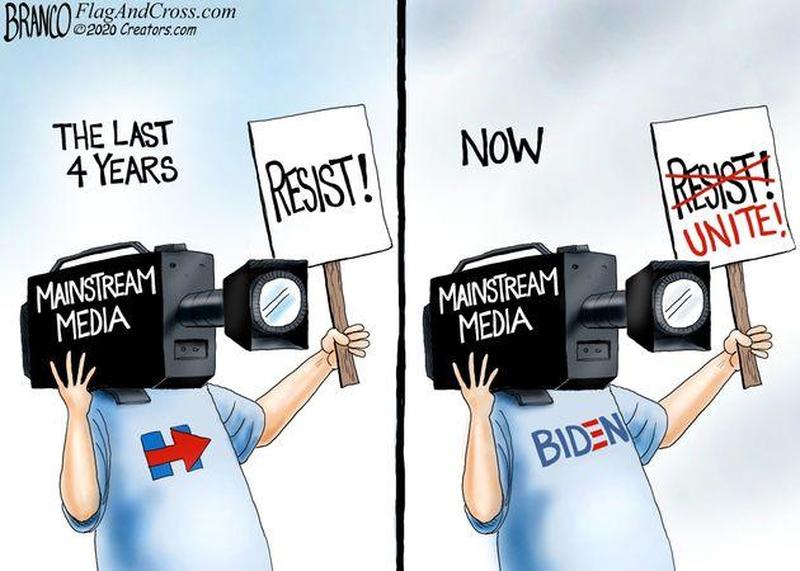
“Trump Anxiety Disorder” has continued to feature in mass media stories to this day, right up until shortly before the election. The narrative has been that Trump is so horrible that he is somehow causing liberals to have psychological breakdowns with his awfulness.
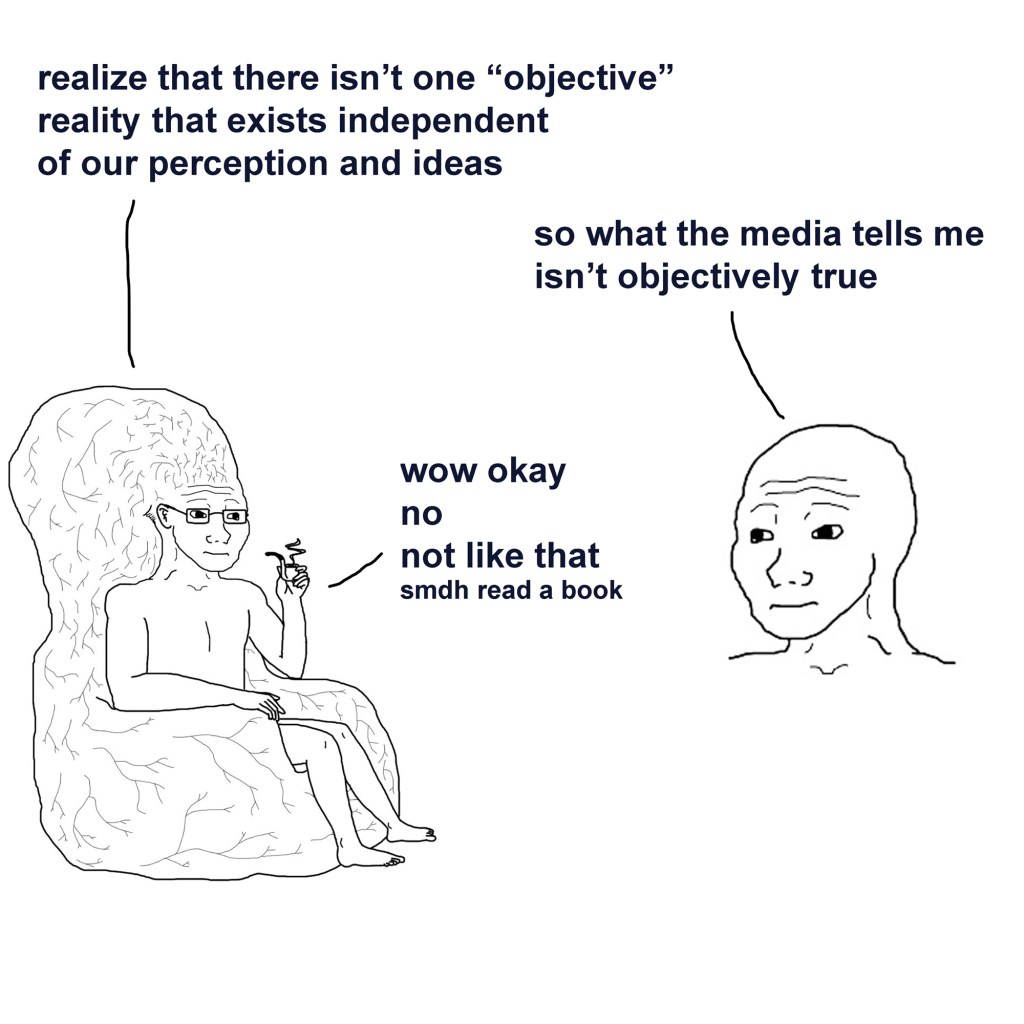
What gets overlooked in these analyses, as is so often the case with human perception in general, is the means by which people are taking in the information that is making them so anxious–in this case the news media.
It is not Trump himself who’s been making people feel terrified of a tyrannical Russian agent ending democracy in America and ruling with an iron fist, it is years of shrieking, hysterical coverage about Trump from the mass media.
 Hellbound and Down
You must be logged in to post a comment.