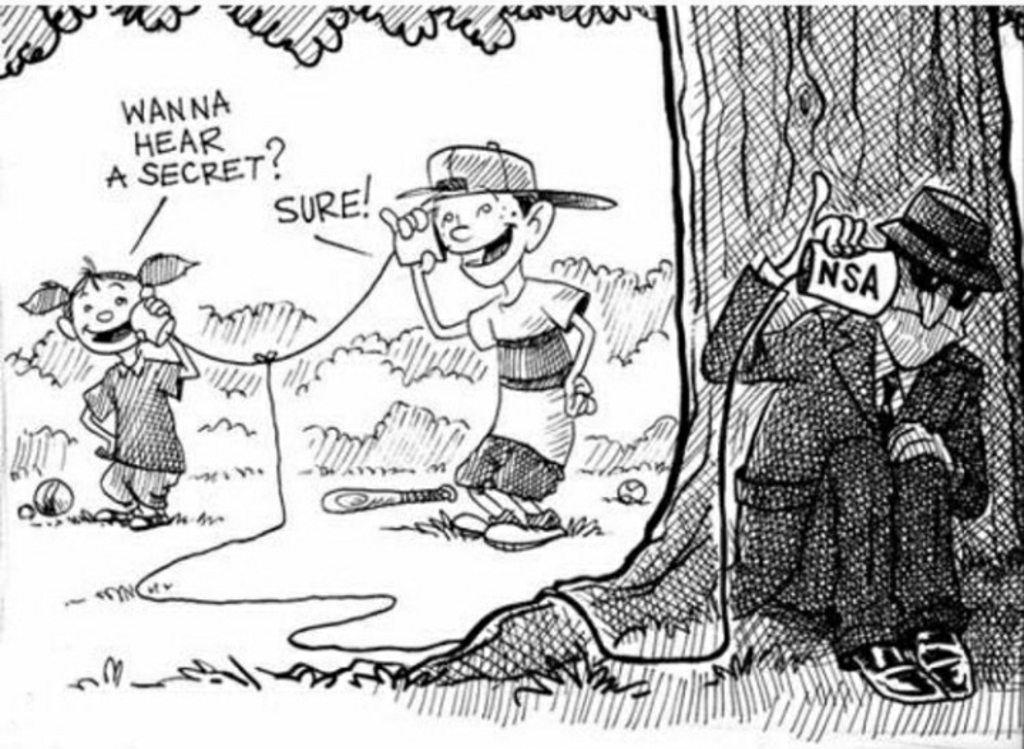
Yes, they do…

The Biden administration is reportedly considering partnering with private companies to track “extremist chatter by Americans online” as part of a plan that would allow federal agencies to circumvent the current legal limits on data collection.
According to CNN’s sources inside the Department of Homeland Security (DHS), the plans would target private and encrypted messaging apps such as Telegram and involve “using outside entities who can legally access these private groups to gather large amounts of information that could help DHS identify key narratives as they emerge.”
Under existing law, the DHS is barred from assuming false identities to gain access to private groups and apps.
But according to CNN, some of the outside entities that are being considered by the DHS include researchers and non-profits that use covert identities to access private groups on platforms such as Telegram.
The Biden administration is considering using outside firms to track extremist chatter by Americans online, an effort that would expand the government’s ability to gather intelligence but could draw criticism over surveillance of US citizens.The Department of Homeland Security is limited in how it can monitor citizens online without justification and is banned from activities like assuming false identities to gain access to private messaging apps used by extremist groups such as the Proud Boys or Oath Keepers.Instead, federal authorities can only browse through unprotected information on social media sites like Twitter and Facebook and other open online platforms.
The plan being discussed inside DHS, according to multiple sources, would, in effect, allow the department to circumvent those limits. A source familiar with the effort said it is not about decrypting data but rather using outside entities who can legally access these private groups to gather large amounts of information that could help DHS identify key narratives as they emerge.
By partnering with research firms who have more visibility in this space, the DHS could produce information that would likely be beneficial to both it and the FBI, which can’t monitor US citizens in this way without first getting a warrant or having the pretext of an ongoing investigation. The CIA and NSA are also limited on collecting intelligence domestically.
It would, however, involve empowering a unit at DHS that is already under fierce scrutiny for its bungled handling of the Portland riots last summer, an episode that included collecting intelligence reports on journalists and unmasking private citizens, according to a source familiar with a recent internal report on the matter.
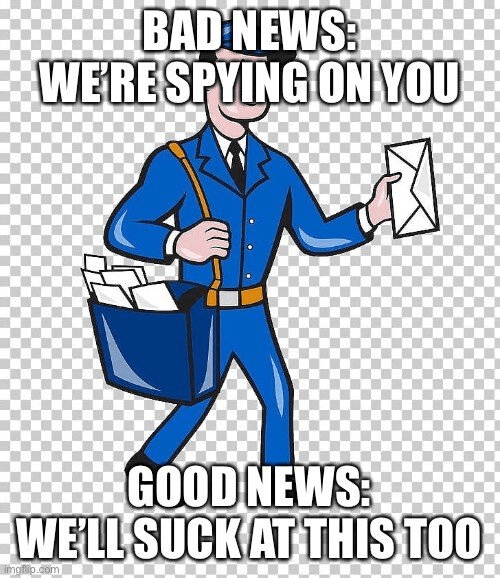
The law enforcement arm of the U.S. Postal Service has been quietly running a program that tracks and collects Americans’ social media posts, including those about planned protests, according to a document obtained by Yahoo News.
The details of the surveillance effort, known as iCOP, or Internet Covert Operations Program, have not previously been made public. The work involves having analysts trawl through social media sites to look for what the document describes as “inflammatory” postings and then sharing that information across government agencies.
“Analysts with the United States Postal Inspection Service (USPIS) Internet Covert Operations Program (iCOP) monitored significant activity regarding planned protests occurring internationally and domestically on March 20, 2021,” says the March 16 government bulletin, marked as “law enforcement sensitive” and distributed through the Department of Homeland Security’s fusion centers. “Locations and times have been identified for these protests, which are being distributed online across multiple social media platforms, to include right-wing leaning Parler and Telegram accounts.”
A number of groups were expected to gather in cities around the globe on March 20 as part of a World Wide Rally for Freedom and Democracy, to protest everything from lockdown measures to 5G. “Parler users have commented about their intent to use the rallies to engage in violence. Image 3 on the right is a screenshot from Parler indicating two users discussing the event as an opportunity to engage in a ‘fight’ and to ‘do serious damage,’” says the bulletin.
“No intelligence is available to suggest the legitimacy of these threats,” it adds.
Many in today’s society have been brainwashed into believing that “smart” devices exist to make our lives easier and more convenient. The ugly truth, however, is that Nest thermostats, Alexa speakers, Apple watches and other always-listening, always-watching electronics were actually designed for the purpose of enslaving you under constant surveillance.
People who live in “smart” homes can now be monitored 24 hours a day, seven days a week without the need for a warrant or probable cause, thanks to this clever little “smart” scheme. And in the United States where privacy laws are pitifully weak, there is almost nothing anyone can do about it other than to try to avoid “smart” devices whenever possible.
The problem is that even if you do not personally own anything “smart,” chances are someone you know does. When you visit a friend or a family member, for instance, “smart” devices throughout their homes will watch and listen to you without your consent.
In many cases, consumer spy devices like the “Amazon Echo” relay the data they capture back to the mother ship, typically for the purpose of selling it to third parties. In some cases, however, “smart” devices relay people’s private information to police departments and even the FBI, which could end up using it to falsely incriminate certain targets.
The US and West German intelligence agencies clandestinely owned the world’s leading manufacturer of encryption devices, Swiss-based Crypto AG, enjoying throughout the Cold War direct access to closely guarded secrets of more than 120 countries, the Washington Post reported on Tuesday.
“It was the intelligence coup of the century,” the newspaper quoted a CIA report as saying. “Foreign governments were paying good money to the US and West Germany for the privilege of having their most secret communications read by at least two (and possibly as many as five or six) foreign countries.”
For decades, since World War II and well into the 21st century, Crypto was selling sophisticated equipment for coded correspondence to state clients all over the world, among them Iran, India and Pakistan, countries of Latin America and the Vatican, the report said.
According to the publication, from 1970 the CIA and the National Security Agency together with their German partners controlled nearly every aspect of the company’s operations, including “hiring decisions, designing its technology, sabotaging its algorithms and directing its sales targets.”
Google is ramping up its monopoly on tracking users with a new system called FloC, or Federated Learning of Cohorts”. It is currently in test mode with some Chrome users, and you can quickly find out if you are being “FloCed” by going to EFF’s AmIFloced.org site.
Google is running a Chrome “origin trial” to test out an experimental new tracking feature called Federated Learning of Cohorts (aka “FLoC”). According to Google, the trial currently affects 0.5% of users in selected regions, including Australia, Brazil, Canada, India, Indonesia, Japan, Mexico, New Zealand, the Philippines, and the United States. This page will try to detect whether you’ve been made a guinea pig in Google’s ad-tech experiment.

 Hellbound and Down
You must be logged in to post a comment.