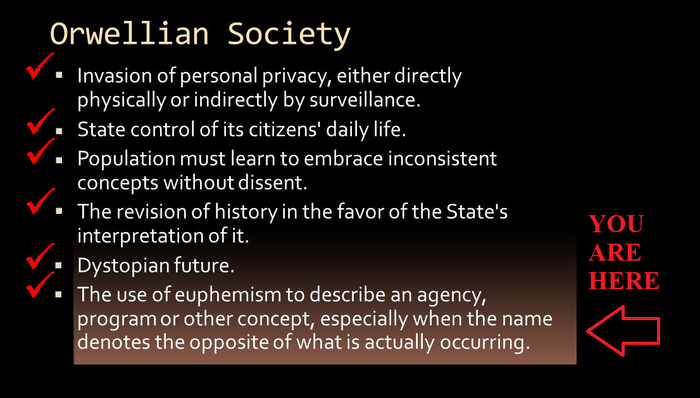
And here we are…

Sen. Rand Paul (R-Ky.), a fierce protector of freedom and privacy, says it is time to ban federal agencies from being able to track Americans’ behavior by buying their cell phone location data from commercial vendors.
“When the government is trying to snoop on your behavior, it’s wrong, and there should be laws against it,” Paul told the “Just the News, Not Noise” television show in an exclusive interview aired Wednesday night.
Paul’s comments came after newly released government documents revealed that the Centers for Disease Control and Prevention (CDC) tracked Americans’ compliance with pandemic lockdowns by buying and monitoring their cellphone geospatial data from commercial vendors.
Such data is collected on each American from apps they use on their smart phones and sold by third-party brokers unless a user explicitly opts out of such collection for each app. Increasingly, law enforcement and other government agencies have been acquiring the data for official work, though the CDC was the first publicly disclosed use to track private Americans’ health behavior.
The data also was bought and used by the election integrity group True the Vote to identify people suspected of illegally collecting ballots in the 2020 Georgia election, a revelation that has prompted a formal investigation by the Georgia Secretary of State’s office.
THE STATEN ISLAND district attorney’s use of the highly controversial Clearview face recognition system included attempts to dig up the social media accounts of homicide victims and was paid for with equally controversial asset forfeiture cash, according to city records provided to The Intercept.
Clearview has garnered international attention and intense criticism for its simple premise: What if you could instantly identify anyone in the world with only their picture? Using billions of images scraped from social media sites, Clearview sells police and other governmental agencies the ability to match a photo to a name using face recognition, no search warrant required — a power civil libertarians and privacy advocates say simply places too much unsupervised power in the hands of police.
The use of Clearview by the Staten Island district attorney’s office was first reported by Gothamist, citing city records obtained by the Legal Aid Society. Subsequent records procured via New York State Freedom of Information Law request and provided to The Intercept now confirm the initial concerns about the tool’s largely unsupervised use by prosecutors. According to spokesperson Ryan Lavis, the DA’s office “completely stopped utilizing Clearview as an investigative tool last year.”
Yet the documents provide new information about how Staten Island prosecutors used the notorious face recognition tool and show that the software was paid for with funds furnished by the Justice Department’s Equitable Sharing Program. The program lets state and local police hand seized cash and property over to a federal law enforcement agency, whereupon up to 80 percent of the proceeds are then sent back the original state or local department to pocket.
The Centers for Disease Control and Prevention (CDC) bought access to location data harvested from tens of millions of phones in the United States to perform analysis of compliance with curfews, track patterns of people visiting K-12 schools, and specifically monitor the effectiveness of policy in the Navajo Nation, according to CDC documents obtained by Motherboard. The documents also show that although the CDC used COVID-19 as a reason to buy access to the data more quickly, it intended to use it for more general CDC purposes.
Location data is information on a device’s location sourced from the phone, which can then show where a person lives, works, and where they went. The sort of data the CDC bought was aggregated—meaning it was designed to follow trends that emerge from the movements of groups of people—but researchers have repeatedly raised concerns with how location data can be deanonymized and used to track specific people.
The documents reveal the expansive plan the CDC had last year to use location data from a highly controversial data broker. SafeGraph, the company the CDC paid $420,000 for access to one year of data to, includes Peter Thiel and the former head of Saudi intelligence among its investors. Google banned the company from the Play Store in June.
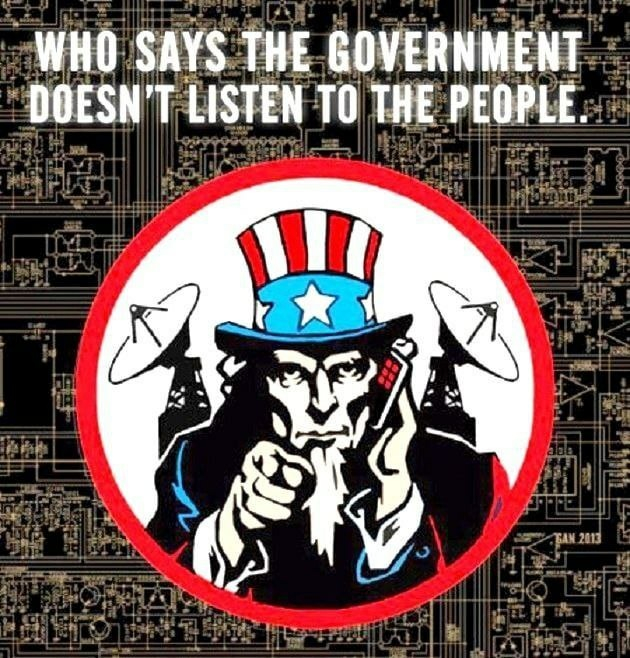
The FBI conducted millions of searches of Americans’ electronic data in 2021 without a warrant, according to a new report released by the Office of the Director of National Intelligence.
The FBI claims it conducted the searches as they sought to curb cyberattacks.
“In the first half of the year, there were a number of large batch queries related to attempts to compromise U.S. critical infrastructure by foreign cyber actors,” according to the report, Bloomberg reported. “These queries, which included approximately 1.9 million query terms related to potential victims — including U.S. persons — accounted for the vast majority of the increase in U.S. person queries conducted by FBI over the prior year.”
The ACLU called the FBI’s warrantless spying an invasion of privacy ‘on an enormous scale.’
No matter where you stand politically, a growing body of facts raises the question: Is there systemic corruption or misfeasance at work inside America’s intelligence agencies?
By that, I don’t mean people stealing money. I mean officials who are stealing our privacy — using the tools of intelligence-gathering and law-enforcing, which are meant to protect Americans, to instead spy on them, to gather information that isn’t the government’s business (at least not without a court’s approval). And, in some instances, it appears, to punish or silence those with whom they disagree — personal and political foes, in and out of government — rather than to pursue and protect Americans from the country’s real enemies.
Perhaps more alarming is the growing evidence that suggests some officials at all levels in intelligence and justice agencies are operating in a way that is clearly intended to serve their own political beliefs and interests — not the public’s interests.
And sometimes, it appears, they operate not just in direct defiance of their superiors but of the Congress, the courts and the very laws of the land as well. (Almost as disturbing, Congress, for its part, seems all too willing to allow all of this to take place, when it becomes known, rather than using its authority to stop the misfeasance, punish the miscreants who lie or stonewall, and protect their constituents.)
This is not, in my view, a partisan political question.
The evidence leading us to ask such a disturbing question indicates there are forces inside our intelligence agencies that are more persistent and powerful than any single political party or administration. They can usurp the intentions of the many fine intelligence officers serving our country.
IN THE MONTHS leading up to Russia’s invasion of Ukraine, two obscure American startups met to discuss a potential surveillance partnership that would merge the ability to track the movements of billions of people via their phones with a constant stream of data purchased directly from Twitter. According to Brendon Clark of Anomaly Six — or “A6” — the combination of its cellphone location-tracking technology with the social media surveillance provided by Zignal Labs would permit the U.S. government to effortlessly spy on Russian forces as they amassed along the Ukrainian border, or similarly track Chinese nuclear submarines. To prove that the technology worked, Clark pointed A6’s powers inward, spying on the National Security Agency and CIA, using their own cellphones against them.
Virginia-based Anomaly Six was founded in 2018 by two ex-military intelligence officers and maintains a public presence that is scant to the point of mysterious, its website disclosing nothing about what the firm actually does. But there’s a good chance that A6 knows an immense amount about you. The company is one of many that purchases vast reams of location data, tracking hundreds of millions of people around the world by exploiting a poorly understood fact: Countless common smartphone apps are constantly harvesting your location and relaying it to advertisers, typically without your knowledge or informed consent, relying on disclosures buried in the legalese of the sprawling terms of service that the companies involved count on you never reading. Once your location is beamed to an advertiser, there is currently no law in the United States prohibiting the further sale and resale of that information to firms like Anomaly Six, which are free to sell it to their private sector and governmental clientele. For anyone interested in tracking the daily lives of others, the digital advertising industry is taking care of the grunt work day in and day out — all a third party need do is buy access.
It isn’t an exaggeration to say that not a single day goes by without a new data exploit, hack, breach, leak, or scandal involving censorship by private companies and government agencies. Of course, this is all compounded even further by the fact that more devices contain more sensors that connect to the internet than ever before, offering many new methods for targeting groups and individuals. It has been estimated that by 2030 there could be 125 billion devices — potentially 15 per user — that in some way will comprise the ever-expanding Internet of Things ecosystem.
Amid this sea of two-way data traffic, we have a massive amount of targeted advertising and personally identifiable information extraction that has shown very often to all be done without users’ consent. If there is consent at all, it very likely is through lenthy and confusing Terms and Conditions that almost no one reads in their entirety. Worse still is the proven targeting of children’s data. Lawmakers continue to attempt to rein in these consumer-unfriendly practices, but their current proposals will likely do more harm than good. At this point it should be obvious that even if legislative measures are effectively created, such a waiting game only leaves all of us, including our kids, increasingly vulnerable at any given moment. People want – and deserve – to become personally responsible for their own security and privacy.
Fortunately, there are residential proxy providers on the opposing side that understand the rising awareness by the public of these data violations and creepy intrusions. These companies are doing everything they can to offer the tools necessary for individuals to protect their family’s data and privacy, while also offering increasing freedom to reach the websites that we do want to visit.
I thought I knew all about the information that consumer reporting agencies were collecting on me. Then I discovered The Work Number—a database that reports every paycheck I’ve received from my company, with net and gross amounts, going back to my hire date six years ago.
Another consumer reporting agency shows the results of a 2016 echocardiogram. (It was normal.) Yet another tracks insurance claims on my home and car. If I’d made too many returns at retail stores or bounced a check at a casino, that could show up in a database as well.
“Any data point that someone can track, there’s going to be a bureau or someone gathering information and selling that information,” says Matthew Loker, a consumer protection attorney in Arroyo Grande, California.
Unfortunately, not all the information being reported is accurate—and mistakes can have serious consequences. Loker says one of his clients lost a lucrative job offer because an employment screening company confused her with a drug smuggler. By the time the error was fixed, the position was filled. Other people have been denied insurance, apartments, bank accounts, and government benefits because of database errors.
But discovering and correcting mistakes is no small task.
 Hellbound and Down
You must be logged in to post a comment.