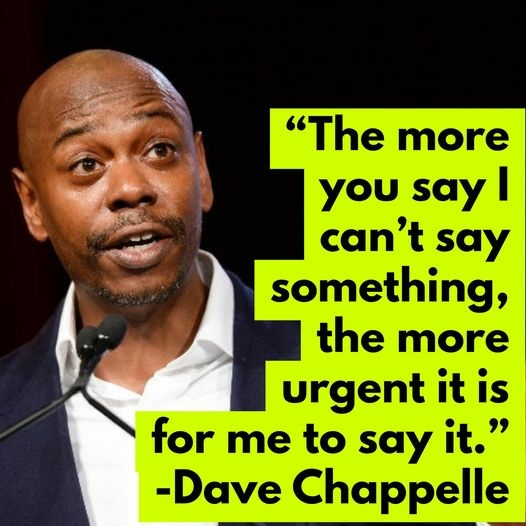
Dave Chappelle on censorship…

Although porn is beyond normalized in the U.S.—whether for good or bad—it is, apparently, utterly illegal in China. To help aid in combating the spread of porn in the country, a team of scientists at Beijing Jiaotong University has developed a “mind-reading” cap that can read men’s minds and sound an alarm when they’re watching illicit content. Particularly “porn appraisers”—a.k.a. jian huang shi—whose job it is to rid the Chinese internet of the material.
The South China Morning Post reports that the device could “speed up the work” of these porn appraisers (which the outlet refers to literally as “censors”) by alerting them—with an alarm—as to when they’re seeing pornographic material. These appraisers—much like Facebook content reviewers, it seems—scan thousands upon thousands of images and videos every day on the look out for porn. The problem is sometimes they miss images: this cap is supposed to solve that problem.
According to the scientists, who published their research the Journal of Electronic Measurement and Instrumentation, the cap is able to pick up on a spike in brainwaves triggered by a wearer seeing explicit content. The researchers tested the cap on 15 male university students between the ages of 20 and 25 as they watched images flit one after another on a computer screen; sounding an “alarm” any time one of the wearer’s saw (somewhat) pornographic images amidst normal, acceptable ones.
“The prototype device proved that human-machine collaboration was feasible ‘for bad information detection,’” Xu Jianjun, director of the electrical engineering experiment center at Beijing Jiaotong University told the Post. As the news outlet notes, human eyes and brains still outperform machines—which utilize machine-learning algorithms—when detecting porn; at least some of the time, particularly when the images contain complex backgrounds.
Sarah Kate Ellis, the chief executive of the LGBTQ+ advocacy organization GLAAD, suggested that there is a need for government intervention in the prevention of online “hate speech” against the LGBTQ+ community.
In an appearance on “CBS Mornings,” Ellis was asked who and what should be cracking down on hate speech against LGBTQ+ people on online platforms.
“We do need government intervention here and we need the right policies,” Ellis responded.
“This has been going on for over a decade and congress has been really ineffective to say the best,” she added.
Ellis argued that online hate speech against the LGBTQ+ community is to blame for the increase in anti-LGBTQ legislation at the state level.
During the interview, Ellis cited a report by her organization that found that 84% of LGBTQ+ individuals aged 18 and above feel there are “not enough” protections in the online world against harassment and discrimination. The report singled out Facebook, Twitter, YouTube, Instagram, and TikTok as not having the essential protections needed to protect the LGBTQ+ community.
UN Secretary-General Antonio Guterres is introducing a new element into the concept of the world organization’s peacekeeping activities: countering “misinformation” and “hate speech.”
And tech and media companies are being enlisted to help in weeding out information that the UN decides to consider as harmful.
Given that, like the saying goes, truth is typically the first casualty of any war – and this goes for any and all sides involved – it’s difficult to envisage how the UN might even start going about the task of “countering” misinformation and hate speech while maintaining its neutral and credible position in peacekeeping.
When he addressed a Security Council debate on peacekeeping operations, dedicated specifically to the “key role” of strategic communications, Guterres did not offer useful insight into that problem, but he did put strong emphasis on UN’s Global Communications Strategy, describing strategic communication variously as critical and central for successful peacekeeping.
Nearly a year ago, former New York Times Journalist Alex Berenson was permanently banned from Twitter for writing the following lines about the Covid shot: “It doesn’t stop infection. Or transmission. Don’t think of it as a vaccine. Think of it—at best—as a therapeutic with a limited window of efficacy and terrible side effect profile that must be dosed IN ADVANCE OF ILLNESS. And we want to mandate it? Insanity.”
From the beginning of the Covid hysteria, we followed and cited Berenson many times on the Ron Paul Liberty Report. Berenson took government and mainstream media rhetoric about the pandemic the way journalists used to take it: with a heavy dose of skepticism. And not long after he was banned for saying so, even the CDC Director admitted what he wrote is true.
But at the time, he was a danger to the government narrative on Covid, and the “private” social media company Twitter silenced him. They did not only silence one reporter who was a thorn in their side, however. They preemptively silenced anyone else who might might question the narrative. The message was clear to all the would-be Alex Berensons out there: do you want to follow him to the digital gulag?
So not only was Berenson’s free speech under attack—free speech itself was under attack.
The Office of Communications (Ofcom), UK’s broadcasting and telecommunications authority, has issued a roadmap for tech companies to start preparing to implement the Online Safety Bill.
That’s despite the fact that the bill is still in parliamentary procedure and is yet to pass.
In fact, Ofcom refers to this democratic procedure, the outcome of which should be unknown until MPs vote on the proposal, as a mere technicality: “A countdown to a safer life online.”
Ofcom announced the roadmap document on Twitter, saying that it has presented its plans for the first 100 days of acting as online safety regulator – for when it starts overseeing the implementation of a law that does not yet exist.
And many civil and digital rights advocates are adamant that it should not exist, referring sometimes to the bill as “a censor’s charter.”
The National Education Association’s (NEA) annual conference is underway in Chicago, and the group is calling for a national policy of mandatory masking, mandatory vaccinations, and rejecting the words “mother” and “father.”
The NEA is the largest labor group in the U.S., with more than three million members, including Jill Biden. Its president is Becky Pringle.
The Chicago conference is chock-full of woke agenda items called New Business Initiatives (NBI). They include progressive language involving issues that seem to have little to do with proper education. NBIs are proposals that delegates must vote on in order to pass.
Terry Stoops, a conservative education expert in North Carolina, exposed this year’s NBIs in a lengthy post on Twitter.
Three children in the UK were left without a mother after she died from a massive stroke determined to be caused by blood clots that formed after she received the AstraZeneca coronavirus vaccine, but Twitter is labeling conversations about this information taking place on the platform as “misinformation.”
Previously healthy Lucy Taberer, whose youngest is a five-year-old boy, succumbed to the consequences of the Covid shot 22 days after she was vaccinated. At first, the 47-year-old experienced mild side-effects, described in reports as common, to then develop a bruise, skin rash, and pain that the doctors at first dismissed as being caused by kidney stones.
In the end, it turned out that the victim’s reaction to the vaccine had been to develop blood clots that proved to be fatal.
Her death certificate reads that Taberer died of cerebral venous sinus thrombosis and vaccine-associated thrombosis with thrombocytopenia.
Local media, including Leicester Mercury, reported about it, and Taberer’s step daughter tweeted a link to the story, but was quickly shut down by Twitter, which labeled the post as “misleading.”
To add insult to injury, she was advised to click another link, provided by Twitter’s “fact-checkers,” that would “explain” why health officials think Covid vaccines are safe “for most people.”
Twitter is suspending users for sharing and reporting on videos posted by the Highland Park shooter Robert “Bobby” E. Crimo III who went on a shooting spree during a July 4th parade on Monday.
Crimo was arrested and accused of killing six people and wounding 38 others.
Twitter users who were reporting on early warning signs from the shooter’s old video content by posting and commenting on old clips began to find their posts deleted and find themselves being locked out of their Twitter account.
Several Twitter users contacted Reclaim The Net, sharing screenshots of their locked accounts. In some cases, no reason was given for the deletion and the space on the email about why the account was locked was blank.
When attempting to look at many of the tweets, Twitter simply states: “This tweet violated the Twitter rules.”
The US is funding technology to allow Russian citizens to get past Russian government censors in efforts to circumvent an information crackdown related to the war in Ukraine.
The US-backed Open Technology Fund is paying out cash to a number of American companies who provide virtual private networks (VPNs). These are now seeking to allow Russians access free of charge, which aids in both accessing blocked websites and preventing Kremlin authorities from tracking IP addresses, thus better protecting online identity.
“Our tool is primarily used by people trying to access independent media, so that funding by the OTF has been absolutely critical,” said a spokesman one of the involved companies, identified as Lantern.
An attorney with an information access rights group called Access Now said of the program, “It’s so very important for Russians to be connected to the whole world wide web, to keep resistance going.”
One firm cited in AFP receiving US government funds reported that on average 1.5 million Russians are using its tools daily, and further:
Tech firms Psiphon and nthLink have also been providing sophisticated anti-censorship applications to people in Russia, with OTF estimating that some four million users in Russia have received VPNs from the firms.
Psiphon saw a massive surge in Russian users, with the number soaring from about 48,000 a day prior to the February 24 invasion to more than a million a day by mid-March, said a company senior advisor Dirk Rodenburg.
This US program to fund companies providing VPNs to assist users living under “authoritarian regimes” has been ongoing for years, but greatly ramped up in the wake of the Ukraine invasion and short-lived attempts of Russian groups to mount protests in major cities like Moscow and St. Petersburg.
A spokesman for Lantern said that getting past Russian censors is fairly easy with the right tools, given “They weren’t ready to block anything” – in reference to Kremlin authorities. “Over time, Russia learned how to block the easy stuff but Lantern and Psiphon are still up and running.”


You must be logged in to post a comment.