
Chloroquine (CQ) and hydroxychloroquine (HCQ) are well-known 4-aminoquinoline antimalarial agents. Scientific evidence also supports the use of CQ and HCQ in the treatment of cancer. Overall, preclinical studies support CQ and HCQ use in anti-cancer therapy, especially in combination with conventional anti-cancer treatments since they are able to sensitise tumour cells to a variety of drugs, potentiating the therapeutic activity. Thus far, clinical results are mostly in favour of the repurposing of CQ. However, over 30 clinical studies are still evaluating the activity of both CQ and HCQ in different cancer types and in combination with various standard treatments. Interestingly, CQ and HCQ exert effects both on cancer cells and on the tumour microenvironment. In addition to inhibition of the autophagic flux, which is the most studied anti-cancer effect of CQ and HCQ, these drugs affect the Toll-like receptor 9, p53 and CXCR4-CXCL12 pathway in cancer cells. In the tumour stroma, CQ was shown to affect the tumour vasculature, cancer-associated fibroblasts and the immune system. The evidence reviewed in this paper indicates that both CQ and HCQ deserve further clinical investigations in several cancer types. Special attention about the drug (CQ versus HCQ), the dose and the schedule of administration should be taken in the design of new trials.
Blog
Domestic Violence More Than Doubled Under Lockdowns, New Study Finds
Analyzing government-mandated lockdowns in India, researchers Saravana Ravindran and Manisha Shah found evidence of a 131 percent increase in complaints of domestic violence in May 2020 in “red zone districts,” or districts that experienced the strictest lockdown measures, relative to districts that had less strict measures (“green zones”).
The researchers, who used a difference-in-differences empirical strategy, found the increase in domestic violence complaints was consistent with a surge in Google search activity for terms related to domestic violence over the same period.
The authors’ findings “contribute to a growing literature on the impacts of lockdowns and stay-at-home policies on violence against women during the COVID-19 pandemic.”
The findings, which also found a decline in reported sexual assaults because of decreased mobility, are similar to those from research that found lockdowns led to a 100 percent increase in intimate partner violence calls in Mexico City. A study analyzing data from police departments in four US cities showed smaller increases in domestic violence, 10-27 percent, during lockdown periods.
Globally about one-third of women experience “intimate partner violence” (IPV), which negatively impacts female earnings, labor participation, earnings, mental health, and household consumption.
Spicy!
Autopsy shows Wellington nurse died of kidney infection, not COVID-19
A report from the Palm Beach County Medical examiner obtained by CBS12 News shows that a young Wellington nurse believed to have passed from COVID-19, was never infected with the virus at all.
The report shows that 33-year-old Danielle DiCenso died from “complications of acute pyelonephritis,” otherwise known as a kidney infection.
DiCenso was quarantining at home when she died suddenly in her sleep. Before she passed away, DiCenso was tested for COVID-19 after she was reportedly exposed to the virus at work.
Her husband, David DiCenso told CBS12 News that the young nurse was not given proper PPE at her job at Palmetto General in Hialeah. He said she began experiencing coronavirus symptoms in late March, and her test came back inconclusive.
Welcome to the dystopia…

You are being lied to…

Plato on truth telling…

It’s the law…
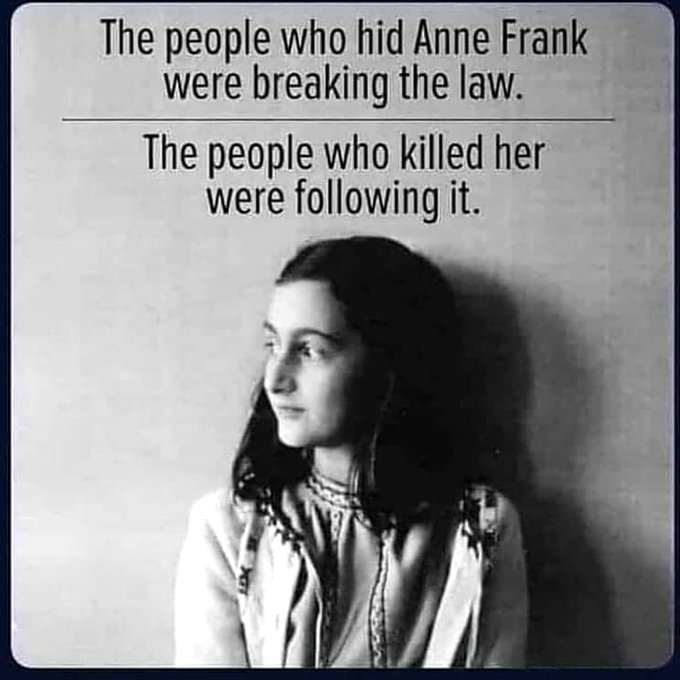
ICE Agents Complain About Nazi Comparisons, Say They’re Only Enforcing the Laws
Another agent complained of being seen as “the bad guys” in society.
“We constantly look like we’re the bad guys, when all we’re doing is enforcing the laws and doing our job,” the agent says.
“It gets to me sometimes, it does,” she says. “Cause, I just feel like, you know, we have no respect.”
Florida Keys couple jailed for refusing to quarantine
Two residents of the Florida Keys have been jailed for failing to quarantine after testing positive for the new coronavirus.
Jose Interian, 24, and Yohana Gonzalez, 26, are facing charges of violating isolation rules for a quarantine and violating emergency management disaster preparedness rules, according to jail records. They were arrested Wednesday in Key West, officials said.
The Miami Herald reports Interian and Gonzalez had been ordered by the health department to quarantine after testing positive for COVID-19, but neighbors said they were ignoring the order.
Someone videotaped the couple and gave it to Key West police, according to Greg Veliz, Key West’s city manager.
“There were complaints from the neighborhood of them continuing to be outside, going about normal life functions,” Veliz said.
 Hellbound and Down
You must be logged in to post a comment.