
Ludwig von Mises on government…


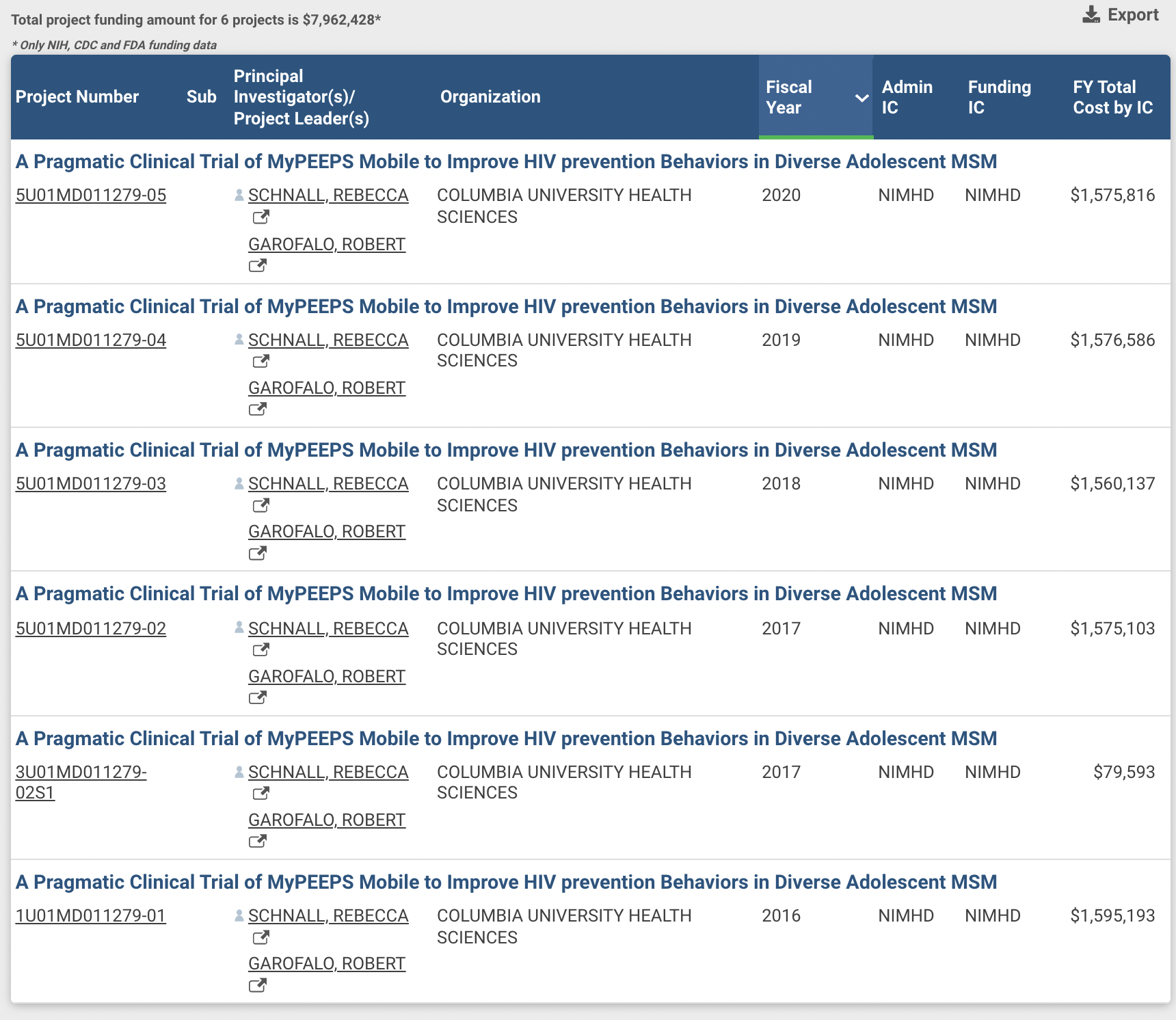
The National Institutes of Health has spent more than $8 million on a research study that pays gay and transgender boys as young as 13 hundreds of dollars to report their sexual behavior on a mobile app, all without parental permission.
NIH-funded researchers at Columbia University offer up to $275 to gay and transgender boys, between the ages of 13 and 18, to document their sexual activity on MyPEEPS Mobile, including whether they have “condomless anal sex.” The NIH spent more than $300,000 to develop the app in 2012 and 2013, and $7.9 million since 2016 for Columbia researchers to study the data it collects, according to a government spending database. The app for “young men who have sex with men” provides “interactive games and activities” designed to teach participating teenagers how to minimize risk in their sex lives, according to the research grant and resulting study.
While researchers say MyPEEPS Mobile provides educational information for gay adolescents on how to have safe sex, some medical experts say there are ethical concerns. According to one of the program’s studies, teenaged participants in the pilot trial were “recruited” to use the app in six different cities and traveled to attend “interventions” to discuss the sex education program, all without parental permission.
“There is an ethical balance between investigators’ desire to enroll children in a study and the need to support parents in caring for their children,” Dr. Monique Wubbenhorst, former deputy assistant administrator in the Bureau for Global Health at the U.S. Agency for International Development, told the Washington Free Beacon. “There are additional concerns that minor children in this study may be engaged in sexually exploitative relationships with older males, sex trafficking/child prostitution, violence, and sexual abuse, from which they should be protected.”
Wubbenhorst, a former member of the Duke University Health System Institutional Review Board, said minors are considered a vulnerable population and are unable to give informed consent in research studies. Department of Health and Human Services regulations require researchers to apply for a waiver of parental permission for minors through designated institutional review boards, which determine if “an appropriate mechanism for protecting the children who will participate as subjects in the research is substituted.”
In Southampton, soccer moms drop their kids off at school after taking their thrice-weekly microdose of psilocybin mushrooms, then meet for oat milk lattes. In Sun Valley, private retreats dedicated to tripping on MDMA or the Amazonian elixir ayahuasca are becoming almost as common as backyard barbecues. (Just don’t bring the kids.) In Silicon Valley, tech entrepreneurs and financiers turned psychonauts believe that taking small doses of LSD, in either liquid or tab form, helps with creativity and productivity in the workforce. Even rightwing internet investor Peter Thiel has put a formidable stake in Compass Pathways, a publicly traded psychedelic medicine company.
But now there’s a weirder, wilder new drug appearing on the menu for moneyed types in search of mind expansion: the Toad, otherwise known as 5-MeO-DMT (or, if you really want to know its correct name, 5-methoxy-N, N-dimethyltryptamine), or DMT, or Bufo. In his landmark 2018 memoir, How to Change Your Mind, Michael Pollan referred to it as the Everest of psychedelics.
The New York Times has finally accepted that individuals unvaccinated against COVID-19 who previously contracted the virus had “lower rates of infection and hospitalization than those protected by vaccines alone.”
A January 19th update posted to the outlet’s COVID-19 live blog explains how unvaccinated individuals who previously contracted the virus “had lower rates of infection and hospitalization than those protected by vaccines alone”:
During the week beginning May 30, 2021, vaccinated people who had not experienced Covid had the lowest risk of coronavirus infection and hospitalization, followed by unvaccinated people who had been previously diagnosed with Covid.
By the week beginning Oct. 3, however, vaccinated people with a prior diagnosis fared best against the Delta variant. Unvaccinated people with a history of Covid also had lower rates of infection and hospitalization than those protected by vaccines alone.
“The data are consistent with trends observed in international studies, the researchers said,” added The New York Times.
The outlet attempts to explain the disparity in vaccinated and unvaccinated people contracting COVID-19 by attributing it to the “waning of vaccine-derived immunity.”


For millions of patients who have lost limbs for reasons ranging from diabetes to trauma, the possibility of regaining function through natural regeneration remains out of reach. Regrowth of legs and arms remains the province of salamanders and superheroes.
But in a study published in the journal Science Advances, scientists at Tufts University and Harvard University’s Wyss Institute have brought us a step closer to the goal of regenerative medicine.
On adult frogs, which are naturally unable to regenerate limbs, the researchers were able to trigger regrowth of a lost leg using a five-drug cocktail applied in a silicone wearable bioreactor dome that seals in the elixir over the stump for just 24 hours. That brief treatment sets in motion an 18-month period of regrowth that restores a functional leg.
Many creatures have the capability of full regeneration of at least some limbs, including salamanders, starfish, crabs, and lizards. Flatworms can even be cut up into pieces, with each piece reconstructing an entire organism. Humans are capable of closing wounds with new tissue growth, and our livers have a remarkable, almost flatworm-like capability of regenerating to full size after a 50% loss.
But loss of a large and structurally complex limb—an arm or leg—cannot be restored by any natural process of regeneration in humans or mammals. In fact, we tend to cover major injuries with an amorphous mass of scar tissue, protecting it from further blood loss and infection and preventing further growth.
The Mayor of Hyattsville, Maryland, Kevin Ward died Tuesday in an apparent suicide, officials said. He was 44-years-old.
Ward’s body was reportedly found in a park in McLean, Virginia.
“It is with great sadness that we report that our beloved Hyattsville Mayor Kevin Ward passed away yesterday, January 25, from an apparent self-inflicted gunshot wound,” the city announced in a statement. “Mayor Ward was a valued and trusted leader and a fierce advocate for all the people of Hyattsville. We are heartbroken at this loss and extend our deepest sympathy to his family.”


You must be logged in to post a comment.