We’re from the government and we’re here to help…


“No one ever died from smoking marijuana, but millions of people have died by believing politicians.”
Harry Browne

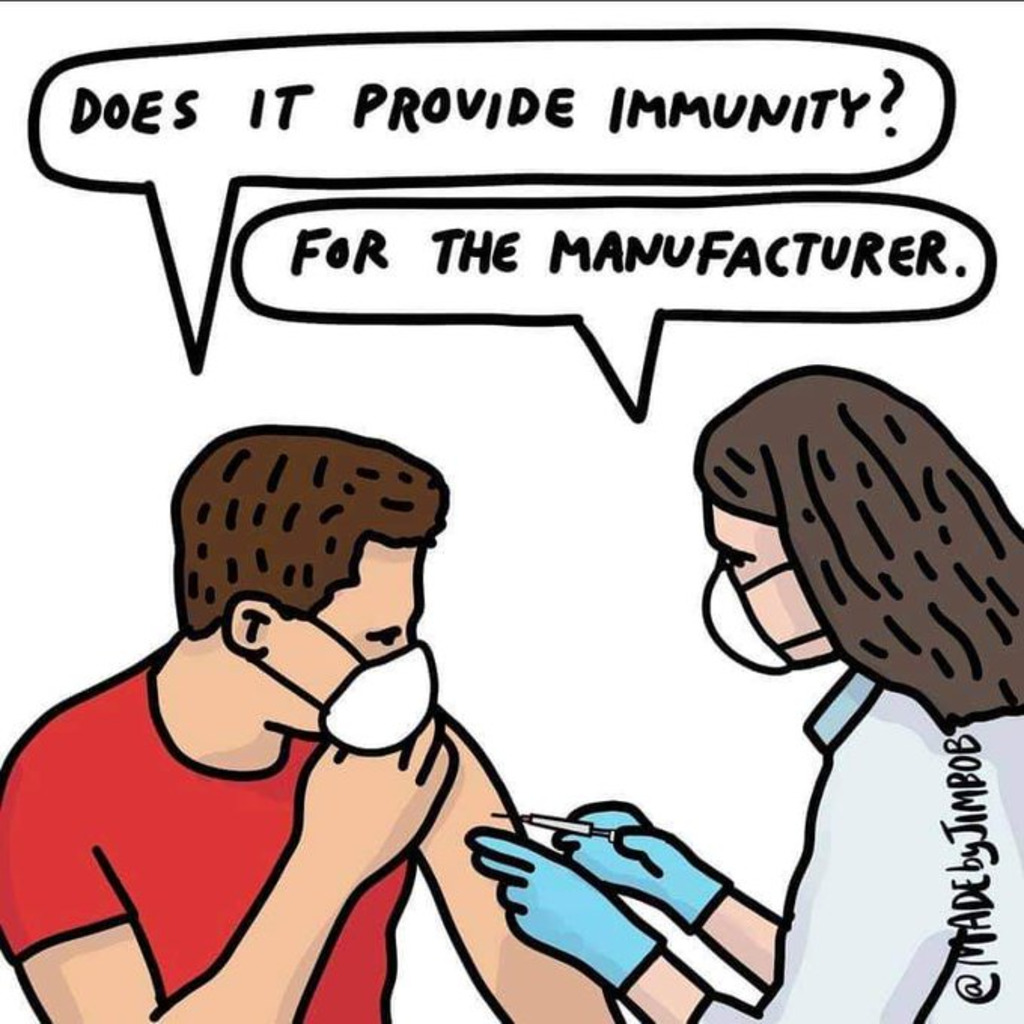
As drugmakers race to develop a vaccine against the coronavirus, several legal questions are emerging: could the government require people to get it? Could people who refuse to roll up their sleeves get banned from stores or lose their jobs?
The short answer is yes, according to Dov Fox, a law professor and the director of the Center for Health Law Policy and Bioethics at the University of San Diego.
“States can compel vaccinations in more or less intrusive ways,” he said in an interview. “They can limit access to schools or services or jobs if people don’t get vaccinated. They could force them to pay a fine or even lock them up in jail.”
Fox noted authorities in the United States have never attempted to jail people for refusing to vaccinate, but other countries like France have adopted the aggressive tactic.
The legal precedent dates back to 1905. In a landmark U.S. Supreme Court case, Jacobson v. Massachusetts, the court ruled Massachusetts had the authority to fine people who refused vaccinations for smallpox.
That case formed the legal basis for vaccine requirements at schools, and has been upheld in subsequent decisions.
“Courts have found that when medical necessity requires it, the public health outweighs the individual rights and liberties at stake,” Fox said.
In 2019, New York City passed an ordinance that fined people who refused a measles vaccination.
Cannon Hinnant, 5, was riding his bike with his sisters in a Wilson, NC, neighborhood on a summer’s day, outside his father’s house, when his young life was cut short.
Hinnant, according to family members, rode his bike onto the neighbor’s yard, prompting Darius N. Sessoms, 25, to shoot him in the head at point blank range. His sisters, 7 and 8, saw their brother get shot.

Shell-shocked is a good way to describe the mood in the U.S. for a good part of the Spring of 2020. Most of us never thought it could happen here. I certainly did not, even though I’ve been writing about pandemic lockdown plans for 15 years. I knew the plans were on the shelf, which is egregious, but I always thought something would stop it from happening. The courts. Public opinion. Bill of Rights. Tradition. The core rowdiness of American culture. Political squeamishness. The availability of information.
Something would prevent it. So I believed. So most of us believed.
Still it happened, all in a matter of days, March 12-16, 2020, and boom; it was over! We were locked down. Schools shut. Bars and restaurants closed. No international visitors. Theaters shuttered. Conferences forcibly ended. Sports stopped. We were told to stay home and watch movies…for two weeks to flatten the curve. Then two weeks stretched to five months. How lucky for those who lived in the states that resisted the pressure and stayed open, but even for them, they couldn’t visit relatives in other states due to quarantine restrictions and so on.
Lockdowns ended American life as we knew it just five months ago, for a virus that 99.4-6% of those who contract it shake off, for which the median age of death is 78-80 with comorbidities, for which there is not a single verified case of reinfection on the planet, for which international successes in managing this relied on herd immunity and openness.
Still the politicians who had become dictators couldn’t admit such astonishing failure so they kept the restrictions in place as a way of covering up what they had done.
You must be logged in to post a comment.