

Customs to Expand License Plate Reading Program Nationwide

The Customs and Border Protection agency has been collecting vehicle information at the border using license plate readers for years. Now, the agency will begin incorporating third-party license plate reader data collected from local governments, law enforcement and the private sector and maintained by a commercial vendor.

privacy impact assessment published July 7 outlines the agency’s plan to incorporate datasets maintained by third-party vendors as part of its investigations. The latest update is the first since December 2017, when CBP authorized the use of license plate readers for data collection.

“To meet its vast mission requirements, CBP relies on a variety of law enforcement tools and techniques for law enforcement and border security,” the PIA states. “One such tool is license plate reader (LPR) technology, which consists of high-speed cameras and related equipment mounted on vehicles or in fixed locations that automatically and without direct human control locate, focus on, and photograph license plates and vehicles that come into range of the device.”

Each data collection—or “read”—gathers the vehicle’s license plate number; an image of the vehicle, including make and model; where it is registered; the location and owner of the camera; and any associated location information, including GPS coordinates. “LPR technology may also capture—within the image—the environment surrounding a vehicle, which may include drivers and passengers,” the impact assessment notes.

Keep reading

How a McDonald’s Stirring Spoon Became a Target in the War on Drugs

The McDonald’s stirring spoon was a fixture of the popular fast food chain in the 1970s — a long, plastic utensil with a small scoop on one end and the signature golden arches on the other. It was a simple tool, designed to stir cream and sugar into coffee and nothing more. But that wasn’t all it was used for.

Indeed, the innocent stirring spoon, colloquially called the McSpoon, soon became an unlikely scapegoat in the War on Drugs.

In 1971, Richard Nixon declared the drug epidemic public enemy number one, kicking off the “war on drugs” that’s still being waged today. Despite the creation of the Drug Enforcement Agency (DEA) and efforts to shut down the Colombian drug trade, drug use only spiked in subsequent years. Cocaine use, in particular, was at its peak in those years, with a whopping 11 percent of the adult population using it.

To help curb the problem, anti-drug folks created a big push against the sale and use of drug paraphernalia — pipes, rolling papers, coke spoons and the like — leading to the DEA’s Model Drug Paraphernalia Act in 1979.

The law, adopted by almost every state government, contained a vague definition of paraphernalia that could include just about everything. A silly straw and a plastic sandwich bag could be paraphernalia under the right circumstances.

Angry about the proposed law, one member of the Paraphernalia Trade Association (PTA, representing smoke shop vendors) mocked the law’s vague wording with, that’s right, a McDonald’s stirring spoon.

“This,” he said, “is the best cocaine spoon in town and it’s free with every cup of coffee at McDonalds.”

Keep reading

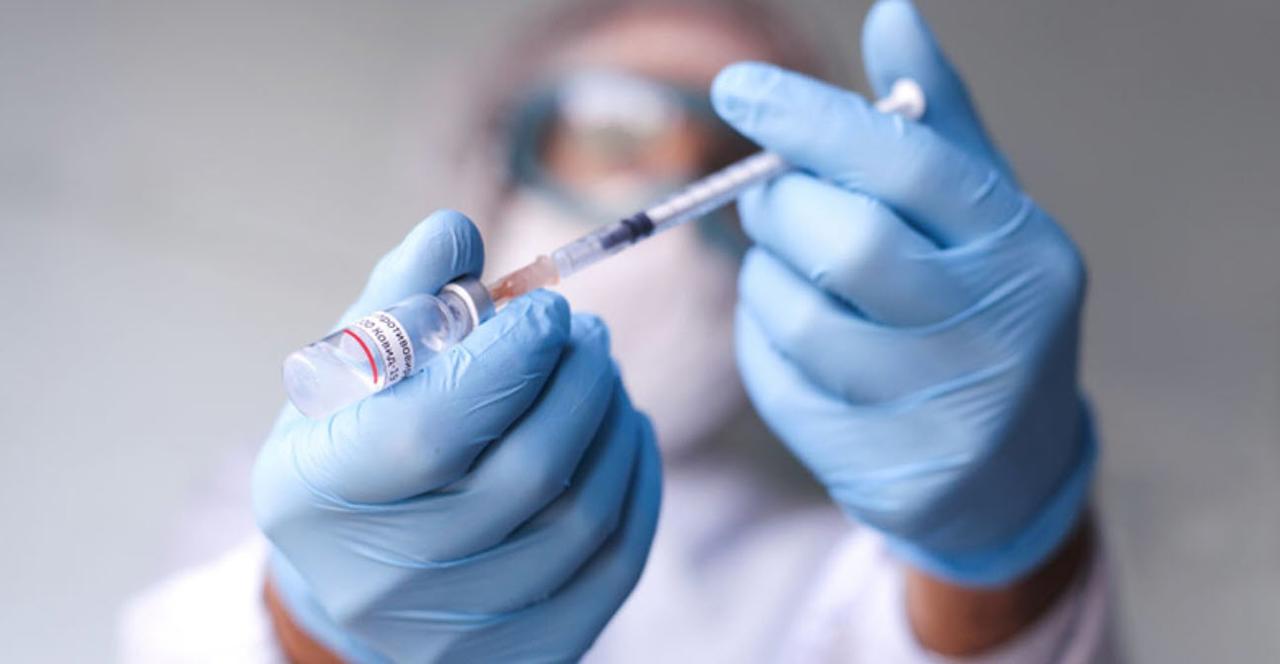
A plasma shot could prevent coronavirus. But feds and makers won’t act, scientists say

It might be the next best thing to a coronavirus vaccine.

Scientists have devised a way to use the antibody-rich blood plasma of COVID-19 survivors for an upper-arm injection that they say could inoculate people against the virus for months.

Using technology that’s been proven effective in preventing other diseases such as hepatitis A, the injections would be administered to high-risk healthcare workers, nursing home patients, or even at public drive-through sites — potentially protecting millions of lives, the doctors and other experts say.

The two scientists who spearheaded the proposal — an 83-year-old shingles researcher and his counterpart, an HIV gene therapy expert — have garnered widespread support from leading blood and immunology specialists, including those at the center of the nation’s COVID-19 plasma research.

But the idea exists only on paper. Federal officials have twice rejected requests to discuss the proposal, and pharmaceutical companies — even acknowledging the likely efficacy of the plan — have declined to design or manufacture the shots, according to a Times investigation. The lack of interest in launching development of immunity shots comes amid heightened scrutiny of the federal government’s sluggish pandemic response.

Keep reading

Police Say Texas A&M Student Who Found Racist Notes On His Car Put Them There

A student at Texas A&M University who reported that racist notes had been left on his car windshield is responsible for the act, police say. 

KBTX-TV reported that in June, Texas A&M senior Isaih Martin alerted the university police when he allegedly discovered handwritten messages reading “All lives matter” and “You don’t belong here,” along with a third listing the N-word, on his vehicle, which he had parked at an apartment complex on the school’s property.

Martin posted a photo of the notes to a Twitter account that has since been made private. According to KBTX, the university responded to his post, asking him to report the incident. 

“For them to tell me I don’t belong here, when I have earned my spot like everybody else here, and am working to get a degree like everyone else is, that was just kind of hurtful because if anything I deserve to be here just as much as anybody else,” Martin commented at the time. 

“Acts of racism are irreconcilable with the values we uphold here at Texas A&M University. Those who promote hate, discrimination and disrespect are not welcomed at this institution. We are tired of bigoted members of our community marring the experiences of students of color,” Texas A&M President Michael K. Young said in a statement following the incident. 

He also announced that the university would offer a $1,200 reward to anyone who could provide information to identify the person responsible for the act. 

“Let me be clear: Incidents like the one yesterday have no place at Texas A&M. Anyone who believes that hate is acceptable is not wanted at Texas A&M.” 

Texas A&M police reported Thursday that, based on surveillance video footage, Martin likely placed the notes on his car himself. Footage taken from nearby cameras shows that passers-by may have come close to Martin’s car, but were only near the vehicle for a few seconds. 

The police report, obtained by KBTX, reads that Martin was seen moving around his vehicle, with two different “white specks” held in the area of his chest. The footage also showed him “stepping back and onto the sidewalk in front of his vehicle, most likely taking photos and videos. He then approaches his vehicle again on the passenger side and remains there for a few moments. He is then seen walking around the front of his vehicle. Martin then enters the driver’s door and drives away a few moments later. The total time spent at his vehicle is 1 minute, 15 seconds.

Keep reading

If weed is legal, why are so many people still being arrested and locked up for it?

While Michigan dispensaries collectively bring in millions of dollars every month, Michael Thompson is serving a de facto life sentence in the same state for the very same reason — selling cannabis. 

As the country grapples with both a global pandemic and nationwide protests against police brutality and systemic racism, cannabis remains at the forefront of the cultural and political conversation. Cannabis was deemed an essential business by nearly all states with a medical or adult-use market during COVID-19, yet its criminalization has resulted in the arrests of millions of Americans, with Black individuals arrested at significantly higher rates than their white counterparts. 

Keep reading