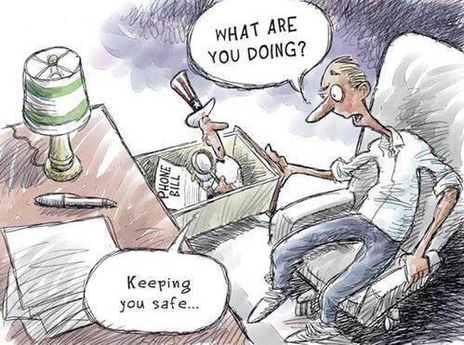
For your own good…

Increased exposure to toxic substances due to an overuse of ineffective measures like mask mandates, frequent use of hand sanitizers, disinfectant sprays, and frequent testing during the pandemic will have a short- and long-term impact on children’s health and future generations.
Moreover, ineffective lockdowns increased the number of children relying on food bank packages which cannot fulfill the daily nutrition needed during growth and development, worsening the threat for poor health during aging.
An overall dis-regulation of the immune system might occur with consequences ranging from autoimmune disorders to cancer. It is most likely that the most affected population will be the poor, immunocompromised, and disabled children. To prevent any further damage measures should be stopped while urgent analysis on poisoning and possible ways to repair the immune system is needed.
In 1990, a paradigm shift occurred in the development of new medicines and treatments. An idea so big, that it was supposed to encompass the whole of medicine. It was to start initially at the level of pre-clinical and clinical trials and work all the way through the system to the care and management of individual patients. This new concept for how medicine would be developed and conducted is called evidence-based medicine (EBM). Evidence-based medicine was to provide a more rigorous foundation for medicine, one based on science and the scientific method. Truly, this was to be a revolution in medicine – a non-biased way of conducting medical research and treating patients.
Evidence-based medicine
Evidence-based medicine is “the conscientious, explicit and judicious use of current best evidence in making decisions about the care of individual patients.” The aim of EBM is to integrate the experience of the clinician, the values of the patient, and the best available scientific information to guide decision-making about clinical management.
So, what the hell happened?
There is a big flaw in the logic of evidence-based medicine as the basis for the practice of medicine as we know it, a practice based on science; one that determines care down to the level of the individual patient. This flaw is nestled in the heart and soul of evidence-based medicine, which (as we have seen over the last two years) is not free of politics. It is naive to think that data and the process of licensure of new drugs is free from bias and conflicts of interest. In fact, this couldn’t be any farther from the truth. The COVID-19 crisis of 2020 to 2022 has exposed for all to see how evidence based medicine has been corrupted by the governments, hospitalists, academia, big pharma, tech and social media. They have leveraged the processes and rationale of evidence-based medicine to corrupt the entire medical enterprise.
Evidence based medicine depends on data. For the most part, the data gathering and analysis process is conducted by and for the pharmaceutical industry, then reported by senior academics. The problem, as laid out in an editorial in the British Medical Journal is as follows:
The release into the public domain of previously confidential pharmaceutical industry documents has given the medical community valuable insight into the degree to which industry sponsored clinical trials are misrepresented. Until this problem is corrected, evidence based medicine will remain an illusion.
This ideal of the integrity of data and the scientific process is corrupted as long as financial (and governments) interests trump the common good.

Governments of several nations around the world have considered using biometric data during SIM card registrations as a “fraud deterrent.” The proposals have always faced pushback for being a clear challenge to privacy.
Biometric data or identifiers include scans of a fingerprint, palm, retina, or the entire face of the user. South Africa has become the latest nation to consider SIM laws that make this data a mobile phone registration requirement.
Identity and other thieves can still hack phones with current security measures. Biometric data makes it more difficult because a criminal would need biometric proof that they own a phone and have the right to unlock it.
Acquiring body scans illegally is a difficult process. Governments hope that the extensive time and financial effort required to copy or mimic the biometrics of a specific person might deter criminals from hacking phones.
They also hope it might deter criminals from using their own phones for criminal activities since biometrics data creates a solid link between them and their phones that investigators can trace from a phone used in a crime back to the owner.
The telephone regulator for South Africa believes that all SIM card records should have biometric identifiers. For now, the data would only be used for basic authentication of ownership and monitoring of SIM swaps.
A new deep dive into discrepancies in the ballot counts of six key battleground states in the 2020 election has turned up more than 250,000 “excess votes” for President Joe Biden, and maybe far more.
The key point in the upcoming peer-reviewed study for the journal Public Choice by economist and noted gun expert John Lott Jr. is that the excess voting may challenge — or explain — Biden’s margin of victory over former President Donald Trump in Arizona, Georgia, Michigan, Nevada, Pennsylvania, and Wisconsin.
In his report, on the Public Choice website but still awaiting final approval, Lott said that there were 255,000 excess votes and possibly as many as 368,000 for Biden in the key states.
And in a review of his statistical study he provided to RealClearPolitics, he said that “Biden only carried these states — Arizona, Georgia, Michigan, Nevada, Pennsylvania, and Wisconsin — by a total of 313,253 votes. Excluding Michigan, the gap was 159,065.”
Lott, who runs the Crime Prevention Research Center, said that his report was not meant to overturn the 2020 election but to reinforce the need for changes to voter identification, absentee voting, and provisional ballots.





You must be logged in to post a comment.