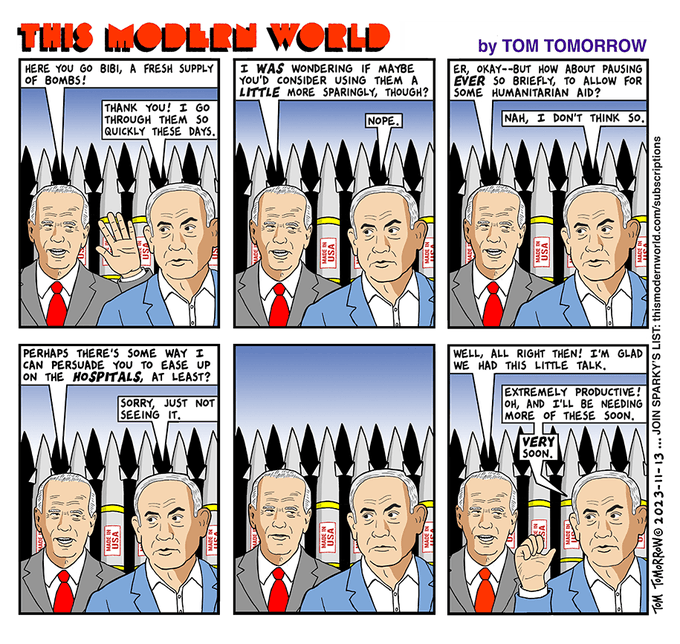
Nice talk!


Dozens of patients stand in line for hours outside the pharmacy booth in the Kuwaiti Hospital compound. They all start out by asking the pharmacist the same question: is my medication available? The answer for most is no.
Amid the long lines of the elderly, the ill, and mothers carrying their children, a man appearing to be middle-aged leaning on a young boy arrives, speaking in a loud voice and asking to be allowed to jump the line — he’s just been released from prison, and can barely stand.
“I spent sixty days of constant beating and humiliation,” he says. “They just released me, and I need to just get my medicine. Please let me take it without having to wait any longer.”
Everyone lets him through, allowing him to collect his medications from the booth and leave.
I stand beside him in the hospital courtyard, asking him how he came to be arrested by the Israeli army — and how he was eventually released.
Palestinian authorities have demanded an international investigation after a mass grave was found in Gaza with the decomposing bodies of Palestinian detainees who were blindfolded and handcuffed.
At least 30 bodies were found in “black plastic bags” near the Hamad school in northern Gaza, with Palestinian officials accusing Israeli soldiers of killing the civilians “execution-style”.
The Palestinian Ministry of Foreign Affairs called for an international investigation on Wednesday into what it described as Israeli “massacres”, demanding that a team visit Gaza “to find out the truth and dimensions of the genocide to which our people are exposed”.
Witnesses told Al Jazeera that the deceased were blindfolded, tortured and killed before being placed in the bags.
“As we were cleaning, we came across a pile of rubble inside the schoolyard. We were shocked to find out that the dozens of dead bodies were buried under this pile,” one witness told Al Jazeera.
“The moment we opened the black plastic bags, we found the bodies, already decomposed. They were blindfolded, legs and hands tied,” the witness added.
“The plastic cuffs were used on their hands and legs and cloths straps around their eyes and heads.”
Hamas said human rights organisations should “document” the mass grave.
More than 800 government officials in the United States and Europe released a letter Friday criticizing their countries’ leaders for providing unconditional military and diplomatic support to Israel as it inflicts disaster on Gaza’s population.
[The 800-plus figure is ascribed to an organizer of the letter who is quoted anonymously, for fear of reprisal, in a report in The New York Times.]
The authors of the letter, who remain anonymous, wrote that their attempts to voice concerns internally about their governments’ support for Israel’s assault on Gaza “were overruled by political and ideological considerations.”
“We are obliged to do everything in our power on behalf of our countries and ourselves to not be complicit in one of the worst human catastrophes of this century,” the letter reads. “We are obliged to warn the publics of our countries, whom we serve, and to act in concert with transnational colleagues.”
“Israel has shown no boundaries in its military operations in Gaza, which has resulted in tens of thousands of preventable civilian deaths,” the letter continues.
“There is a plausible risk that our governments’ policies are contributing to grave violations of international humanitarian law, war crimes, and even ethnic cleansing or genocide.”
The letter was coordinated by government officials in The Netherlands, the U.S., and European Union bodies and endorsed by civil servants in 10 countries, including Belgium, Denmark, Finland, France, Germany, and the United Kingdom.
Josh Paul, a former U.S. State Department official who resigned in October over the Biden administration’s decision to continue arming Israel as it pummeled Gaza, called the new letter “a remarkable statement from hundreds of individuals who have devoted their lives to building a better world.”
A TEAM OF Israeli lawyers and officials presented their defense at The Hague on Friday in the second day of the genocide case brought before the International Court of Justice by the government of South Africa. The lawyers portrayed Israel as the actual victim of genocide, not Gaza, accused South Africa of supporting Hamas, and painted South Africa’s government as functioning as the legal arm of the Palestinian militants who led the deadly raids into Israel on October 7.
Israel benefitted greatly from the fact that there was no cross examination permitted or debate allowed during these proceedings. It embarked on a bold mission to do in a court of international law what its military and political officials have done day and night throughout the course of this war against Gaza: unleash a deluge of what was known within the Trump administration as “alternative facts.”
Israel’s defense was the inverse of South Africa’s case yesterday, and as weak in offering documented facts as South Africa’s was powerful. History began on October 7, the Israelis seemed to say, South Africa is Hamas, South Africa did not give Israel a chance to meet up and chat about Gaza before suing for genocide, and actually the Israel Defense Forces is the most moral entity on earth. As for the voluminous public statements by senior Israeli officials indicating genocidal intent, those were just “random assertions” by some irrelevant underlings. Prime Minister Benjamin Netanyahu’s statements invoking a murderous story from the Bible about killing the women, infants, and cattle of your enemies? The South Africans just don’t understand theology and presented Netanyahu’s words out of context.
While Israel’s lawyers made legal arguments that the genocide charges leveled against it are invalid, their primary strategy was to appeal to the court on jurisdictional and procedural matters, hoping that they could form the basis for the panel of international judges to dismiss South Africa’s case. Aware of the global audience, Israel also sought to reinforce its claims of righteousness and self-defense in fighting the war in Gaza.
In early 2024, a new, grim chapter may be written in the annals of journalistic history. Julian Assange, the publisher of Wikileaks, could board a plane for extradition to the United States, where he faces up to 175 years in prison on espionage charges for the crime of publishing newsworthy information.
The persecution of Assange is clear evidence that the Biden administration is overseeing the silent death of the First Amendment—with global consequences.
Bob Woodward and Carl Bernstein’s exposé during the Watergate scandal is seen as a triumph of truth over power. Their investigative reporting led to the downfall of President Nixon, cementing their status as champions of press freedom. However, what if this tale had taken a dark turn, with the journalists prosecuted for espionage and silenced under the guise of national security? While this is mere fiction, Assange’s plight is all too real.
Assange, the standard-bearer of our era’s investigative journalism, awaits extradition in a British cell in Belmarsh Prison, a fate that could stifle the beacon of transparency he represents. At a time when the world grapples with the erosion of press freedom, with journalists imprisoned and killed, Assange’s case raises profound questions about the consequences of challenging power and unveiling uncomfortable realities.
The legacy of WikiLeaks goes beyond exposing government misconduct; it pierces the veil of secrecy shrouding global affairs. The release of Collateral Murder, the haunting camera footage from a 2007 Apache helicopter attack in Baghdad showing the murder of several civilians, including two Reuters journalists, shocked the world. As we’ve seen in the past two months, the killing of civilians and journalists in war continues. In the last two months, Israel’s bombardment of Gaza has killed dozens of journalists, according to the Committee to Protect Journalists. On Thursday, human rights groups determined that Israel had deliberately fired on a Reuters journalist in southern Lebanon—a blatant war crime.
The aim of targeting journalists is to keep information where governments want it—under lock and key. That is why Wikileaks is such a threat—because, since its founding, it has fearlessly worked to wrest that information out of the hands of the powerful and put it in the hands of the people.
A vast field is filled as far as the eye can see with miserable and gaunt men in remnants of military uniform. It’s May 1945 and the war in Europe has ended. By rights, these surrendered soldiers will be allowed to return to their families, but many will not leave this muddy ground alive. There is no food, no shelter, and no medicine. The Rheinwiesenlager (Rhine meadow camps) were the killing fields of one of the worst war crimes in modern history, committed by General Dwight Eisenhower and the US Army.
The cull of German troops was a closely-guarded secret until four decades after the war, when a Canadian researcher was writing a book on a French resistance hero. James Bacque found that his subject, Raou Laporterie, had been saved by a German soldier, Hans Goertz. In gratitude, in 1946, Laporterie got Goertz out of a French prison camp to work in his chain of drapery stores. Goertz told of mass deaths of inmates through lack of sustenance.
After pursuing leads in the French records, Bacque came to realise that Allied military leaders had ‘committed an appalling crime against humanity’. His investigation culminated in Bacque’s harrowing book Other Losses: The Shocking Truth Behind the Mass Deaths Of Disarmed German Soldiers And Civilians Under General Eisenhower’s Command (1989). The foreword to this expose was written by Ernest Fisher, a retired colonel of the US Army, and war historian noted for his book Cassino to the Alps. Fisher set the scene: –
‘Over most of the western front in April 1945, the thunder of artillery had been replaced by the shuffling of millions of pairs of boots as columns of disarmed German soldiers marched wearily towards Allied barbed wire enclosures. Scattered enemy detachments fired a few volleys before fading into the countryside and eventual capture by Allied soldiers.’
As Fisher explained, German soldiers did everything they could to evade capture by the Russians, who raped and pillaged as they advanced over eastern Germany:
‘The mass surrenders in the west contrasted markedly with the final weeks on the eastern front where surviving Wehrmacht units still fought the advancing Red Army to enable as many of their comrades as possible to evade capture by the Russians. This was the final strategy of the German High Command then under Grand Admiral Doenitz who had been designated Commander-in-Chief by Adolf Hitler.’
But crossing to the Allied side was not the sanctuary that the defeated Germans expected, due to the visceral hatred of Eisenhower. The supreme military commander, of Swedish-Jewish background, had wriiten in a letter to his wife ‘God, I hate the Germans’. In September 1944, in the presence of the British ambassador to Washington, Eisenhower proposed that the entire German general staff, all officers of the Gestapo and all leaders of the Nazi party from mayor upwards should be exterminated (around a hundred thousand men).
Fisher had met Bacque in Washington in 1987 where they uncovered evidence, deeply buried in national archives, of a systematic slaughter. ‘More than five million German soldiers in the American and French zones were crowded into barbed wire cages, many of them literally shoulder to shoulder. The ground beneath them became a quagmire of filth and disease. Open to the weather, lacking even primitive sanitary facilities, underfed, the prisoners soon began dying of starvation.’
Shockingly, more German soldiers died in the camps from April 1945 onwards than died in combat.
The chief executive of one of the world’s largest technology conferences resigned on Saturday amid furor over remarks he made about the Israel-Hamas war sparked a boycott that led to droves of speakers and companies to pull out of the gathering.
Organizers for Web Summit, which drew more than 70,000 attendees last year, said the event will still take place in Lisbon next month and that a new CEO will soon be appointed.
Paddy Cosgrave, the Irish entrepreneur who founded Web Summit and has been running the event since 2009, announced his departure after a flurry of companies, including Google, Meta, Amazon and Intel, withdrew from the event in the wake of Cosgrave’s comments.
Last week, he wrote on X that he was shocked at the rhetoric of so many Western leaders and governments in response to Israel’s bombardment of Gaza following the Hamas terrorist attack that killed more than 1,300 people.
“War crimes are war crimes even when committed by allies, and should be called out for what they are,” Cosgrave wrote, referring to Israel’s wave of attacks on Gaza after the violence committed by Hamas.
The statement set off outrage, with venture capitalists, Israeli startup founders and Big Tech companies all pulling out of Web Summit, an annual conference that for the past 14 years has brought together some of the industry’s top leaders and companies.
The Associated Press has quietly deleted a reference to official Israeli threats to subject the Gaza Strip to a Dresden-style firebombing campaign — the latest move in legacy media outlets’ ongoing push to downplay the impacts of Tel Aviv’s siege of over two million Palestinians.
“Four U.S. officials familiar with the discussions said American diplomats became increasingly alarmed by comments from their Israeli counterparts regarding their intention to deny water, food, medicine, electricity and fuel into Gaza, as well as the inevitability of civilian casualties,” the AP article previously stated.
The attacks by Hamas fighters in southern Israel on 7 October, and the Israeli air attacks on Gaza that have followed, and now the unfolding humanitarian disaster there, once again expose fundamental bias in the state-corporate news media. Does news coverage really convey the impression that all lives – Palestinian and Israeli – are of equal value? After all, they surely deserve the same level of humanity and compassion. Do the news media present heart-wrenching stories of individual victims and their grieving families from both sides? And is the full context and history explained in order for audiences to arrive at a proper understanding of events?
As Jack Mirkinson, an interim senior editor at The Nation magazine, wrote:
‘Who is allowed humanity, and who is not? Whose deaths are tragedies worth paying concerted attention to, and whose deaths can be dealt with in a matter of seconds? Whose children are worth learning about? Whose heartbreak is worth lingering over? And which people, when confronted by bloodshed, deserve to have the world put everything on hold and rush to their side? The answer is clear. Palestinians are killed by Israel all of the time, including when they peacefully protest. But the world never puts itself on hold to bear witness to their heartbreak.’
On BBC Newsnight, host Kirsty Wark listened to Husam Zomlot, head of the Palestinian Mission to the UK, describe how six of his family members had been killed by Israeli air strikes. Wark reacted oddly:
‘I’m sorry for your own personal loss. I mean, can I just be clear, though, you cannot condone the killing of civilians in Israel, can you?’
This captures an essential element of western media coverage in the region: the death of Palestinians might be noted, but attention is swiftly brought back to the suffering of Israelis.
You must be logged in to post a comment.