THE CIA’S APPALLING HUMAN EXPERIMENTS WITH MIND CONTROL

ON APRIL 10, 1953, ALLEN DULLES, THE NEWLY APPOINTED DIRECTOR OF THE CIA, delivered a speech to a gathering of Princeton alumni. Though the event was mundane, global tensions were running high. The Korean War was coming to an end, and earlier that week, The New York Times had published a startling story asserting that American POWs returning from the country may have been “converted” by “Communist brain-washers.”

Some GI’s were confessing to war crimes, like carrying out germ warfare against the Communists–a charge the U.S. categorically denied. Others were reportedly so brainwashed that they had refused to return to the United States at all. As if that weren’t enough, the U.S. was weeks away from secretly sponsoring the overthrow of a democratically elected leader in Iran.

Dulles had just become the first civilian director of an agency growing more powerful by the day, and the speech provided an early glimpse into his priorities for the CIA. “In the past few years we have become accustomed to hearing much about the battle for men’s minds–the war of ideologies,” he told the attendees. “I wonder, however, whether we clearly perceive the magnitude of the problem, whether we realize how sinister the battle for men’s minds has become in Soviet hands,” he continued. “We might call it, in its new form, ‘brain warfare.’”

Dulles proceeded to describe the “Soviet brain perversion techniques” as effective, but “abhorrent” and “nefarious.” He gestured to the American POWs returning from Korea, shells of the men they once were, parroting the Communist propaganda they had heard cycled for weeks on end. He expressed fears and uncertainty–were they using chemical agents? Hypnosis? Something else entirely? “We in the West,” the CIA Director conceded, “are somewhat handicapped in brain warfare.” This sort of non-consensual experiment, even on one’s enemies, was antithetical to American values, Dulles insisted, as well as antithetical to what should be human values.

Keep reading

Body Cam: Cops Strip Child Nude in Public, Grope His Genitals to Look for Drugs

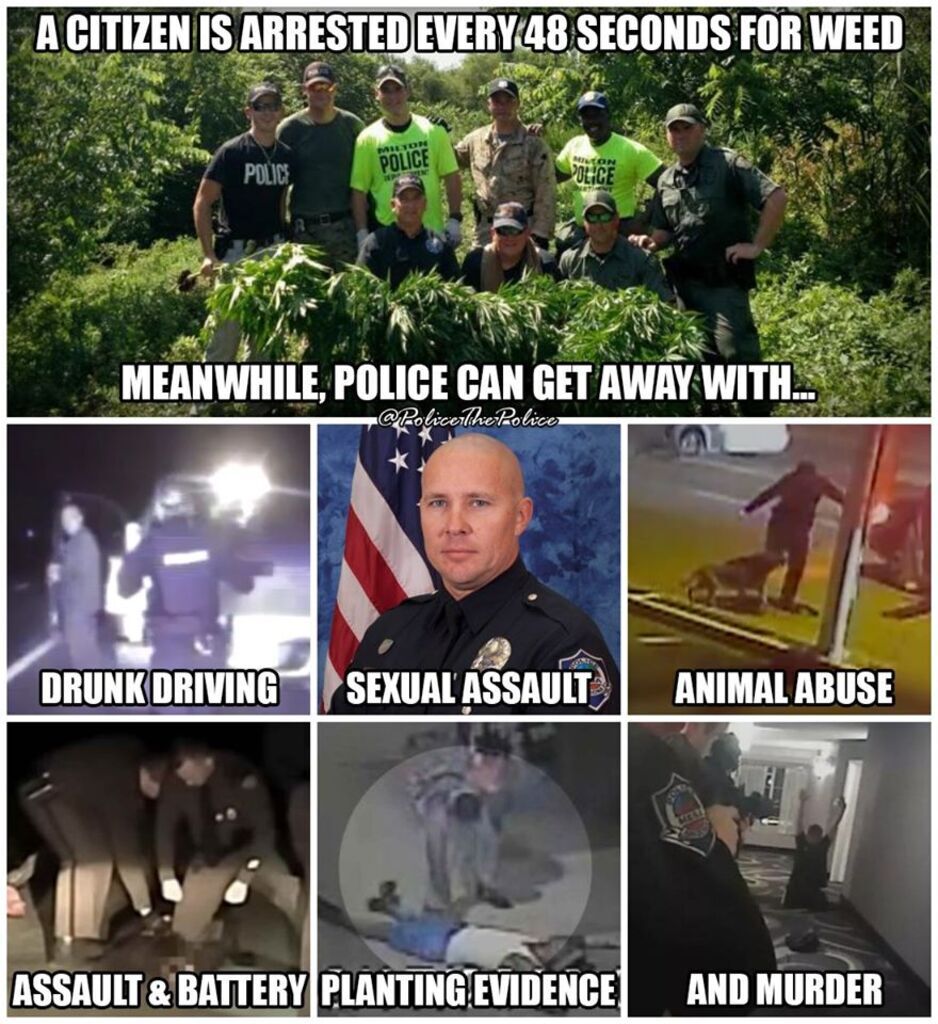
The taxpayers of Baton Rouge were quietly put on notice this week that they will be footing the bill for the acts of several Baton Rouge police officers. After conducting an illegal traffic stop, the officers stripped a man and his teen brother completely nude, while groping their genitals on the side of the road before driving to their home and illegally searching it.

Body camera footage of the officers’ crimes was released as part of a settlement paid out to Clarence Green and his family after their rights were trampled by Baton Rouge’s finest. The measly $35,000 settlement, however, will most assuredly not undo the trauma of being publicly humiliated, sexually assaulted, and imprisoned. Instead, it serves as a testament to the untouchable nature of criminal cops and the violations they can commit with no accountability all in the name of the drug war.

Keep reading

NO JAIL for Police Chief Caught Stealing 3,000 Bags of Heroin from Evidence Room

In the land of the free, there are two sets of justice systems — one for all those connected to that system, and one for everyone else. Time after time, we’ve seen police officers and politicians alike accused of terrible crimes and they escape with little to no jail. As the following case illustrates, police chiefs can betray everything they stand for, steal tens of thousands of dollars in heroin from their own department and face no jail.

The former Elizabeth Borough police chief, Timothy Butler, pleaded guilty to stealing heroin from the department’s evidence room but he will not go to jail. Instead of jail, Butler was sentenced to 55 months probation and 325 hours of community service.

In August, Butler pleaded guilty to two counts of theft, one count of possession and one count of obstructing the administration of law. The sheer amount of heroin found in Butler’s possession makes the one count of possession outright laughable.

According to police, Butler was arrested last year after they found more than 60 bundles of heroin and 3,230 individual “stamp bags” (given this name for being the size of a stamp and individually packaged for resale) in and around his desk — inside his police chief office.

Clearly he was unconcerned with hiding it because after all, he was the top cop. According to the criminal complaint, when asked how bad the evidence problem was, Butler said, “it was all gone.”

Had Butler not been a police officer, rest assured that he would have received a far harsher sentence than just probation. Indeed, many will argue — and rightfully so — that Butler should face harsher sentencing due to the betrayal of his duties as the top cop.

Keep reading

Mississippi Supreme Court overturns medical marijuana Initiative 65

The Mississippi Supreme Court on Friday issued a much-anticipated ruling that strikes down the Medical marijuana program enshrined in the state constitution by voters in November.

The ruling also voids — for now — the state’s ballot initiative process that allows voters to take matters in hand and pass constitutional amendments. The court ruled that the state’s ballot initiative process is “unworkable and inoperative” until lawmakers and voters fix state law and the constitution.

With six of the nine state justices agreeing, the court wrote, “We grant the petition, reverse the Secretary of State’s certification of initiative 65 and hold that any subsequent proceedings on it are void.”

Madison Mayor Mary Hawkins Butler filed a Supreme Court challenge to Initiative 65 just days before voters approved it on Nov. 3. Butler argued that Mississippi’s ballot initiative process is constitutionally flawed and Initiative 65 was not legally before voters. She said a provision requiring an equal number of signatures from Mississippi’s five congressional districts could not be met, because Mississippi has only had four districts for two decades.

Besides derailing the medical marijuana program, the ruling also jeopardizes six pending ballot initiatives, including one to expand Medicaid and others to reinstate the state’s 1890 state flag, allow early voting and to approve recreational marijuana use. The ruling also could open to challenge two constitutional amendments that voters have passed since they were allowed to do so in 1992, one limiting eminent domain powers over government to take private land and one requiring a government-issued ID to vote.

Keep reading