REVEALED: Parler’s New CEO Wants Convention That Would Let George Soros Rewrite The Constitution

Mark Meckler, the new interim CEO of Parler, currently supports a Convention of States that could give George Soros and other interests the power to rewrite the Constitution.

Meckler, who was appointed as interim CEO of Parler following the removal of founder John Matze, currently runs the Convention of States Project, a supposed “grassroots” organization pushing for a convention under Article V of the Constitution.

The project describes itself as a “national effort to call a convention under Article V of the United States Constitution, restricted to proposing amendments that will impose fiscal restraints on the federal government, limit its power and jurisdiction, and impose term limits on its officials and members of Congress,” which initially sounds appealing.

However, a report by the Center on Budget and Policy Priorities argued that such a restriction on an Article V convention would be impossible, with states unable to control what a convention could and could not discuss, and nobody else having clear constitutional control over the convention.

Keep reading

2020: The Year In Which Comforting American Myths Were Ravaged

Thanks in large part to Covid lockdowns, this year has left vast wreckage in its wake, with ten million jobs lost, more than 100,000 businesses and dozens of national chains bankrupted or closed. Up to 40 million people could face eviction in the coming months for failing to pay rent, and Americans report that their mental health is at record low levels. But the casualty list for 2020 must also include many of the political myths that shape Americans’ lives.

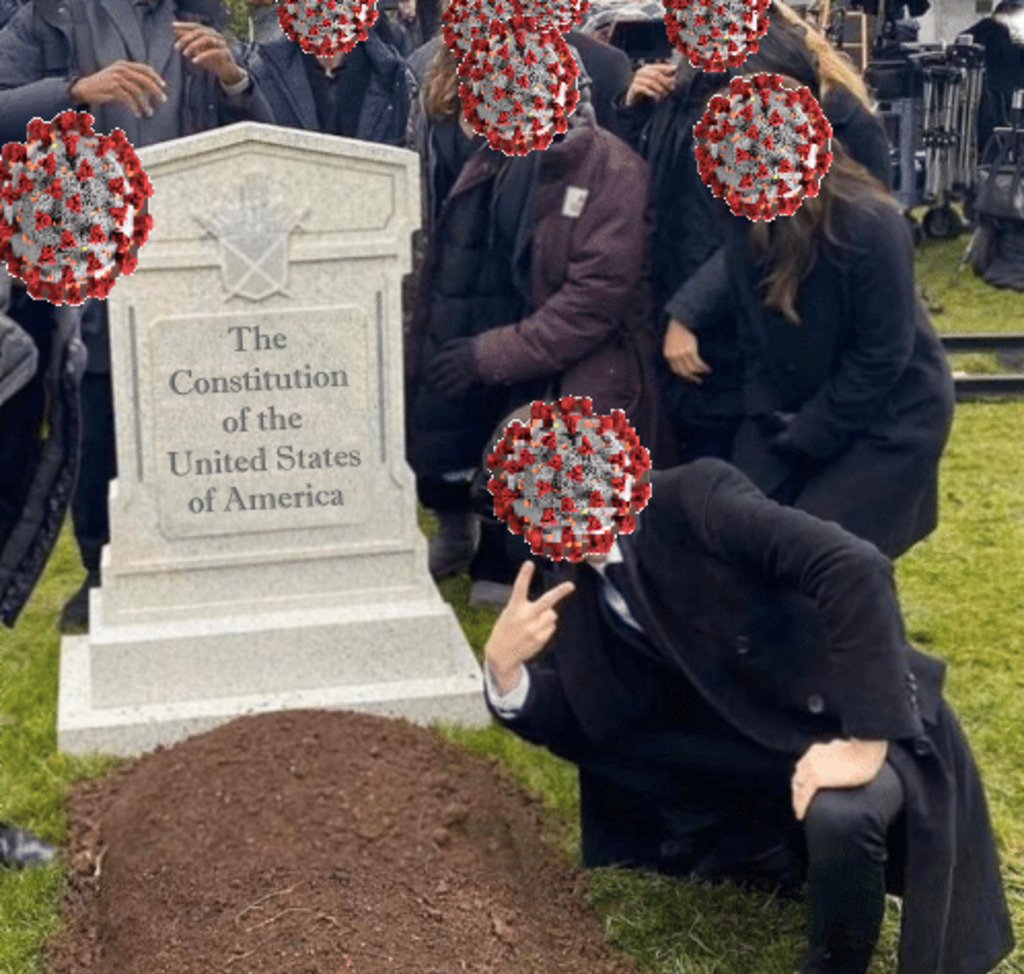
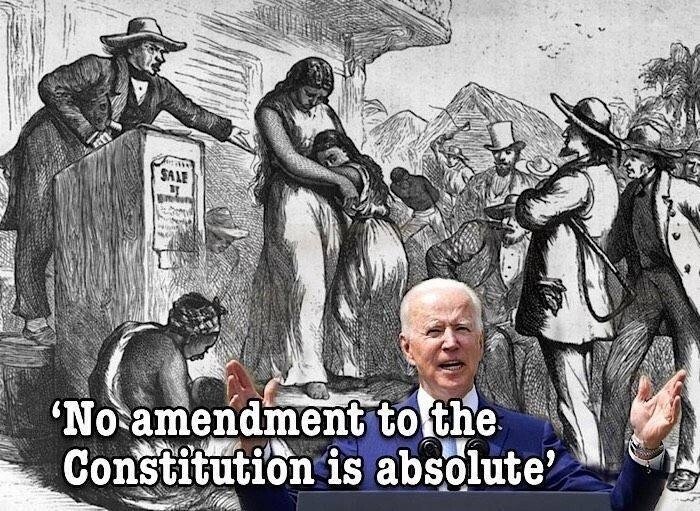
Perhaps the biggest myth to die this year was that Americans’ constitutional rights are safeguarded by the Bill of Rights. After the Covid-19 pandemic began, governors in state after state effectively placed scores of millions of citizens under house arrest – dictates that former Attorney General Bill Barr aptly compared to “the greatest intrusion on civil liberties” since the end of slavery. Politicians and government officials merely had to issue decrees, which were endlessly amended, in order to destroy citizens’ freedom of movement, freedom of association, and freedom of choice in daily life. Los Angeles earlier this month banned almost all walking and bicycling in the city, ordering four million people to “to remain in their homes” in a futile effort to banish a virus.

Keep reading

“Necessary” Is Not a Constitutional Argument

I hear a lot of bad constitutional arguments justifying this or that federal action. One common justification for expanding federal power is: “This thing is necessary! It needs to be done.”

But it doesn’t follow that the federal government has to do the thing. In fact, the founding generation expected that the states and the people would do most of the “necessary things” – not the federal government.

Tench Coxe was a prominent and influential advocate for ratification of the Constitution and a delegate for Pennsylvania to the Continental Congress in 1788-1789. He later served as Secretary of the Treasury. He wrote three essays published in the Pennsylvania Gazette in early 1788 under the pen-name “A Freeman.”

In these essays, Coxe offered some of the most forceful arguments asserting the limited nature of the federal government under the proposed Constitution. He insisted that many, if not most, of the “necessary” things for society would be taken on by state and local governments, not the federal government.

Keep reading

An Overdue Rebuke to Politicians Who Think Anything Goes in a Pandemic

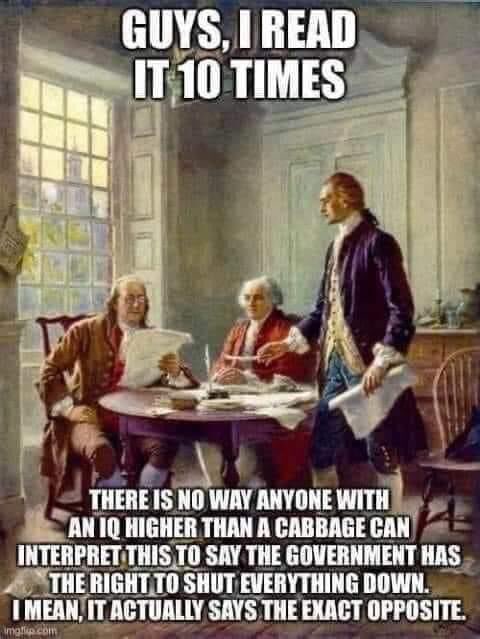
Last Friday the Michigan Supreme Court ruled that a law Gov. Gretchen Whitmer (D) used to shutter businesses and confine people to their homes except for Whitmer-approved purposes improperly delegated legislative functions to the executive branch. And last month a federal judge in Pennsylvania said that state’s lockdown violated the right of assembly guaranteed by the First Amendment, along with the 14th Amendment’s guarantees of due process and equal protection.

Both decisions uphold a principle that politicians across the country seemed to forget while they rushed to curtail the epidemic last spring. As U.S. District Judge William Stickman put it in the Pennsylvania case, “the Constitution sets certain lines that may not be crossed, even in an emergency.”

Keep reading