This is what liberal war fever looks like

In a private letter written in 1918, the recently deposed German chancellor Theobald von Bethmann-Hollweg admitted that in the run-up to the Great War, “there were special circumstances that militated in favor of war, including those in which Germany in 1870-71 entered the circle of great powers” and became “the object of vengeful envy on the part of the other Great Powers, largely though not entirely by her own fault.”

Yet Bethmann saw another crucial factor at work: that of public opinion. “How else,” he asked, “[to] explain the senseless and impassioned zeal which allowed countries like Italy, Rumania, and even America, not originally involved in the war, no rest until they too had immersed themselves in the bloodbath? Surely this is the immediate, tangible expression of a general disposition toward war in the world.”

The Austrian writer Stefan Zweig got a taste of the war fever gripping France in the spring of 1914 while sitting in a movie theater in Tours. As Nicholson Baker recounts in Human Smoke, his monumental pacifist history of the Second World War,

an image of Wilhelm II, then Emperor of Germany, came on screen for a moment. At once the theater was in an uproar.

The good natured people of Tours, who knew no more about the world and politics than what they had read in the newspapers, had gone mad for an instant…it had only been a second, but one that showed me how easily people anywhere could be aroused in a time of crisis, despite all attempts at understanding.

America shared in the “general disposition toward war” of which Bethmann wrote. On April 6, 1917, the House of Representatives voted 374 to 50 in favor of America’s entry into the war. One of the holdouts, the first woman elected to Congress, Jeanette Rankin from Montana, was castigated not only by her fellow suffragettes but by her hometown paper, which accused her of being a “dupe of the Kaiser.”

The similarities between then and now are hard to miss.

Keep reading

The US And Ukraine Have Every Reason To Lie About The War

The Washington Post has a new article out titled “Intelligence points to heightened risk of Russian chemical attack in Ukraine, officials say,” and I challenge you to find me any Russian state media with two opening paragraphs that are more brazenly propagandistic and bereft of journalistic ethics than these:

“The United States and its allies have intelligence thatRussia may be preparing to use chemical weapons against Ukraine, U.S. and European officials saidFriday, as Moscow sought to invigorate its faltering military offensive through increasingly brutal assaults across multiple Ukrainian cities.


“Security officials and diplomats said the intelligence, which they declined to detail, pointed to possible preparations by Russia for deploying chemical munitions, and warned the Kremlin may seek to carry out a ‘false-flag’ attack that attempts to pin the blame on Ukrainians, or perhaps Western governments. The officials, like others quoted in this story, spoke on the condition of anonymity because of the sensitive nature of the matter.”

So Russia is preparing to stage a chemical attack, and also the Russian chemical attack might look like Ukrainians or western governments committing a chemical attack, and also the evidence for this is secret, and also the details are secret, and also the government officials advancing this claim are secret, and also Russia’s military offensive is faltering. Gotcha.

The third paragraph is even better:

“The accusations surfaced as Russia repeated claims that the United States and Ukraine were operating secret biological weapons labs in Eastern Europe — an allegation that the Biden administration dismissed as ‘total nonsense’ and ‘outright lies.’”

This paragraph is awesome in two different ways. First, it’s awesome because The Washington Post goes out of its way to inform readers that Russia’s claims have been dismissed as “total nonsense” and “outright lies” after having literally just reported completely unevidenced claims by anonymous government officials with no criticism or scrutiny of any kind. Secondly, it’s awesome because at no point during the rest of the article is any mention made of Victoria Nuland’s incendiary admission before the Senate Foreign Relations Committee that Ukraine has “biological research facilities” that the US is “quite concerned” might end up “falling into the hands of Russian forces”.

Over and over again throughout the article The Washington Post takes great care to inform readers that Russian claims about biological weapons are not to be trusted, with allegations from Moscow described as “unproven accusations” made with “no verifiable evidence“, “absurd and laughable“, “outrageous claims”, “utter nonsense”, “sinking to new depths” and “baseless“.

This, again, after uncritically reporting completely unsubstantiated allegations by government officials and sheltering them from any accountability by granting them the cover of anonymity. Unproven claims by the Russian government are laughable absurdities presented without evidence; unproven claims by the US government are just The News.

The Washington Post also refers to past Russian dismissals of alleged chemical weapons attacks in Syria as false flags used to frame Damascus, while of course making no mention of the mountains of evidence that this has indeed occurred. It also says the UN human rights office “has received ‘credible reports’ of Russia using cluster bombs” which “could constitute war crimes”, making no mention of the USA’s abundant use and sale of these same munitions.

Keep reading

Umm… Are We The Baddies?

Reuters reports that Facebook and Instagram are now allowing calls for the death of Russians and Russian leaders in exemption from the platforms’ hate speech terms of service due to the war in Ukraine:

“Meta Platforms will allow Facebook and Instagram users in some countries to call for violence against Russians and Russian soldiers in the context of the Ukraine invasion, according to internal emails seen by Reuters on Thursday, in a temporary change to its hate speech policy.”

Twitter has also altered its rules against incitement and death threats in the case of Russian leaders and military personnel, as Ben Norton explains here for Multipolarista.

Last month we also learned that Facebook is now allowing users to praise the Ukrainian neo-Nazi Azov Battalion because of the war, a move that is arguably the most liberal thing that has ever happened.

Western institutions everywhere are rejecting all things Russia with such a savage degree of xenophobia it really ought to shock anyone who was born after the 1800s. Everything from Russian athletes to Russian musicians to Russian-made films to Russian composers to Russian Netflix shows to lectures about Russian authors to Russian restaurants to Russian vodka to Russian-bred cats to Russian trees to dishes that sound a little too much like “Putin” have been cancelled to varying degrees around the western world.

Normally when the US and its allies are involved in a war they’ll at least pay lip service to the notion that they have nothing but good will for the people of the enemy nation, claiming they only oppose their oppressive rulers. With Russia it’s just a complete rejection of the entire culture, the entire ethnicity. It’s a widespread promotion of hatred for the actual people because of who they are.

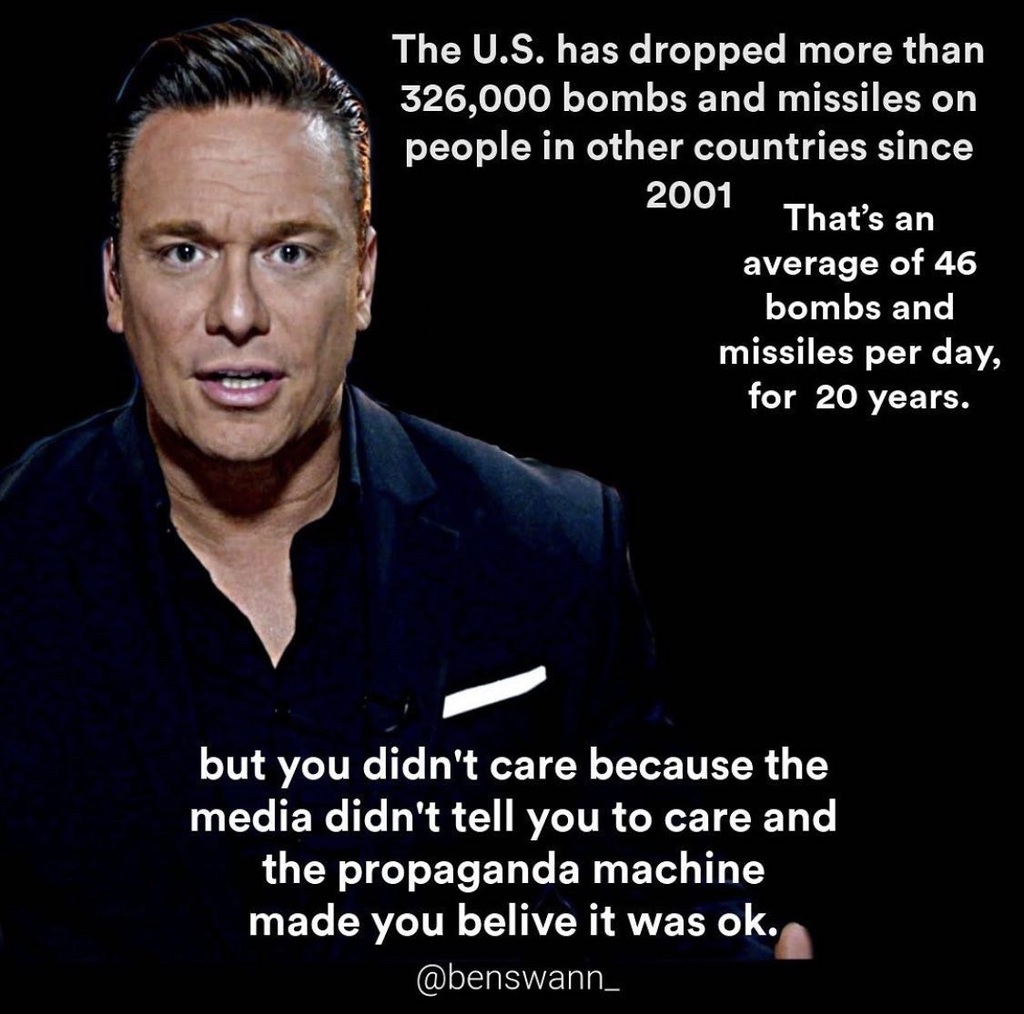
These are the people who are being smashed with crushing economic sanctions while western pundits proclaim that “There are no more ‘innocent’ ‘neutral’ Russians anymore” and ask “At what point do you hold a people responsible for putting an evil despot in power?” This even as the Russian people are being arrested by the thousands in anti-war protests, putting to shame our own western society that has generally slept through war after war in the years since 9/11 while our militaries have been killing of millions of people.

Keep reading

The White House is briefing TikTok stars about the war in Ukraine

On Thursday afternoon, 30 top TikTok stars gathered on a Zoom call to receive key information about the war unfolding in Ukraine. National Security Council staffers and White House press secretary Jen Psaki briefed the influencers about the United States’ strategic goals in the region and answered questions on distributing aid to Ukrainians, working with NATO and how the United States would react to a Russian use of nuclear weapons.

As the crisis in Ukraine has escalated, millions have turned to TikTok for information on what is happening there in real time. TikTok videos offered some of the first glimpses of the Russian invasion and since then the platform has been a primary outlet for spreading news to the masses abroad. Ukrainian citizens hiding in bomb shelters or fleeing their homes have shared their stories to the platform, while dangerous misinformation and Russian propaganda have also spread. And TikTok stars, many with millions of followers, have increasingly sought to make sense of the crisis for their audiences.

The White House has been closely watching TikTok’s rise as a dominant news source, leading to its decision to approach a select group of the platform’s most influential names.

Keep reading

Meta changes policy, says Facebook and Instagram users may call for violence against Russians, Putin’s assassination

Users of Facebook and Instagram in certain countries will be temporarily allowed to call for and threaten violence against Russian citizens and Russian troops, according to a new report.

In a change to Meta‘s hate speech policy, users in these countries will be able to make such posts only in the context of Russia’s war in Ukraine, according to Reuters, citing internal emails.

“The social media company is also temporarily allowing some posts that call for death to Russian President Vladimir Putin or Belarusian President Alexander Lukashenko in countries including Russia, Ukraine and Poland,” the report from Reuters says. “These calls for the leaders’ deaths will be allowed unless they contain other targets or have two indicators of credibility, such as the location or method.”

Keep reading