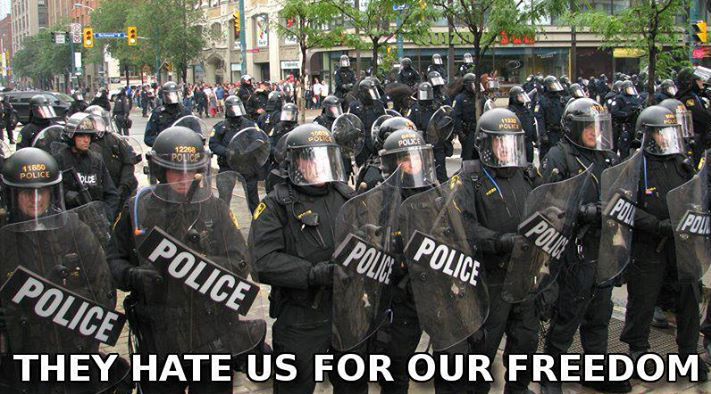
Why do they hate us?

Following a controversial deployment to the nation’s capital to defend and protect the inauguration, at least 5,000 National Guard members will remain in Washington through mid-march.
“As we continue to work to meet the final post-inauguration requirements, the National Guard has been requested to continue supporting federal law enforcement agencies with 7,000 members and will draw down to 5,000 through mid-March,” Maj. Matt Murphy told the Epoch Times.
“We are providing assistance such as security, communications, medical evacuations, logistics and safety support to state, district and federal agencies,” he added.
One-thousand of these National Guard troops are from Virginia, according to Virginia National Guard officials.
“Virginia National Guard personnel are remaining on duty following the Presidential Inauguration at the request of local and federal authorities, and they will remain on duty until those agencies no longer require our direct support,” Maj. Gen. Timothy P. Williams said.
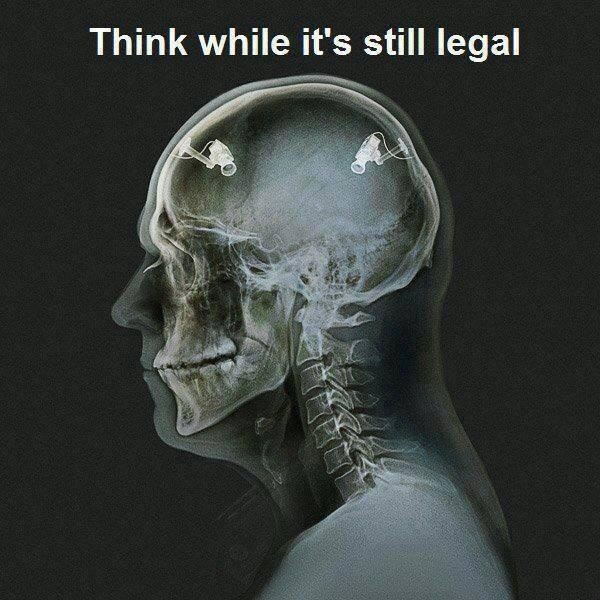
Gabbard’s comments came during an appearance on Fox News Primetime when host Brian Kilmeade asked her if she was “surprised they’re pushing forward with this extra surveillance on would-be domestic terror.”
“It’s so dangerous as you guys have been talking about, this is an issue that all Democrats, Republicans, independents, Libertarians should be extremely concerned about, especially because we don’t have to guess about where this goes or how this ends,” Gabbard said.
She continued:
“When you have people like former CIA Director John Brennan openly talking about how he’s spoken with or heard from appointees and nominees in the Biden administration who are already starting to look across our country for these types of movements similar to the insurgencies they’ve seen overseas, that in his words, he says make up this unholy alliance of religious extremists, racists, bigots, he lists a few others and at the end, even libertarians.”
She said her concern lies in how officials will define the characteristics they are searching for in potential threats.
“What characteristics are we looking for as we are building this profile of a potential extremist, what are we talking about? Religious extremists, are we talking about Christians, evangelical Christians, what is a religious extremist? Is it somebody who is pro-life? Where do you take this?” Gabbard said.
She said the proposed legislation could create “a very dangerous undermining of our civil liberties, our freedoms in our Constitution, and a targeting of almost half of the country.”
“You start looking at obviously, have to be a white person, obviously likely male, libertarians, anyone who loves freedom, liberty, maybe has an American flag outside their house, or people who, you know, attended a Trump rally,” Gabbard said.
The Domestic Terrorism Prevention Act of 2021 was introduced in the House earlier this week in the aftermath of rioting at the U.S. Capitol earlier this month that left five dead.
Former President Donald Trump’s upcoming Senate impeachment trial poses a security concern that federal law enforcement officials told lawmakers last week requires as many as 5,000 National Guard troops to remain in Washington through mid-March, according to four people familiar with the matter.
The contingency force will help protect the Capitol from what was described as “impeachment security concerns,” including the possibility of mass demonstrations coinciding with the Senate’s trial, which is slated to begin the week of Feb. 8.
Despite the threat, the citizen soldiers on the ground say they have been given little information about the extension and wonder why they are being forced to endure combat-like conditions in the nation’s capital without a clear mission.
“Quite frankly this is not a ‘combat zone,’ so combat conditions shouldn’t apply,” said one Guard member on the ground in D.C. who has deployed twice to Afghanistan.
Several National Guard units have seen their deployments extended involuntarily, though a majority of Guardsmen remaining in Washington will do so on a volunteer basis. Around 7,000 troops will continue to provide riot security through the beginning of February, with that number decreasing slightly to 5,000 by the time Trump’s impeachment trial begins.
The Miami Heat are bringing back some fans, with help from some dogs.
The Heat will use coronavirus-sniffing dogs at AmericanAirlines Arena to screen fans who want to attend their games. They’ve been working on the plan for months, and the highly trained dogs have been in place for some games this season where the team has allowed a handful of guests — mostly friends and family of players and staff.
Starting this week, a limited number of ticket holders will be in the seats as well, provided they get past the dogs first.
President Joe Biden signed an executive order on Thursday which may be the precursor to requiring proof of vaccination for air travel.
The executive order was entitled “Promoting COVID-19 Safety in Domestic and International Travel.” Section 5 ‘International Travel’ subsection ‘e’ the order read:
“International Certificates of Vaccination or Prophylaxis. Consistent with applicable law, the Secretary of State, the Secretary of HHS, and the Secretary of Homeland Security (including through the Administrator of the TSA), in coordination with any relevant international organizations, shall assess the feasibility of linking COVID-19 vaccination to International Certificates of Vaccination or Prophylaxis (ICVP) and producing electronic versions of ICVPs.”
The order also called for “agencies may impose additional public health measures for domestic travel.”
The order also mandates masks on airplanes, trains, ferries, ships, bus services and inside airports.
Writing at The Daily Beast, Jeff Stein asks whether America needs a new federal spy agency focused on domestic threats in the wake of the attack on the U.S. Capitol by Americans who refuse to accept that outgoing President Donald Trump lost the 2020 election.
But we already have such an organization. It’s called the FBI. Stein argues that the FBI is so focused on solving and clearing crimes that it’s not able to effectively engage in domestic intelligence gathering. He asks whether a new federal agency should be created for that purpose.
In reality, the FBI is set up just fine for intelligence gathering. In fact, under Trump, the FBI’s authority to secretly snoop on American citizens was actually expanded. The intelligence failures that preceded the attack on the Capitol involved a lack of communication between law enforcement agencies about the intelligence that had been gathered. It’s not entirely clear how yet another federal surveillance agency would fix that problem.
Baltimore/Washington International Thurgood Marshall Airport (BWI) has welcomed in the new year with Light Detection and Ranging (LiDAR) technology informing travelers at one security checkpoint whether they’re properly social distancing, according to Airport World.
The LiDAR technology measures travelers’ movements with laser sensors, including the number of people waiting in line. Automated tracking software firm CrowdVision installed the new sophisticated technology at Security Checkpoint B of BWI.
The system notifies travelers on a giant screen whether social distancing is satisfactory. If lines at the security checkpoint are too dense, the system will encourage those waiting in line to practice more social distancing.
“Safe, healthy travel remains our priority,” said BWI’s executive director, Ricky Smith.
“Since the outset of the pandemic, BWI Marshall Airport has implemented many measures to help protect passengers and employees. This innovation provides real-time data on passenger flow so we can notify travelers and manage separation,” Smith said.
Among other global airports, BWI could be one of the first to embrace LiDAR technology to enforce social distancing.
 Hellbound and Down
You must be logged in to post a comment.