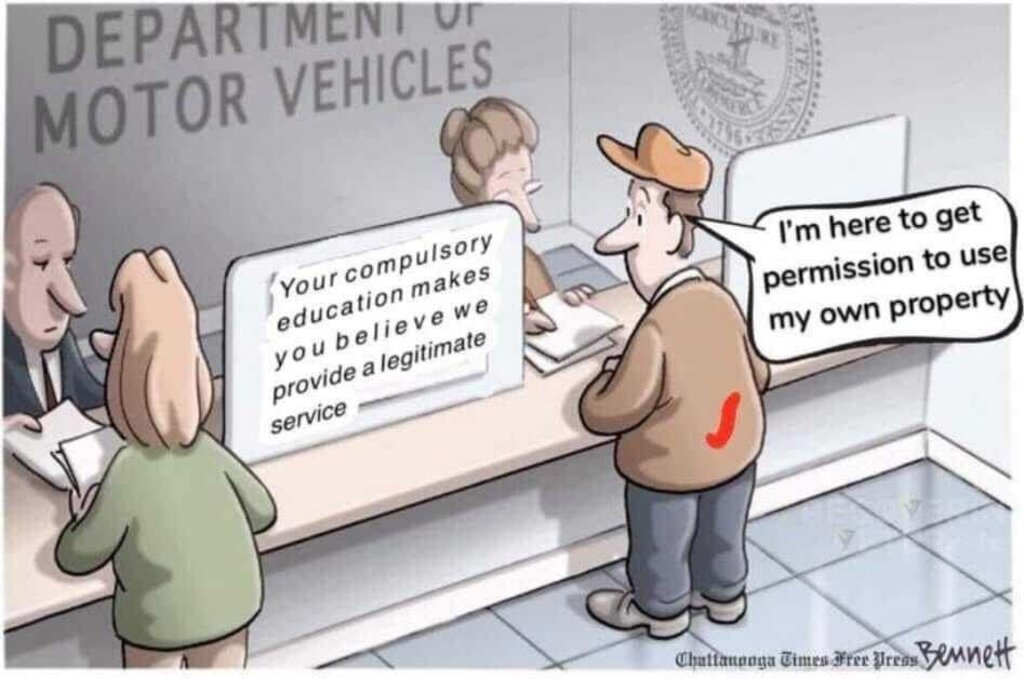
Thought Police: Germany Conducts Mass Raids over Online ‘Insults’ Against Politicians

Federal police in Germany have conducted mass raids across 13 states on Tuesday over online ‘insults’ levied against politicians.

A large number of apartments and houses were raided in Germany on Tuesday as Federal police in the country look to prosecute those who made allegedly hateful remarks against elected officials online.

In total, federal authorities have said that they have checked over 600 statements for so-called “criminal content”, with 100 people being “searched and questioned” across 13 different German states.

According to a report by Der Spiegel, a significant number of raids have also been conducted, with the houses and apartments of those suspected of posting illegal online messages being searched by law enforcement for incriminating evidence.
Keep reading

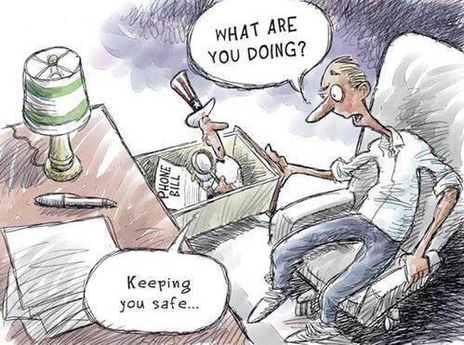
South Africa considers requiring citizens to turn over biometric data to own a phone

Governments of several nations around the world have considered using biometric data during SIM card registrations as a “fraud deterrent.” The proposals have always faced pushback for being a clear challenge to privacy.

Biometric data or identifiers include scans of a fingerprint, palm, retina, or the entire face of the user. South Africa has become the latest nation to consider SIM laws that make this data a mobile phone registration requirement.

Identity and other thieves can still hack phones with current security measures. Biometric data makes it more difficult because a criminal would need biometric proof that they own a phone and have the right to unlock it.

Acquiring body scans illegally is a difficult process. Governments hope that the extensive time and financial effort required to copy or mimic the biometrics of a specific person might deter criminals from hacking phones.

They also hope it might deter criminals from using their own phones for criminal activities since biometrics data creates a solid link between them and their phones that investigators can trace from a phone used in a crime back to the owner.

The telephone regulator for South Africa believes that all SIM card records should have biometric identifiers. For now, the data would only be used for basic authentication of ownership and monitoring of SIM swaps.

Keep reading

Doctor Honored and Investigated by Same State For Same Work

In a classic case of one hand not knowing what the other is doing, a Virginia doctor has been awarded a legislative commendation for his study into alternative treatments of COVID-19 just a few days before the state’s medical licensing board informed him he was under investigation for misconduct for the same work.

On Mar. 11, the Virginia House of Delegates unanimously passed HR228, a resolution to recognize Dr. Paul Marik, founder of the Front Line COVID-19 Critical Care Alliance (FLCCC), for what lawmakers called “his courageous treatment of critically ill COVID-19 patients.”

“Instead of playing it safe, and going along with so-called conventional wisdom, Dr. Marik dared to take a truly scientific approach by questioning and innovating in an environment where both were not only frowned upon, but for which he was persecuted,” said Virginia Republican Dave LaRock, the resolution’s primary sponsor.

Just a few days later Marik received a letter dated Mar. 15 from the Virginia Department of Health Professions informing him he had until Mar. 29 to respond to an investigation underway by the agency into his medical practices.

According to the letter, the investigation is based on a complaint from Sentara Hospitals, Norfolk, where Marik ran its intensive-care unit before it suspended him for refusing to prescribe Remdesivir and instead prescribed Ivermectin and other alternative treatments to COVID patients.

Keep reading

Signed as Law: Utah Expands Limits on Drone Surveillance

On Monday, Utah Governor Spencer Cox signed a bill into law expanding state limits on government drone surveillance. The legislation will not only establish important privacy protections at the state level; it will also help thwart the federal surveillance state.

Rep. Ryan Wilcox (R) introduced House Bill 259 (HB259) on Jan. 28. In 2014, Utah passed a law requiring police to get a warrant before conducting drone surveillance in most situations. HB259 clarifies that the law applies “to any imaging surveillance device, as defined in Section 77-23d-102 when used in conjunction with an unmanned aircraft system.” This includes “radar, sonar, infrared, or other remote sensing or detection technology.”

In effect, the enactment of HB259 clarifies that this type of technology cannot be used in conjunction with a drone without a warrant.

The Senate passed HB259 by a 23-0 vote. The House approved the measure by a vote of 70-0. With Gov. Cox’s signature, the law goes into effect May 4.

Keep reading

Eric Adams considering using drones to fight NYC crime, sources say

Mayor Eric Adams is mulling a mini-army of drones to fight surging crime in the Big Apple — possibly deploying the high-flying robocops from rooftops as watchful guardians of Gotham, sources told The Post.

Tel Aviv-based Blue White Robotics and Easy Aerial of Brooklyn were two drone manufacturers featured earlier this month at an event to launch a NYC-Israel Chamber of Commerce.

Adams attended the gathering in the Williamsburg Hotel, and sources said the mayor was so impressed with the joint presentation that he suggested his chief technology officer Matthew Fraser and the firms’ honchos begin talks about the city potentially buying drones and expanding the NYPD’s use of them.

“Eric is a big booster of drones and how they can be used to streamline government function, but obviously whatever he would try to roll out would be constrained” under existing laws limiting drone use, said a source familiar with the mayor’s thinking.

The drone makers – whose clients include the US Department of Defense, Air Force and Customs and Border Protection – say they’ve dubbed the plan the “Soteria Project,” derived from a Greek word meaning “deliverance from a crisis.”

Keep reading

The Kids Online Safety Act Is a Heavy-Handed Plan to Force Platforms to Spy on Young People

Putting children under surveillance and limiting their access to information doesn’t make them safer—in fact, research suggests just the opposite. Unfortunately those tactics are the ones endorsed by the Kids Online Safety Act of 2022 (KOSA), introduced by Sens. Blumenthal and Blackburn. The bill deserves credit for attempting to improve online data privacy for young people, and for attempting to update 1998’s Children’s Online Privacy Protection Rule (COPPA). But its plan to require surveillance and censorship of anyone under sixteen would greatly endanger the rights, and safety, of young people online.

KOSA would require the following:

  • A new legal duty for platforms to prevent certain harms: KOSA outlines a wide collection of content that platforms can be sued for if young people encounter it, including “promotion of self-harm, suicide, eating disorders, substance abuse, and other matters that pose a risk to physical and mental health of a minor.”
  • Compel platforms to provide data to researchers
  • An elaborate age-verification system, likely run by a third-party provider
  • Parental controls, turned on and set to their highest settings, to block or filter a wide array of content

There are numerous concerns with this plan. The parental controls would in effect require a vast number of online platforms to create systems for parents to spy on—and control—the conversations young people are able to have online, and require those systems be turned on by default. It would also likely result in further tracking of all users.

Keep reading