
Coming soon to a police state near you…

The FBI is refusing to release DOJ-mandated body camera footage from agents who participated in a raid that killed Craig Robertson, a 75-year-old disabled Trump supporter who allegedly threatened President Biden on Facebook, according to a report from Daily Wire reporter Gregg Re.
“The fbi is refusing to release the doj-mandated body camera footage in the shooting death of Utah man Craig Robertson. They say it could “interfere” with “enforcement proceedings.” (??)” Re wrote in an X post on Tuesday. “This is an elderly guy that the salt lake field office decided to surprise and swarm at 6 am.”
Re included a response to a Freedom of Information Act (FOIA) request that sought to obtain the footage. “The material you requested is located in an investigative file which is exempt from disclosure,” the response states.
“The records responsive to your request are law enforcement records: there is a pending or prospective law enforcement proceeding relevant to these responsive records, and release of the information could reasonably be expected to interfere with enforcement proceedings,” the letter continued. “Therefore, your request is being administratively closed.”
The U.K. government finally acknowledges that a component of the Online Safety Bill that would force tech companies to scan data and messages for child porn images can’t be implemented without violating the privacy rights of all internet users and undermining the data encryption tools that keep our information safe.
And so the government is backing down—for now—on what’s been called the “spy clause.” Using the justification of fighting the spread of child sexual abuse material (CSAM), part of the Online Safety Bill would have required online platforms to create “backdoors” that the British government could use to scan messages between social media users. The law also would’ve allowed the government to punish platforms or sites that implement end-to-end encryption and prevent the government from accessing messages and data.
While British officials have insisted that this intrusive surveillance power would be used only to track down CSAM, tech and privacy experts have warned repeatedly that there’s no way to implement a surveillance system that could be used only for this particular purpose. Encryption backdoors allow criminals and oppressive governments to snoop on people for dangerous and predatory purposes. Firms like Signal and WhatsApp threatened to pull their services from the U.K. entirely if this bill component moved forward.
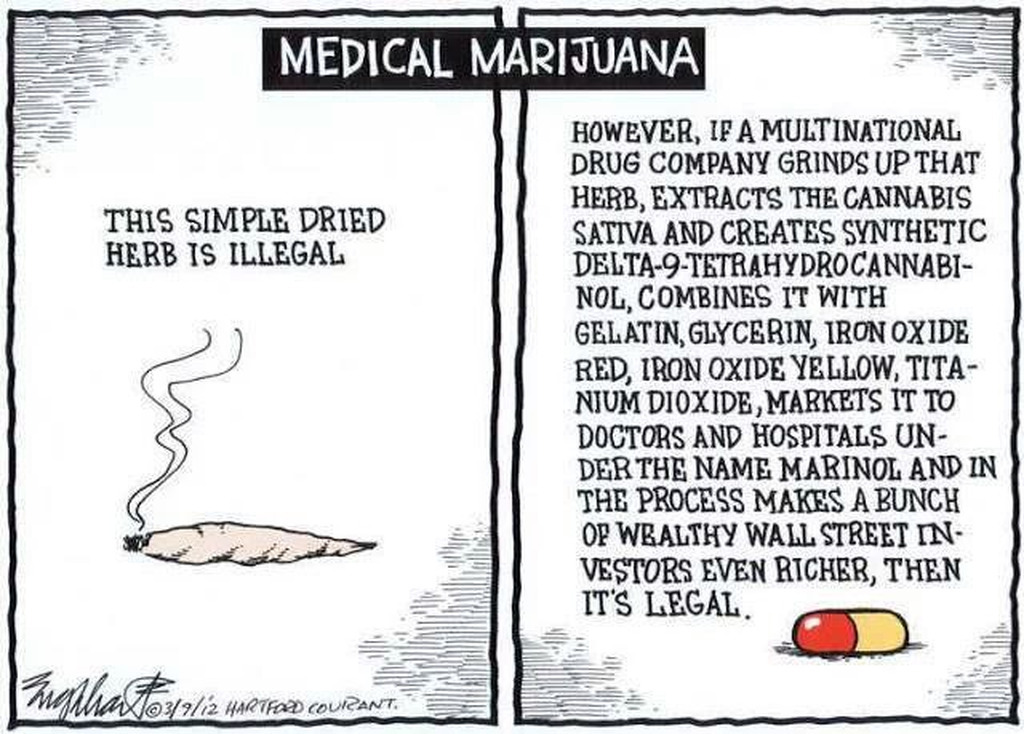
An anti-marijuana advocacy group is taking aim at a banking arrangement between Wells Fargo and the state of Maryland that allows officials to receive and process tax revenue generated by state-legal cannabis businesses, calling the scheme “an active effort to protect the banks who are breaking federal law” and making an attempt to alert federal officials about it.
The state, for its part, has said it “complies with applicable laws and regulations.”
Smart Approaches to Marijuana (SAM), which opposes marijuana legalization, made the allegations in a press release late last month following media reports of the banking arrangement, including in Marijuana Moment.
The also group sent an open letter to Maryland officials and Wells Fargo, while CCing several federal officials, requesting that “Wells Fargo cease working with Maryland state officials to circumvent federal laws and regulations.”
“The workaround by the Maryland government reported on in the media is a clear attempt to protect banks from thoughtfully crafted federal regulations,” the prohibitionist group’s letter says.
Among those copied on the letter are Erek L. Barron, the U.S. attorney for Maryland, whose office would oversee any potential federal prosecutions in the state, as well as Attorney General Merrick Garland and Treasury Secretary Janet Yellen.
THOUSANDS OF AIRBNBS and short-term rentals are about to be wiped off the map in New York City.
Local Law 18, which came into force Tuesday, is so strict it doesn’t just limit how Airbnb operates in the city—it almost bans it entirely for many guests and hosts. From now on, all short-term rental hosts in New York must register with the city, and only those who live in the place they’re renting—and are present when someone is staying—can qualify. And people can only have two guests.
Gone are the days of sleek downtown apartments outfitted for bachelorette parties, cozy two- and three-bedroom apartments near museums for families, and even the option for people to rent out their apartment on weekends when they’re away. While Airbnb, Vrbo, and others can continue to operate in New York, the new rules are so tight that Airbnb sees it as a “de facto ban” on its business.
Short-term rentals can bring noise, trash, and danger, and they can price local residents out of their own neighborhoods. Some landlords in New York are prolific and have hundreds of Airbnb listings. But other New Yorkers who have listings on Airbnb are trying to make ends meet, either leasing their place while they’re out of town or renting half of a duplex to help cover their mortgage costs.
Airbnb is also popular with some of the 66 million visitors a year looking for accommodations that are cheaper and sometimes larger than hotels. In 2022 alone, short-term rental listings made $85 million in New York. The city might be a relatively small slice of Airbnb’s global market, but the new rules show how local governments can effectively stamp out short-term rentals overnight and lessen their impact on dense residential areas. And New York is just one of many cities around the world trying to calm the short-term rental gold-rush.
And everyone is taking a different approach. Dallas has limited short-term rentals to specific neighborhoods to avoid disruptive and dangerous parties. Elsewhere, the Canadian province of Quebec and Memphis, Tennessee, among others, now require licenses for short-term rentals. In San Francisco, the amount of time someone can list their entire residence for rent on Airbnb is limited to 90 days each year; Amsterdam puts that limit at 30 nights per year, Paris at 120 days. Berlin previously banned nearly all Airbnbs but walked the decision back in 2018.
Airbnb’s attempts to fight back against the new law have, to date, been unsuccessful. The company sued New York City in June, but a judge dismissed the case in August, ruling that the restrictions were “entirely rational.” Airbnb did not comment on whether it would appeal the decision. Hosts are also fighting for the right to list their apartments as short-term stays by meeting with city officials to try to change the law.
Arrest and incarceration are uniquely dangerous experiences, regardless of where they take place. People die every day in law enforcement custody. In jails, prisons, and immigration detention centers. On sidewalks, city streets, and in their homes. From violence, neglect, and suicide. Despite the frequency of in-custody deaths, their exact scope remains unknown and data is often intentionally obfuscated by the refusal of states to comply with federally mandated reporting requirements.
More than two decades ago, Congress passed the Death in Custody Reporting Act (DCRA), requiring states to report the number of people who die in custody or during arrest. But authorities have resisted implementing the DCRA, resulting in incomplete data that likely drastically undercounts the actual figures. Although the DCRA authorized the federal government to financially penalize states that fail to meet reporting requirements, enforcement has been lax.
In a recently released book, Death In Custody: How America Ignores The Truth and What We Can Do About It, authors Roger A. Mitchell Jr. and Jay D. Aronson argue that deaths in law enforcement custody amount to a public health emergency. Their work ties in high-profile examples and shows how journalists have long done the work of tracking in-custody deaths—from Ida B. Wells famously investigating extrajudicial lynchings in the late 19th century, to the Washington Post’s comprehensive database of police shooting deaths beginning in 2015.
Mitchell and Aronson argue that collecting accurate data is the first step toward addressing this crisis. To do this, they propose amending U.S. death certificates to begin accounting for in-custody deaths. “The government’s ultimate responsibility is to protect and preserve life, so any government system that causes death requires an immediate response—especially when those deaths are justified as serving ‘public safety,’” the authors write.
Censorship of the Internet has been getting worse for years, but we just crossed a threshold which is going to take things to a whole new level.
On August 25th, a new law known as the “Digital Services Act” went into effect in the European Union. Under this new law, European bureaucrats will be able to order big tech companies to censor any content that is considered to be “illegal”, “disinformation” or “hate speech”. That includes content that is posted by users outside of the European Union, because someone that lives in the European Union might see it. I wrote about this a few days ago, but I don’t think that people are really understanding the implications of this new law. In the past, there have been times when governments have requested that big tech companies take down certain material, but now this new law will give government officials the power to force big tech companies to take down any content that they do not like.
Any big tech companies that choose not to comply will be hit with extremely harsh penalties.
Of course mainstream news outlets such as the Washington Post are attempting to put a positive spin on this new law. We are being told that it will “safeguard” us from “illegal content” and “disinformation”…
New rules meant to safeguard people from illegal content, targeted ads, unwanted algorithmic feeds and disinformation online are finally in force, thanks to new regulation in the European Union that took effect this month.
Doesn’t that sound wonderful?
Laws to ban disinformation and misinformation are being introduced across the West, with the partial exception being the US, which has the First Amendment so the techniques to censor have had to be more clandestine.
In Europe, the UK, and Australia, where free speech is not as overtly protected, governments have legislated directly. The EU Commission is now applying the ‘Digital Services Act’ (DSA), a thinly disguised censorship law.
In Australia the government is seeking to provide the Australian Communications and Media Authority (ACMA) with “new powers to hold digital platforms to account and improve efforts to combat harmful misinformation and disinformation.”
One effective response to these oppressive laws may come from a surprising source: literary criticism. The words being used, which are prefixes added to the word “information,” are a sly misdirection. Information, whether in a book, article or post is a passive artefact. It cannot do anything, so it cannot break a law. The Nazis burned books, but they didn’t arrest them and put them in jail. So when legislators seek to ban “disinformation,” they cannot mean the information itself. Rather, they are targeting the creation of meaning.
The authorities use variants of the word “information” to create the impression that what is at issue is objective truth but that is not the focus. Do these laws, for example, apply to the forecasts of economists or financial analysts, who routinely make predictions that are wrong? Of course not. Yet economic or financial forecasts, if believed, could be quite harmful to people.
The laws are instead designed to attack the intent of the writers to create meanings that are not congruent with the governments’ official position. ‘Disinformation’ is defined in dictionaries as information that is intended to mislead and to cause harm. ‘Misinformation’ has no such intent and is just an error, but even then that means determining what is in the author’s mind. ‘Mal-information’ is considered to be something that is true, but that there is an intention to cause harm.
Alabama wants to execute a man so badly that they’re likely to become the first state in the nation to kill someone by nitrogen hypoxia.
Kenneth Eugene Smith, 58, who was sentenced to death for a 1988 murder-for-hire killing, has already survived one execution attempt from the state. Last November, he won a court case allowing him to demand to be executed specifically by nitrogen hypoxia, a method that has been approved in Alabama since 2018 but has remained untested.
Nonetheless, Alabama Attorney General Steve Marshall still asked the state Supreme Court to set an execution date for Smith last week, with plans to use the method.
While four states in addition to Alabama have approved execution by lethal gas, no one has been executed using this method since 1999. While 20th-century gas chambers typically killed inmates using cyanide gas, death by nitrogen hypoxia is a completely untested method. Under the proposed process, an inmate would be placed in a gas chamber, where they would be forced to breathe pure nitrogen, ultimately causing death by suffocation due to the lack of oxygen.
After long arguing that they should be allowed to kill Smith by lethal injection because the state had not yet developed a nitrogen hypoxia protocol, state officials unveiled a formal nitrogen hypoxia process in conjunction with their motion to set Smith’s execution date. Under the process, the inmate will wear a mask, which will force them to breathe pure nitrogen gas “for 15 minutes, or five minutes following a flatline indication on the EKG, whichever is longer,” resulting in death by suffocation.
Smith won the right to be executed by this method in a ruling from the U.S. Court of Appeals for the 11th Circuit last November. Smith argued that a lethal injection attempt would expose him to “an intolerable risk of torture, cruelty, or substantial pain,” citing the state’s previous botched executions.
The same day as the 11th Circuit’s ruling, the U.S. Supreme Court lifted a stay of execution for Smith. Alabama officials attempted to kill him by lethal injection that day, but they abandoned their attempt after they tried unsuccessfully for several hours to place IV needles in Smith’s arms.
While nitrogen hypoxia has been touted as a more humane method for killing death-row inmates—it’s simply unknown how much suffering death by nitrogen hypoxia causes.


You must be logged in to post a comment.