
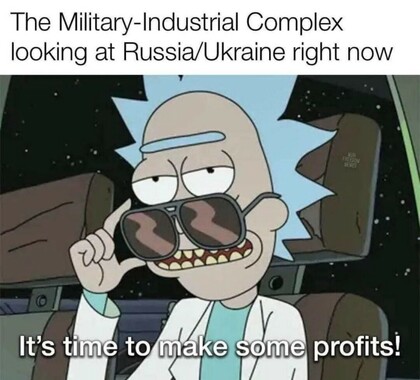
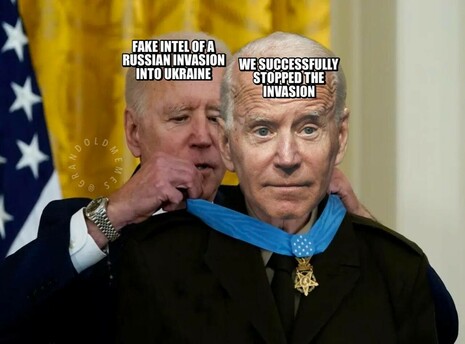
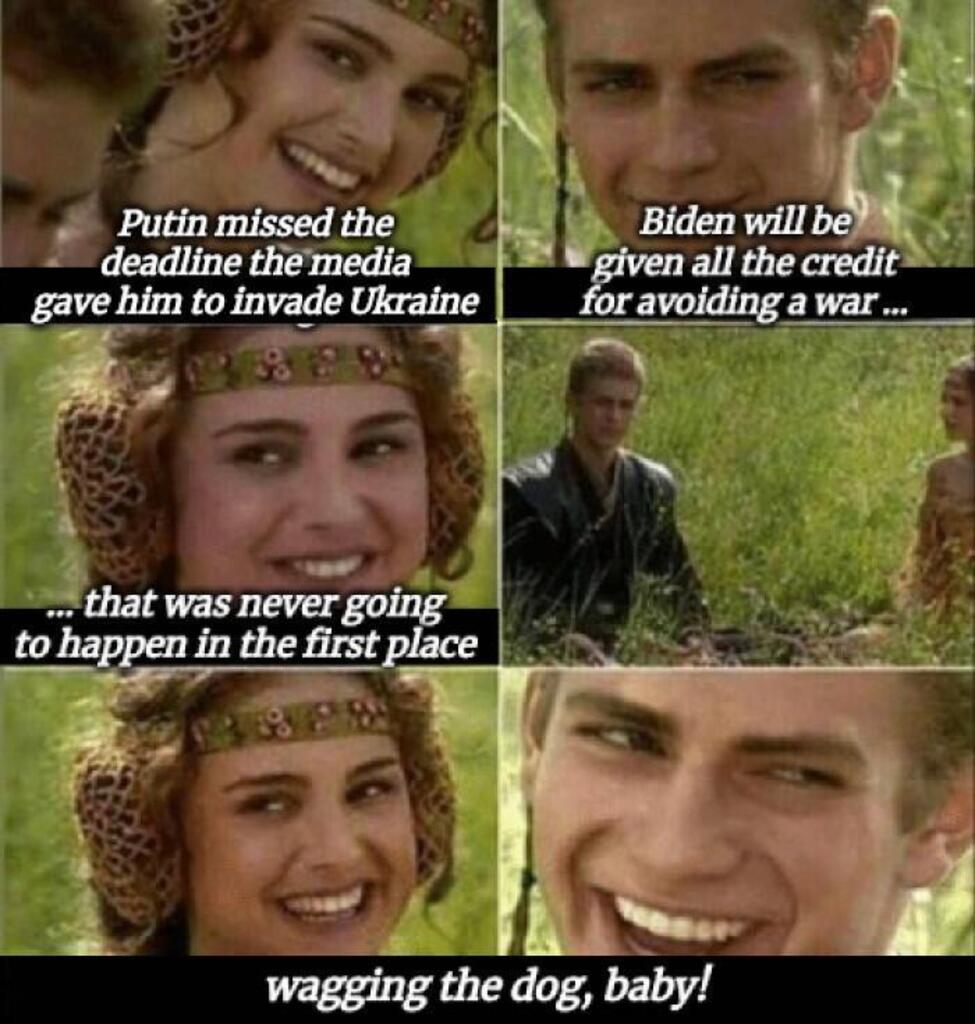
War is one of the most primitive and senseless manifestations of the human experience, so naturally, most sane people with families, ambitions and kind hearts want nothing to do with such things. Unfortunately, as we are seeing with the Ukraine / Russia escalation, governments thrive on war, as it gives them a pressing excuse to grab more power and take extrajudicial measures—both at home and abroad.
To get around the obstacle of public opinion, governments have an extensive history of lying their way into war. This is hard to believe for people who think that government has their best interest in mind, but it is something that rulers have been doing since the beginning of time. In the modern United States, people are led to believe that the establishment accidentally flounders its way into war with the good intentions of protecting the country from harm or liberating an ally in distress.
This strategy of deception was illustrated by the Nazi propagandist Herman Goering, who famously said:
“Of course the people don’t want war. Why should some poor slob on a farm want to risk his life in a war when the best he can get out of it is to come back to his farm in one piece? Naturally, the common people don’t want war neither in Russia, nor in England, nor for that matter in Germany. That is understood. But, after all, it is the leaders of the country who determine the policy and it is always a simple matter to drag the people along, whether it is a democracy, or a fascist dictatorship, or a parliament, or a communist dictatorship. Voice or no voice, the people can always be brought to the bidding of the leaders. That is easy. All you have to do is tell them they are being attacked, and denounce the peacemakers for lack of patriotism and exposing the country to danger. It works the same in any country.”
Of course, the Nazi regime is notorious for their brutality and deceit, so this admission is not as stunning as it would be from an American general, but make no mistake that these are the types of thoughts that American generals and politicians have—they are just not brazen enough to say it out loud.
Believe it or not, using deceptive tactics to sway public opinion in favor of war is actually an official part of the US military’s playbook. According to Wikileaks, the U.S. Army’s publication “Special Forces Foreign Internal Defense Tactics Techniques and Procedures for Special Forces” recommends funding terrorists for regime change operations and using false flag attacks to destabilize regimes that were unfriendly to western interests.
This is nothing new though, this is a part of American history, as nearly every war that the U.S. has ever been involved in was built upon lies. Below are some of the most well-documented examples of wars that were started because of lies and government propaganda.
 Hellbound and Down
You must be logged in to post a comment.