
Clown world, cont.


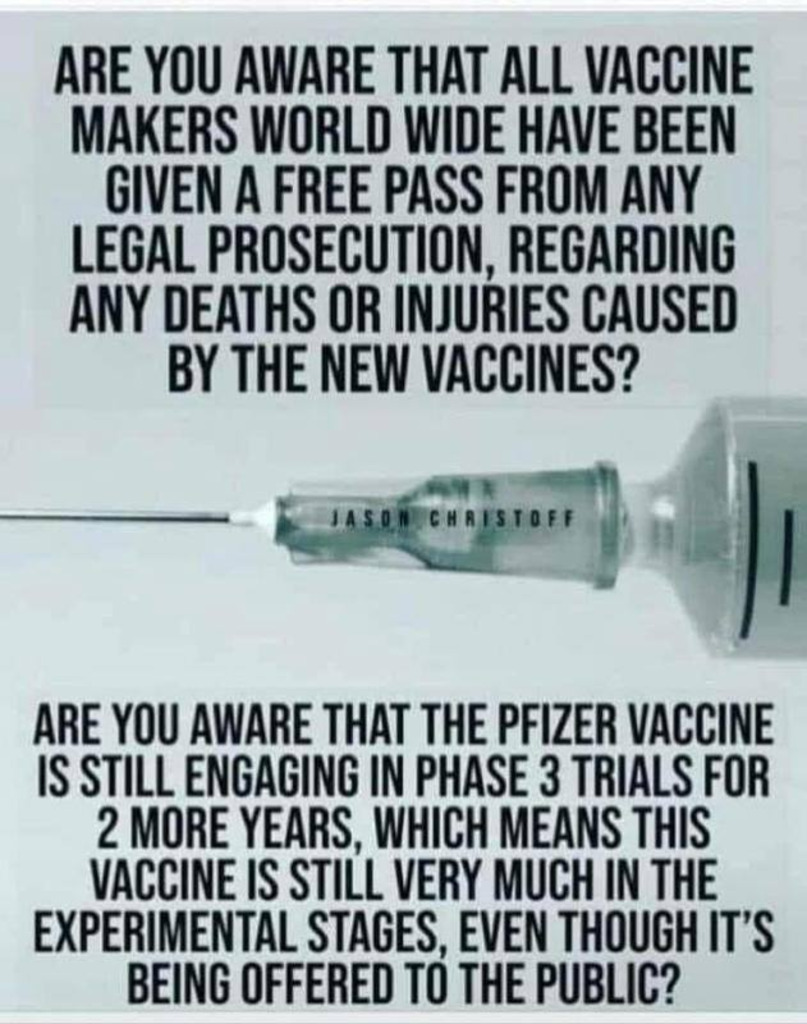
According to new data released today, as of Feb. 12, 15,923 adverse reactions to COVID vaccines, including 929 deaths, have been reported to the Centers for Disease Control and Prevention’s (CDC) Vaccine Adverse Event Reporting System (VAERS) since Dec. 14, 2020.
VAERS is the primary mechanism in the U.S. for reporting adverse vaccine reactions. Reports submitted to VAERS require further investigation before a determination can be made as to whether the reported adverse event was directly or indirectly caused by the vaccine.
The study, entitled “Reparations for American Descendants of Persons Enslaved in the U.S. and their Potential Impact on SARS-CoV-2 Transmission” was published in the “Social Science and Medicine” Journal online at the start of the month.
Put together by academics from Harvard, Duke, UC San Francisco, Stanford, among other universities and organisations, claimed that if only the US had given black Americans reparations for slavery, then coronavirus transmissions would drop in the community by anywhere between 31%-68%.
The study compares the transmission rates at the start of the pandemic between Louisiana, and South Korea, and claimed that the R-rate in Louisiana would have dropped by the given percentages if each black American in the state was given $250,000 in reparations, or $800,000 per household.
The government of the United Kingdom has been collecting critical safety data on the Pfizer/ BioNTech and Oxford/ AstraZeneca “vaccines,” and the latest report doesn’t paint a pretty picture.
The first dose of the experimental Pfizer/ BioNTech “vaccine” has been introduced into the arms of 5.4 million citizens, with 500,000 of these people receiving a second dose.
Up until January 24, there have been nearly 50,000 reports of vaccine injury for this specific vaccine, including the sudden death of seven UK citizens…

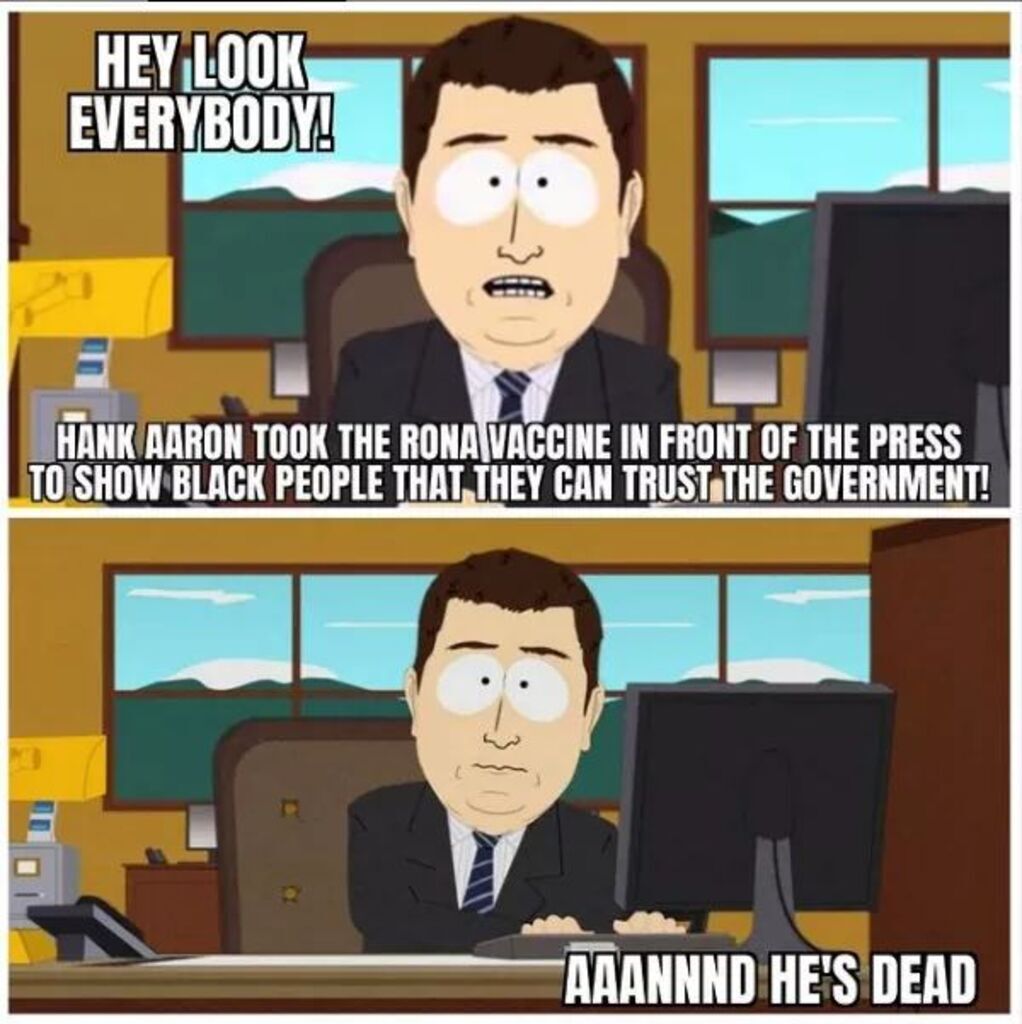
Late last month, the mainstream media attacked me in a regimented swarm “debunking” my quote in The Defender questioning whether Hank Aaron’s death might have been related to the Moderna COVID-19 vaccine he received 18 days earlier.
I never said that the Moderna shot caused Aaron’s death. I simply made the factual observation that “Aaron’s tragic death is part of a wave of suspicious deaths among elderly closely following administration of COVID vaccines.”
Among the apoplectic hive of “fact checkers” that condemned this statement as “misinformation” were Meet the Press, NBC, The New York Times, The Washington Post, USA Today, Chicago Tribune, Inside Edition and many more.
The Daily Beast headline summarized the media’s moral revulsion at my query: “RFK Jr. Stoops to New Low by Falsely Tying Hank Aaron’s Death to Vaccine.”
Shortly after this high-tech media lynching, Instagram permanently deplatformed my 800,000 follower account.
The New York Times, citing the Fulton County coroner’s office, assured the public that “the Covid vaccine did not kill Hank Aaron.” NBC’s national wire service reported that the Fulton County coroner declared that Aaron’s death was from “natural causes unrelated to the vaccine.”
Fact checkers falsely claimed the coroner exonerated the Moderna vaccine
In an embarrassing disclosure for the mainstream Pharmedia, the Fulton County coroner’s office denies that any of its staff ever saw Aaron’s body, much less conducted an examination. Candace, a medical examiner investigator for the Fulton County coroner’s office, told me, “His body was never here. We declined jurisdiction. There was never any autopsy.”
Candace explained that since Aaron’s personal physician assumed his death was from “natural causes,” there was never any necropsy or postmortem investigation. By implying that the Fulton County coroner conducted an autopsy, the New York Times and other media outlets deceived their readers.
Vaccine deaths are nearly impossible to diagnose
I contacted the Fulton County coroner’s office because the various press denunciations all cited that office as their authoritative source exculpating the vaccine. I was curious to know what cutting-edge test the medical examiner might have performed that would so definitively rule out the vaccine as a contributing culprit.
Under the best circumstances, vaccine injuries are notoriously difficult — if not impossible — to diagnose — so difficult, in fact, that doctors miss MORE than 99% of them, according to a 2010 U.S. Department of Health and Human Services (HHS) study.
Vaccine injuries wear so many guises that nobody even knows what they look like. Manufacturers’ U.S. Food and Drug Administration (FDA)-required product inserts on the 16 vaccines the Centers for Disease and Prevention (CDC) recommends for children list some 400 ways that vaccines can kill or injure people. These include heart attacks, myocardial infarction, strokes, seizures, tachycardia, a long list of allergies and allergic reactions, encephalopathy, anaphylaxis, arteritis, autoimmune injuries, blood clots, brain swelling, systemic inflammation, sudden death and many, many others.
Vaccine injuries and deaths generally result from aggravations of existing comorbidities. But since the vaccine rarely leaves a distinctive fingerprint, there is almost no way to determine if the vaccine triggered the fatal event — even with an extensive autopsy.
The National Academy of Sciences has listed 175 injuries closely associated with vaccines, and concludes that there is insufficient science to exonerate or definitively inculpate any of them.
In cases before the National Vaccine Injury Compensation Program (Vaccine Court), the government routinely takes the reflexive position that something else caused the injuries. The Vaccine Court has nevertheless paid out $4.5 billion for vaccine injuries. The deciding factor in most of these cases is timing; If the injury or death associated with that vaccine occurred within a few days or weeks following inoculation, the court is more likely to assume culpability.
Contrary to the positions of the so-called “Fact Checkers” and others, no one can say that the Moderna vaccine killed Aaron, and no one can rule it out as a culprit.
Local watermen and charter boat operators don’t quite understand the logic behind President Joe Biden’s Jan. 21 executive order requiring passengers and crew to wear masks when their vessels are in federally regulated waters, but they have little choice but to follow the rules.
If they don’t, they could run into trouble with the Coast Guard, which is charged with enforcing the new regulation authorized by an executive order issued by President Joe Biden.


You must be logged in to post a comment.