The Story of a Weed that Could Make Californians Rich!

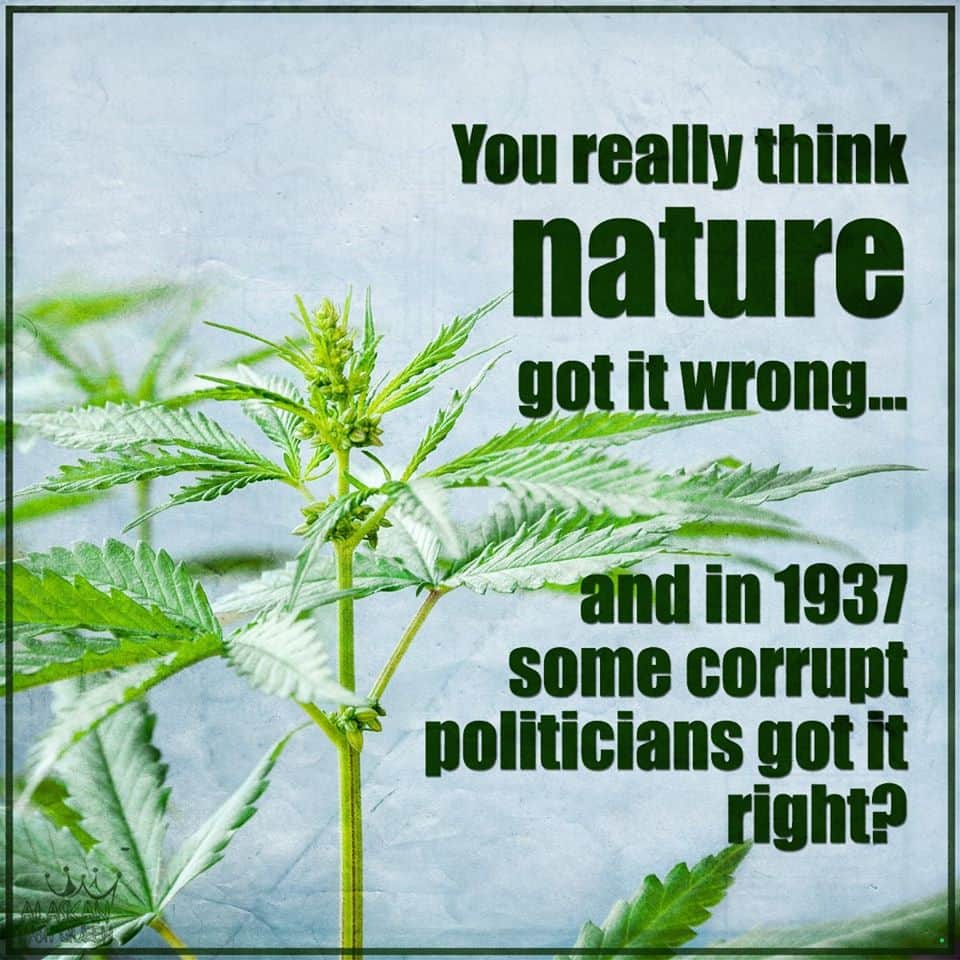
It was 1930s and the last thing the depression era needed was an invasive plant that took over farmland and pastures. The Klamath weed, or goatweed, a native of Europe, first appeared in the United States in 1793 near Lancaster, Pennsylvania. By 1900 it had reached California in the vicinity of the Klamath River, hence the name locally given to it. By 1929 it had occupied about 100,000 acres of rangeland, and by 1952 it had invaded some two and one half million acres. Livestock consuming “the weed” became sore-mouthed and lost weight so the government and chemical (pesticide) companies took action! Tons of herbicides like 2,4-D (a component of the notorious chemical weapon called “Agent Orange”)1 were used and millions of dollars were spent to control the weed with little success. Local rivers and soil were contaminated with the harmful chemicals that accumulate in animals and humans and can cause neuroendocrine disruptions (More details in my article Do Pesticides Impact Fertility, Masculinity and Miscarriages? An Overview of Scientific Literature).

The “invasion” problem was finally solved when species of beetles (native to southern France) were imported in 1944, that mainly fed upon the “weed.”

In her 1962 book Silent Spring, Rachel Carson discusses Klamath weed as an example of how poorly researched chemical approaches to pest control can have unintended negative consequences. But today, we know the yellow-flowered perennial Americans called Klamath “weed” was called St. Johns Wort (Hypericum perforatum) in Europe with amazing medicinal and therapeutic properties!

The herb St. John’s Wort (SJW) now sells for $20 a pound and in concentrated pill for $100 a pound! This is the same plant that Californians spent millions of dollars to (unsuccessfully) eradicate by contaminating their precious soil and water resources!

The herb, when organic and untreated, is used for relief of menopausal symptoms, such as hot flashes, treatment of insomnia, depression, nerve pain (neuralgia) and wounds.

Keep reading

As witchcraft becomes a multibillion-dollar business, practitioners’ connection to the natural world is changing

Witches, Wiccans and other contemporary Pagans see divinity in trees, streams, plants and animals. Most Pagans view the Earth as the Goddess, with a body that humans must care for, and from which they gain emotional, spiritual and physical sustenance.

Paganism is an umbrella term that includes religions that view their practices as returning to those of pre-Christian societies, in which they believe the Goddess was worshipped along with the gods and the land was seen as sacred. Wicca focuses specifically on the practice of the British Isles.

Witchcraft has also become a multibillion-dollar business. As a sociologist who has been researching this religion for more than 30 years, I have witnessed this growing commercialization: Witch kits are sold by large companies and in stores – something unheard of when I began my research in 1986.

This surge in popularity has changed these communities in some subtle and not-so-subtle ways. Groups called covens were the norm when I began my research, but as my own research shows, most Pagans now are solitary practitioners. Even while the Goddess continues to be revered, the practitioners’ connection to the natural world, at least for many, is also changing.

Keep reading

Barcoding Nature: The Largest Global Land Grab In Human History

“We abuse land because we see it as a commodity belonging to us. When we see land as a community to which we belong, we may begin to use it with love and respect.” — Aldo Leopold

Have you ever heard of a natural asset company or NAC in short (and we’re not referring here to the glutathione precursor, N-acetyl-cysteine)? It won’t surprise us if you haven’t. We’ve only recently come across the term ourselves and we’re coming to the view that it may facilitate the biggest corporate land grab in recent history. That’s if we, the people, don’t put a stop to it.

If you believe that Nature should never become a commodity that’s bought and sold by a powerful few, read on. The fact that the moneyed minority feel that they have a right to effectively barcode Nature is quite breathtaking in its greed and arrogance. Though not all that surprising when you look at what’s been happening over the past 2 years. We really are being called to ‘clean house’ on so many levels.

We’ve created an infographic (see below) to summarise the plans for the exploitation of what’s now being termed, Nature’s Economy. You can see at a glance the price tag that’s been placed on her head and why suddenly traditional philanthropy — based on giving — has been declared ‘a total failure’ and is being replaced by ‘investment philanthropy’. You’ll be familiar with the names involved in kicking off this new kind of non-giving (aka taking) philanthropy. If you were wondering how philanthropic investing could be declared a failure, look no further than André Hoffmann, the vice chairman of pharmaceutical giant, Roche.

Please download and share as far and wide as you can. This is a message that needs to take flight rapidly.

Keep reading