Price Tag of NASA’s Martian Rock Retrieval Mission Is Skyrocketing

As NASA’s chief of science programs, Thomas Zurbuchen oversaw missions like the James Webb telescope launch and the landing of the Mars Perseverance rover. When he stepped down from that post in 2022, he told The New York Times that the key to innovation was to take smart risks and not to panic when some of them don’t pay out. It appears NASA itself is struggling to apply that wisdom. 

Last week, according to reporting from Ars Technica, leaders at the space agency were told that the development cost for the Mars Sample Retrieval (MSR) program had doubled. Originally, the cost to collect rock samples from Mars was estimated at $4.4 billion; now, that number is north of $8 billion. And that’s just for development. The estimate does not include launch costs, construction, or operating costs. The final tab could be north of $10 billion. 

The plan is to send an unmanned sample retrieval lander to Mars in 2028. That vehicle would return to Earth with the rock and soil samples that the Perseverance rover has collected since it landed on Mars in 2021. However, there are concerns over whether Perseverance will still be operational in 2028, so NASA is creating backup plans that include sample recovery helicopters. If all of these steps go according to plan, the samples will return to Earth by 2033 at the earliest. 

Understanding the geological makeup of other planets is a noble scientific endeavor, but not when taxpayers are footing the colossal bill. This is not the first time (or even the second) that NASA has run a delayed project over budget. Their flagship Artemis program has ballooned in price and will now cost over $93 billion by the end of 2025. And it’s likely an astronaut won’t return to the moon by then. 

The news that this project had doubled really shouldn’t come as much of a surprise. Back in April, NASA Administrator Bill Nelson told the Senate Appropriations Committee’s Commerce, Justice, and Science Subcommittee that the MSR program would need an additional $250 million to stay on track in fiscal year 2023. 

Even the science community has suggested that this price tag is simply not worth it. Planetary scientist Paul Byrne told Ars Technica that MSR risks becoming “the planetary community’s James Webb Telescope,” meaning that this project would eat up much of the budget allotted for planetary science, stifling other worthwhile projects in its wake.

Keep reading

NASA Blocks Replies To Its ‘Pride Month’ Tweet

Generally, the posts of the National Aeronautics and Space Administration (NASA) at Twitter are open for replies. But, that is not the case for NASA’s June 2 tweet regarding “Pride Month.”

When the United States government agency shares an impressive photograph or video, such as video of a spacewalk in a June 9 tweet, the ability of Twitter users to post replies below the tweet is left open. As would be expected, most of the 150 replies as of June 12 to that spacewalk tweet are positive. Score for NASA public relations.

Compare this with a tweet from NASA a week earlier — on June 2 — regarding “Pride Month.” Above a photo of the “Progress Pride Flag” flying alongside the flags of the US and, it appears, NASA, that tweet states:

There’s space for everyone this #PrideMonth, and we’re celebrating the LGBTQI+ employees who help us reach for the stars, examine humanity’s place in the universe, and study our home planet: go.nasa.gov/3C9ncnU

The only reply to this tweet is from NASA itself on the same day. That reply states:

The diversity of our NASA team is what brings different perspectives to our missions, and we celebrate and share their stories. To protect our people from personal attacks, we have decided to limit comments on this post.

Replies to this second June 2 tweet are also barred.

Hmmm. What’s the deal with a US government agency selectively blocking the public from commenting on its actions because those comments may be harsh or critical? Shouldn’t free speech be valued and respected by the US government? Isn’t a government trying to silence speech critical of itself and its agents incompatible with respect for liberty?

Keep reading

US military has been observing ‘metallic orbs’ making extraordinary ‘maneuvers’

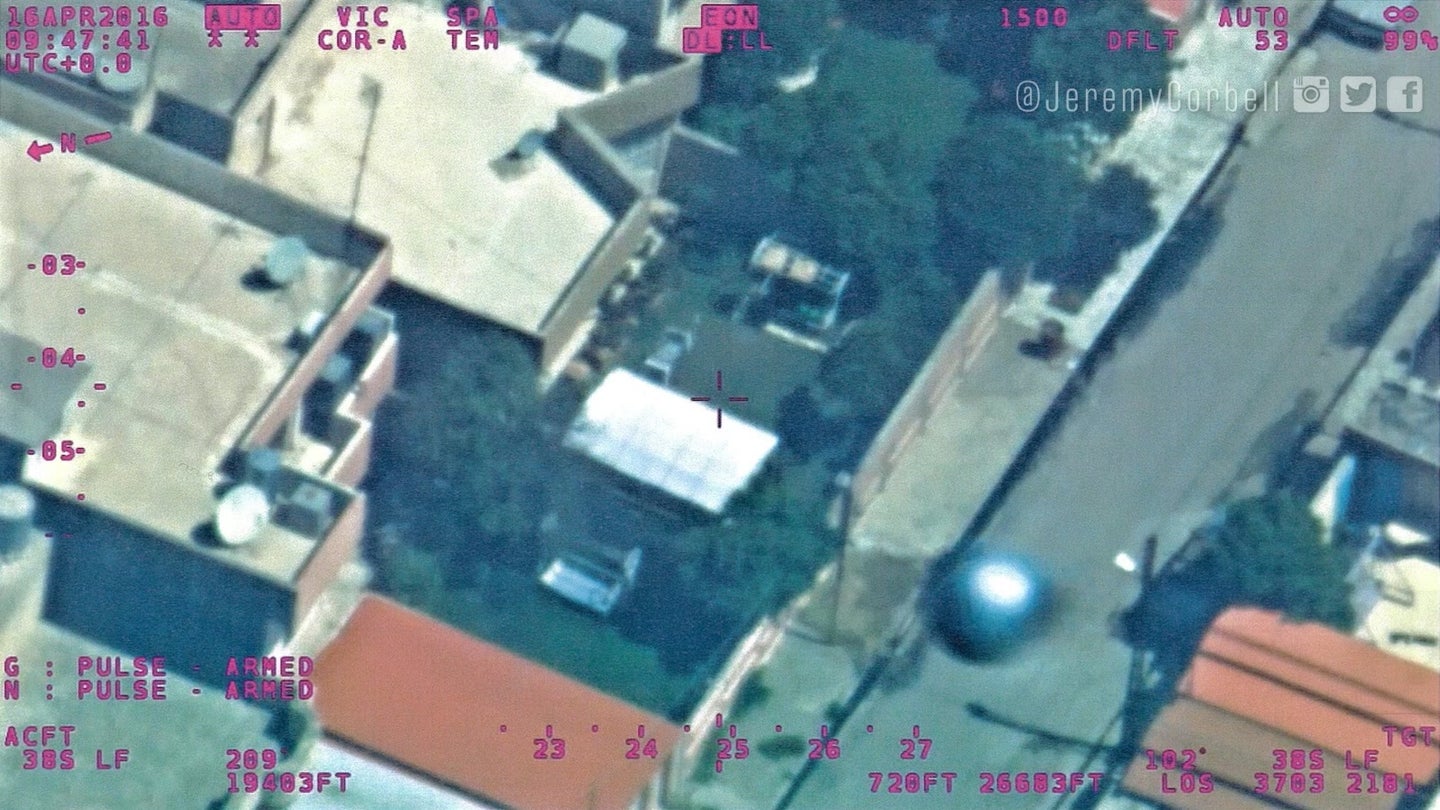
At a historic NASA briefing on UFOs — “unidentified anomalous phenomena” (UAP) in government parlance — a key Defense Department official made a striking disclosure. Dr. Sean Kirkpatrick, director of a new UAP analysis office, stated that U.S. military personnel are observing “metallic orbs” “all over the world.”

An image, along with two brief videos of such objects are now publicly available. 

According to Kirkpatrick, spherical objects account for the largest proportion — nearly half — of all UAP reports received by his office. Critically, some of these objects are capable of “very interesting apparent maneuvers.” 

To be sure, rigorous scientific analysis may ultimately identify a prosaic explanation for such observations. In the meantime, however, such “metallic orbs” are prima facie evidence of extraordinary technology. After all, how would spheres, lacking wings or apparent forms of propulsion, execute “maneuvers” of any kind? 

In his presentation, Kirkpatrick also described the UAP characteristics most frequently received by his office. This range of attributes, in short, amounts to a UAP profile that Kirkpatrick’s staff is “out hunting for.”

Keep reading

NASA to Address UFO Findings at First Public Question and Answer Meeting

NASA’s dedicated task force charged with looking into UFO sightings over the United States will meet the public on Wednesday in an exercise that will also see it taking questions.

UPI reports the space agency will livestream the four-hour event on its website with a start scheduled for 10:30 a.m. EDT.

The public event comes 24-hours after Breitbart News reported Dr. Garry Nolan, a professor at Stanford University’s medical school who worked with the CIA to analyze U.S. personnel who developed medical issues after alleged contact with UFOs, has stated that extraterrestrial life not only exists, but walks among us.

Keep reading

The Complicated Legacy Of The V-2 Rocket And Its Designer

In the final installment of his series of articles on the history of the V-2 rocket, historian Dr. Charlie Hall explores the legacy of the V-2 in the late 20th and early 21st centuries. Be sure to read parts one and two in our series on the terrorizing Nazi weapon that failed to change the course of World War II, but drastically altered warfare and gave birth to mankind’s access to space, and the man behind it.

In February 1970, at a ceremony attended by the governor of Alabama, a U.S. senator, various other local dignitaries, and his wife and three children, Wernher von Braun was honored with a plaque in the state of Huntsville. The plaque listed his achievements in both missile development and the U.S. space program and concluded by saying that “he will forever be respected and admired by his local fellow citizens.”

The plaque did not mention von Braun’s membership of the Nazi Party or the SS, his meetings with Adolf Hitler, his frequent visits to the Mittelwerk underground factory where V-2 rockets were built by slave laborers in appalling conditions, or the number of people killed in the United Kingdom and the Netherlands in 1944-45 by the rockets he designed. When he died in 1977, von Braun was remembered not as a Nazi war criminal, but as an American hero with a favorable legacy that he had worked hard to cement.

Keep reading

NASA Says Collaborating With IBM to Apply Artificial Intelligence Analysis to Earth Data

NASA and IBM have launched a new collaboration to utilize Artificial Intelligence (AI) in the study of scientific data about the Earth and its environment, the US space agency announced in a press release on Wednesday.

“A collaboration between NASA and IBM will use artificial intelligence technology developed by IBM to discover insights in NASA Earth science data,” the release said. “This joint undertaking will be a new application of AI foundational model technology to NASA Earth observation satellite data.”

The project will seek to extract a greater understanding of the patterns and likely projections to be made from the data than was previously possible, the release said.

Keep reading

NASA, DARPA Testing Nuclear Engine For Future Mars Missions

NASA and the Defense Advanced Research Projects Agency (DARPA) announced a plan on Tuesday to test out a nuclear-powered thermal rocket engine which will enable NASA-crewed missions to Mars, according to NASA.

The program, called Demonstration Rocket for Agile Cislunar Operations, or DRACO, could allow for faster transit time, an increased payload capacity, and higher power for instrumentation and communication.

In a nuclear thermal rocket engine, a fission reactor is used to generate extremely high temperatures. The engine transfers the heat produced by the reactor to a liquid propellant, which is expanded and exhausted through a nozzle to propel the spacecraft. Nuclear thermal rockets can be three or more times more efficient than conventional chemical propulsion. -NASA

Keep reading

NASA begins investigating UFOs with new team

NASA on Monday launched a new independent study team to investigate unidentified aerial phenomena (UAPs) and pave a path forward for future probes into mysterious sightings and aircraft in the sky.

The 16-member team will investigate UAPs, now the formal name for what were previously called UFOs, over the course of nine months as it seeks to lay the groundwork for future studies.

The team will focus on how data collected by civilians, governments and commercial businesses can be analyzed to shed light on UAPs — and then construct a road map for future NASA analyses.

Thomas Zurbuchen, the associate administrator of the Science Mission Directorate at NASA Headquarters in Washington, D.C., said the focus on data is important because the raw information is the “language of scientists and makes the unexplainable, explainable.”

“Understanding the data we have surrounding unidentified aerial phenomena is critical to helping us draw scientific conclusions about what is happening in our skies,” Zurbuchen said in a statement. “Exploring the unknown in space and the atmosphere is at the heart of who we are at NASA.”

Keep reading

NASA Provides Update on UFO Study, Calls Forthcoming Project ‘High Priority’

An official from NASA has provided a promising update on the space agency’s forthcoming independent UFO study. The insights reportedly came by way of Daniel Evans, who serves as the assistant deputy associate administrator for research within NASA’s Science Mission Directorate, during a town hall meeting held on Wednesday. Asked about the impending UFO study, which was announced earlier this summer, he told the audience that the space agency is “going full force” with the project and went on to say that “this is really important to us, and we’re placing a high priority on it.”

To that end, Evans explained that they hope to assemble a group of around 16 “of the world’s leading scientists, data practitioners, artificial intelligence practitioners, aerospace safety experts, all with a specific charge, which is to tell us how to apply the full focus of science and data to UAP.” A list of prospective panelists has been created by the group, he said, and they are currently waiting on approval from NASA Administrator Bill Nelson to begin formally bringing these individuals into the fold. Evans indicated that they hope to have the team fully assembled by October at the latest, though expressed hope that it could be accomplished even sooner.

Keep reading

Are the crew members of 1986 Space Shuttle Challenger still alive?

Friends, wrap your head with duct tape (to prevent it from exploding). It’s Down-the-Rabbit-Hole time!

If you’re age 40 years or older, you’d probably remember January 28, 1986.

That was day of the Challenger disaster, when the NASA Space Shuttle orbiter Challenger broke apart 73 seconds into its flight over the Atlantic Ocean, off the coast of Cape Canaveral, Florida at 11:38 EST. All seven crew members were killed, including five NASA astronauts and two payload specialists.

Millions of Americans (17% of the total population) watched the launch live on TV because of Payload Specialist Christa McAuliffe, the first teacher in space. Media coverage of the explosion was extensive: one study reported that 85% of Americans surveyed had heard the news within an hour of the accident.

We were told that Challenger disintegrated because of a malfunctioning O-ring seal in its right solid rocket booster. The O-ring failure caused a breach in the SRB joint it sealed, allowing pressurized burning gas from within the solid rocket motor to reach the outside and impinge upon the adjacent SRB aft field joint attachment hardware and external fuel tank, leading to the structural failure of the external tank. Aerodynamic forces broke up the orbiter.

The crew compartment and many other vehicle fragments were eventually recovered from the ocean floor after a lengthy search and recovery operation. The exact timing of the death of the crew is unknown; several crew members are known to have survived the initial breakup of the spacecraft. But the shuttle had no escape system, and the impact of the crew compartment with the ocean surface was too violent to be survivable.

The disaster resulted in a 32-month hiatus in NASA’s shuttle program and the formation of the Rogers Commission, a special commission appointed by then President Ronald Reagan to investigate the accident. The commission found NASA’s organizational culture and decision-making processes had been key contributing factors to the accident.

These are the names of Challenger’s 7 crew members:

  1. Francis Richard Scobee, Commander
  2. Michael J. Smith, Pilot
  3. Ronald McNair, Mission Specialist
  4. Ellison Onizuka, Mission Specialist
  5. Judith Resnik, Mission Specialist
  6. Gregory Jarvis, Payload Specialist
  7. Christa McAuliffe, Payload Specialist

But wait!

What if someone were to tell you that most, if not all, of Challenger’s 7 crew members are still alive and thriving in their new professions, contrary to what we’ve been told?

Keep reading