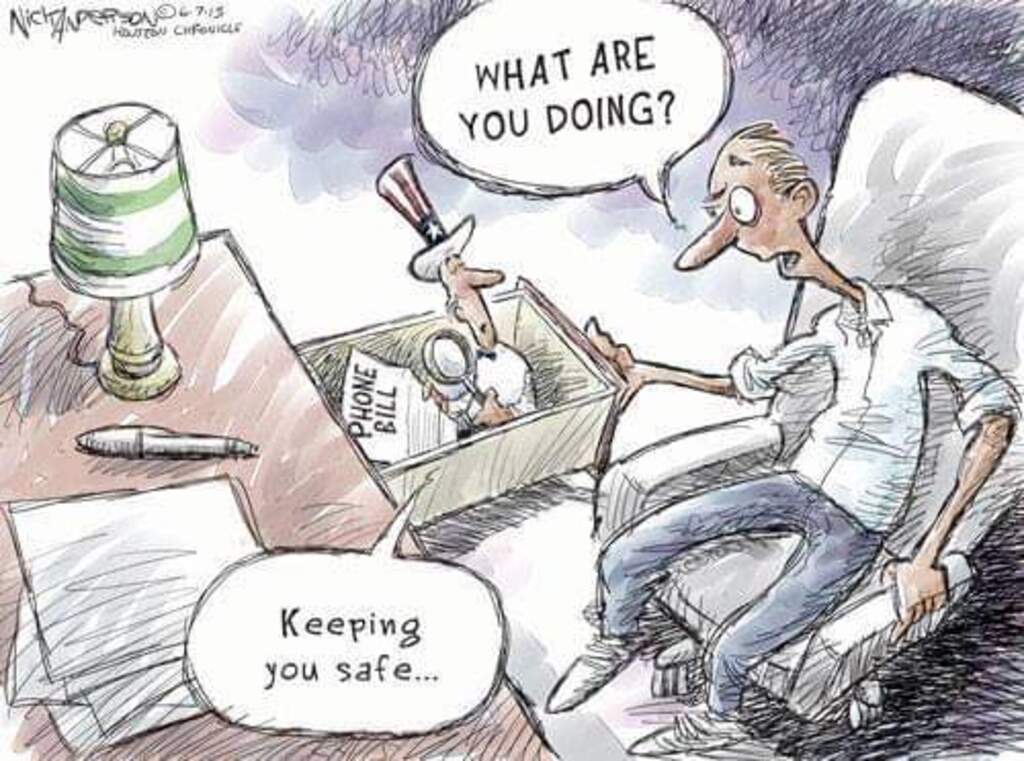
It’s for your own good…

On Wednesday, the Biden administration revealed that illegal immigrants entering the United States are handed smartphones when they arrive.
Fox News White House correspondent Peter Doocy asked Jen Psaki about the attempt during today’s news briefing.
“Our team in Texas is saying that you guys are starting to give smartphones to border crossers, hoping that they’ll use the phones to check-in or – uh – to be tracked. Which part of that is supposed to ‘deter’ people from crossing illegally into the states?” asked Doocy.
Well,” replied Psaki, “I think you of all people – since you’ve asked me a range of questions on this topic over time – would recognize that we need to take steps to ensure that we know where individuals are and we can track – we can check in with them.”
Psaki went on to describe the three types of technology that the administration is using to track illegal immigrants: “Telephonic is one of them, which uses a participant’s voice to create a biometric voiceprint during the enrollment process. And when the participant has a check-in call, their voice is compared to the voiceprint.”
“SmartLink, which is another option, enables participant monitoring via smartphone or tablet using facial-matching technology to establish identity.”
“And Global Positioning System monitoring is of a participant’s location and movement history, using satellite technology through an ankle bracelet. This is all part of our effort, as individuals come into the United States and individuals who are entering who will proceed to immigration proceedings, to monitor and track where they are.”
Social media users seemed to foreshadow the Jan. 6 attack on the U.S. Capitol — and the FBI apparently missed it.
Now, the FBI is doubling down on tracking social media posts, spending millions of dollars on thousands of licenses to powerful social media monitoring technology that privacy and civil liberties advocates say raise serious concerns.
The FBI has contracted for 5,000 licenses to use Babel X, a software made by Babel Street that lets users search social media sites within a geographic area and use other parameters.
The contract began March 30 and is worth as much as $27 million. The FBI has already agreed to pay an IT vendor around $5 million for the first year of the contract, procurement records indicate. The contract has not previously been reported.
The Justice Department has previously had Babel X in its arsenal, contracting records show. But the new contract appears to be by far the most the agency has ever shelled out for the software, and is one of the largest contracts for the software by a civilian agency, experts said.
Last year it was revealed that Pentagon scientists working in a secretive united created a microchip to be inserted underneath the skin, that can detect Covid-19 before the body exhibits symptoms.
60 Minutes interviewed retired Colonel Matt Hepburn, an army infectious disease physician, who spent years with the secretive defense advanced research projects agency or DARPA, working on technology he hopes will ensure COVID-19 is the last pandemic.
“Dr. Hepburn showed us a few current projects, some sound like they’re from an episode of “Star Trek.” Consider a ship like the USS Theodore Roosevelt — hobbled last year when 1,271 crew members tested positive for the coronavirus. What if everyone on board had their health monitored with this subdermal implant, now in late-stage testing. It’s not some dreaded government microchip to track your every move, but a tissue-like gel engineered to continuously test your blood,” 60 Minutes host Bill Whitaker said.
Dr. Hepburn told 60 Minutes that the microchip is like a “check engine light.”
The segment aired on “60 Minutes.”
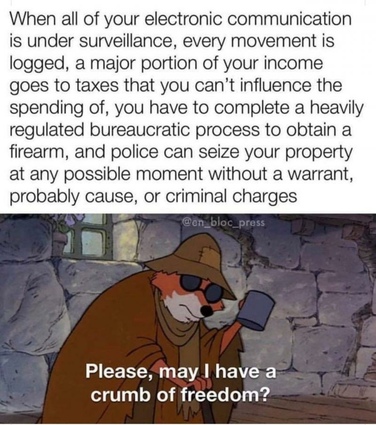

We’re living out a sci-fi thriller where unaccountable corporations openly force advanced tech into our bodies. Capitalizing on the current germaphobic frenzy, Moderna’s co-founder, Dr. Robert Langer, saw his experimental mRNA vaccines pushed on the American public. Riding that dark wave of corporate and government mandates, Langer became an instant billionaire. But this isn’t the only fanged rabbit in his magic top hat.
In 2018, the MIT scientist had developed a quantum dot tattoo—an under-skin nanoparticle QR code, to be scanned by smartphones—in order to track the vaccinated masses and ensure compliance. Like many undignified experiments, this was to begin in the Third World—cuz social justice.
This vaxx & track technology drew the intense personal interest of Bill Gates. That interest naturally translated into millions of dollars in funding. This is in addition to $20 million given to Moderna by the Gates Foundation back in 2016 to develop a new type of vaccine—where bits of injected genetic code would hijack the cell’s machinery to produce reams of pathogenic proteins.
Three technologies drive the plot of this horrific story—mRNA gene therapy, quantum dot tattoos, and artificial intelligence. Advanced machine learning, used to predict the effects of mRNA mutations in silico, allows for lightning fast vaccine development—including regulatory approval. Additionally, embedded subdermal tracking systems can ensure that every person on planet Earth is up-to-date on their shots.
Taken together, these innovations are rapidly converging on a long sought after goal—an inescapable surveillance state, controlled by corporations, in which the global population is subject to continual medical experimentation.
The UK government is pushing ahead with its nationwide digital ID plans, despite half of the responses to its public consultation on digital identity opposing the idea.
On April 6, 2022, new digital identity document verification technology (IDVT) that enables data sharing between public bodies and businesses for the purpose of identity verification will be introduced. It will be made available to UK employers, landlords, and letting agents who can use it to digitally carry out pre-employment criminal record checks, right to work checks, and right to rent checks.
The introduction of this digital IDVT is part of the government’s far-reaching digital ID plans which were announced in March. The government has framed these digital ID plans as a way for UK citizens to “easily and quickly prove their identity using digital methods instead of having to rely on traditional physical documents.”
Governments of several nations around the world have considered using biometric data during SIM card registrations as a “fraud deterrent.” The proposals have always faced pushback for being a clear challenge to privacy.
Biometric data or identifiers include scans of a fingerprint, palm, retina, or the entire face of the user. South Africa has become the latest nation to consider SIM laws that make this data a mobile phone registration requirement.
Identity and other thieves can still hack phones with current security measures. Biometric data makes it more difficult because a criminal would need biometric proof that they own a phone and have the right to unlock it.
Acquiring body scans illegally is a difficult process. Governments hope that the extensive time and financial effort required to copy or mimic the biometrics of a specific person might deter criminals from hacking phones.
They also hope it might deter criminals from using their own phones for criminal activities since biometrics data creates a solid link between them and their phones that investigators can trace from a phone used in a crime back to the owner.
The telephone regulator for South Africa believes that all SIM card records should have biometric identifiers. For now, the data would only be used for basic authentication of ownership and monitoring of SIM swaps.
 Hellbound and Down
You must be logged in to post a comment.