
The war on some drugs…

Florida’s Agriculture Commissioner took issue with a recent Department of Justice memo attached to a move to dismiss a lawsuit that challenges disqualifying the state’s medical cannabis patients from legally owning firearms. The memo characterized marijuana users as “dangerous.”
“The DOJ’s argument is as offensive as it is inaccurate,” Florida Agriculture Commissioner Nikki Fried, a Democrat, said in an Aug. 8 written statement. “We were disappointed not only with the motion but with the memo attached to the motion, calling marijuana users dangerous.”
“DOJ’s argument is … inaccurate, utilizing centuries-old case law and making false claims demonizing medical marijuana patients—including perpetuating prejudicial stereotypes that cannabis users are dangerous or mentally ill.”
However, the Justice Department argues in their request for dismissal that it would be “dangerous to trust regular marijuana users to exercise sound judgment” with firearms because marijuana “causes significant mental and physical impairments that make it dangerous for a person to possess (a) firearm.”
On Aug. 9, Fried responded to a motion from the DOJ to dismiss her April lawsuit challenging the disqualification of the state’s nearly 741,000 medical cannabis patients with active identification cards from owning firearms. According to Fried’s office, Florida has 2.5 million concealed weapons permit holders on record.
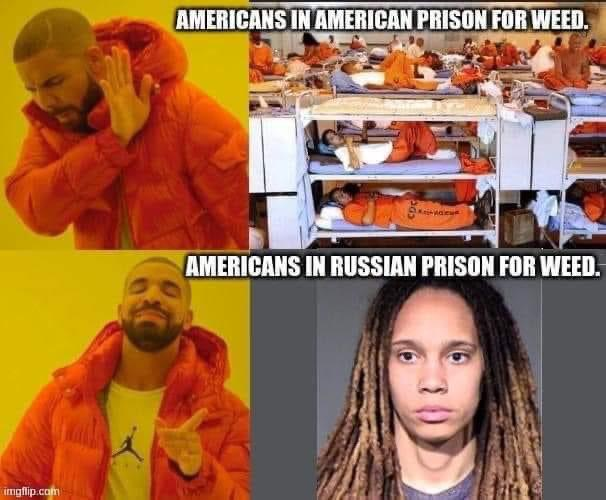
Former Democratic presidential candidate Tulsi Gabbard blasted Vice President Kamala Harris regarding her “hypocrisy” of vehemently defending Brittney Griner but not standing up for Americans locked up at home for marijuana violations – including those who were prosecuted by the former California attorney general.
On Thursday, Vice President Harris condemned Russia for sentencing Griner to nine years in prison for possessing a cannabis vape pen at an airport near Moscow earlier this year.
“With today’s sentencing, Russia continues its wrongful detention of Brittney Griner. She should be released immediately,” Harris wrote on Twitter. “@POTUS and I, and our entire Administration, are working every day to reunite Brittney, as well as Paul Whelan, with loved ones who miss each of them dearly.”
Gabbard told Fox News host Will Cain, “Another note of hypocrisy coming from Kamala Harris and this administration, as you mentioned during her illustrious record as attorney general in California…she kept prisoners in prison longer than their sentences to use them as free slave labor yet at the same time these very same people are condemning other countries for doing the exact same thing. It doesn’t make any sense.”
Minnesota just sorta, kinda, almost legalized weed.
A law took effect earlier this month allowing anyone at least 21 years old to purchase edibles or beverages with up to 5 milligrams of hemp-derived THC per serving. Those relatively low potency products with up to 50 milligrams per package still pack enough of a psychoactive punch to get most users plenty high.
But some key lawmakers who approved the significant change in drug policy were seemingly confused about what they’d done.
Marijuana legalization has been a divisive issue in the Minnesota Legislature for years. The Democratic-controlled House passed legislation last year that would allow anyone at least 21 years old to legally purchase and possess the drug, but the GOP-controlled Senate has remained staunchly opposed to recreational legalization. Yet a legalization provision was adopted during a marathon conference committee meeting in May without debate or objection.
“That doesn’t legalize marijuana?” Sen. Jim Abeler, the Republican chair of the Senate Human Services Reform Finance and Policy Committee, asked after it was adopted by a voice vote. “We didn’t just do that?”
Since 2012, 19 states and Washington, DC have legalized marijuana for adults over the age of 21. In total, 38 states and DC have legalized medical marijuana — meaning that a majority of Americans have access to cannabis, whether medically or recreationally. There are just 12 states in the country left who outlaw cannabis entirely — and even they are fading fast.
Currently, 144 million Americans live in states where recreational marijuana is legal and decriminalization measures are currently sweeping through all the other states where it is not. The war on weed is crumbling and the drug warriors who’ve ruined an untold number of lives over this plant are quickly finding themselves on the wrong side of history.
Despite the prohibition wall collapsing and legal cannabis winning the drug war, there are still police state-addicted tyrants holding strong while attempting to maintain their relevancy through enforcement. The US Drug Enforcement Administration is full of these tyrants and their latest numbers prove just how bad their addiction to the drug war is.
In the last two years, one would think that cannabis plant seizures and arrests related to marijuana would go down thanks to widespread legalization. Unfortunately, however, one would be wrong. The DEA is still carrying out their Domestic Cannabis Eradication/Suppression Program with a vengeance.
Federal law enforcement agents and their partners seized over 5.5 million cultivated marijuana plants and made more than 6,600 marijuana-related arrests in 2021, according to annual data compiled by the DEA.
According to figures published in the DEA’s Domestic Cannabis Eradication/Suppression Program Statistical Report, agents and their partners confiscated approximately 5.53 million cultivated cannabis plants last year – a 20 percent increase over 2020’s totals. Law enforcement also reported making 6,606 marijuana-related arrests, a 25 percent increase over the prior year’s totals (when agents reported 4,992 arrests) … for a plant.
These numbers are record breaking and are the highest since 2011 — before any states had legal weed. Since then, arrests have been going down, but in 2021 a surge began once more as police-state worshipping tyrants ramped up their hatred of this amazing plant and the people who choose to grow it.
Delayed packages, bare grocery store shelves, and inflated prices have become the norm for American consumers over the past two years. While the COVID-19 pandemic has been the catalyst, there are other challenges causing supply chain issues, including a lack of truck drivers to transport goods from one place to another. In late 2021, the American Trucking Associations reported that the driver shortage had risen to an all-time high of 80,000, partly due to the aging population and shrinking wages.
In response, the Biden administration vowed in December to get more truck drivers on the road by boosting recruitment efforts and expediting the issuing of commercial licenses. However, that won’t have an effect on another hurdle: disparate marijuana laws across the U.S. that are contributing to an increase in violations. In 2022, a growing number of truckers are being taken off the job, which could soon worsen the already suffering supply chain.
As more states legalize recreational marijuana—four of which did so in the past year and three more are expected to by the end of 2022—more truck drivers have tested positive for the substance. As of April 1, 2022, 10,276 commercial vehicle drivers have tested positive for marijuana use. By the same time in 2021, there had been 7,750 violations. That’s a 32.6% increase year over year.
Truck drivers who travel cross-country face inconsistent state regulations as 19 states have legalized recreational marijuana and 37 states permit it for medicinal purposes. But even if a driver used marijuana or hemp-based products like CBD while off duty in a state where those substances are legal, they could still be faced with a violation due to the Department of Transportation’s (DOT) zero-tolerance policy at the federal level.
“While states may allow medical use of marijuana, federal laws and policy do not recognize any legitimate medical use of marijuana,” a DOT handbook for commercial vehicle drivers reads. “Even if a state allows the use of marijuana, DOT regulations treat its use as the same as the use of any other illicit drug.”
Stacker looked at what’s causing thousands of truckers to be removed from their jobs, and the looming domino effect of the continued supply chain disruptions.
The latest California budget submitted by Gov. Gavin Newsom could go a long way in fixing the state’s ailing recreational marijuana industry by fully eliminating an oppressive cultivation tax.
Newsom’s May revisions to the 2022–23 fiscal year budget call for some significant statutory changes to the state’s cannabis tax system. The biggest change would be zeroing out the cultivation taxes beginning in July. The excise tax of 15 percent would remain intact.
When Californians voted to legalize recreational marijuana cultivation and sales back in 2016, the industry ended up saddled with state and local taxes that make it inordinately costly to attempt to sell or buy cannabis legally. As a result, the black market for marijuana still dominates sales in a state where it’s legal to buy it. Industry analysts estimate about $8 billion in black market marijuana sales annually in California—double the amount of marijuana purchased through licensed dispensaries.
The cultivation tax has been consistently eyed by industry analysts as a problem. This particular tax is unique among agricultural products in California, and due to the legislation passed in 2017 to establish tax authorities, it’s regularly adjusted for inflation. As a result, cultivation tax rates actually increased at the start of 2022 despite this big black market problem.
In the early days of the state-level movement to legalize marijuana, we often got opposition from a surprising camp – libertarians.
You would think libertarians would be thrilled with laws rolling back cannabis prohibition, but for many, it wasn’t enough. Skeptical libertarians found a myriad of reasons to oppose legalization efforts, saying they “didn’t go far enough.”
The movement started in the early 1970s and really started to grow with the legalization of medical marijuana in California way back in 1996. Opponents protested, “what about everybody else?”
Some libertarians also opposed medical marijuana on principle, saying people shouldn’t need a state-issued “card” to access cannabis. They’re not wrong theoretically. Asking the government for permission is never desirable. But the fact is virtually all of these people carry a card so they can drive.
As the legalization movement grew and states started allowing recreational marijuana, libertarians often complained about the tax and regulatory schemes attached to cannabis legalization bills and used this as a reason to oppose reforms. Of course, you never heard any of these people arguing that it would be better for alcohol to be illegal rather than heavily taxed and regulated, as it is in most states.
Another common objection was that legalizing marijuana doesn’t help people who have already been convicted of marijuana crimes. Having a criminal record has lifelong consequences and millions of people have to go through life with this legal millstone tied around their necks simply because at some point they possessed or sold a plant. What about these people? Again, they would actively oppose legalization bills on this basis.
But think about the implied logic. We’re going to allow more people to get caught in this legal web because this bill doesn’t address the needs of people already caught in this legal web. Sounds self-defeating, doesn’t it?
In reality, all of these are legitimate concerns. These libertarian opponents were generally right about the problems inherent in most legalization schemes. They were good on the philosophy. But opposing legalization efforts because they “aren’t good enough” is a bad strategy.
Consider this: would a starving man turn down a slice of bread because it wasn’t a whole loaf?
Let’s be honest here. Today, we’re starving for liberty at every turn.
Sometimes you have to take what you get so you have the ability to move forward. If the man gets a slice of bread, he’ll have the energy to go for that loaf.
The same principle applies to legislative activism. Small steps forward often lead to more steps forward.
Thomas Jefferson understood this well. In fact, in a 1790 letter to the Rev. Charles Clay Jefferson said liberty is to be gained by inches.
 Hellbound and Down
You must be logged in to post a comment.