
Quotes about the CIA…

Very shortly after the stories were published, they were quickly deleted from the websites. However, National File was able to retrieve this portion of the Daily Beast article from Google’s cache:
“Bill Clinton’s former body man and aide has cooperated with the federal investigation into the former president’s ties to Jeffrey Epstein and Ghislaine Maxwell, Radar Online reports. Doug Band, normally reticent to speak about his former boss, spoke with prosecutors for the Southern District of New York around December 2020 about the millionaire sex trafficker and his alleged madam, according to the site. Band made frequent appearances on Epstein’s flight manifests in the early 2000s, at one point traveling with his alleged girlfriend Naomi Campbell to the financier’s private island Little St. James, known locally as “pedophile island.” He also accompanied Epstein and Clinton on lengthy trips through Africa and Asia. Band has claimed he urged the Clintons to cut ties with Epstein and Maxwell for years, but photos as recently as 2007 show him partying with the pair. Virginia Roberts Giuffre, one of Epstein’s many victims, named Band in a 2016 court filing as one of 70 people who would have knowledge of Epstein’s and Maxwell’s alleged sex trafficking.”
Additionally, users on Reddit posted what appears to be the full Radar Online story, as pointed out by the anti-human trafficking Twitter account known as “An Open Secret.”
The articles were removed in the early afternoon of March 5. Less than an hour after the deletions, National File reached out to Daily Beast and Radar Online for clarification and explanation, but has not received any response. National File specifically asked if the respective outlets intended to notify readers of a retraction.
The Washington Post was busted for publishing fabricated quotes from an anonymous source, attributing them to a sitting president, and using those quotes as a basis to speculate the president committed a crime. The invented Donald Trump quotes, which related to a fight over election integrity in Georgia, were cited in Democrats’ impeachment brief and during the Senate impeachment trial.
But the fake quotes, bad as they were, are just one of many ways the media have done a horrible job of covering election disputes in the state.
According to the media narrative, the Georgia presidential election was as perfectly run as any election in history, and anyone who says otherwise is a liar. To push that narrative, the media steadfastly downplayed, ignored, or prejudiciously dismissed legitimate concerns with how Georgia had run its November 2020 election and complaints about it.
That posture was the complete opposite of how they were reporting on Georgia elections prior to Democrats performing well in them. In the months prior to November, some media sounded a bit like Lin Wood when they wrote about Secretary of State Brad Raffensperger, Dominion Voting Systems, legal challenges in the state, and Georgia election integrity in general.
Journalists with the largest and most influential media outlets disseminated an outright and quite significant lie on Tuesday to hundreds of thousands of people, if not millions, on Twitter. While some of them were shamed into acknowledging the falsity of their claim, many refused to, causing it to continue to spread up until this very moment. It is well worth examining how they function because this is how they deceive the public again and again, and it is why public trust in their pronouncements has justifiably plummeted.
The lie they told involved claims of Russian involvement in the procurement of Hunter Biden’s laptop. In the weeks leading up to the 2020 election, The New York Post obtained that laptop and published a series of articles about the Biden family’s business dealings in Ukraine, China and elsewhere. In response, Twitter banned the posting of any links to that reporting and locked The Post out of its Twitter account for close to two weeks, while Facebook, through a long-time Democratic operative, announced that it would algorithmically suppress the reporting.
The excuse used by those social media companies for censoring this reporting was the same invoked by media outlets to justify their refusal to report the contents of these documents: namely, that the materials were “Russian disinformation.” That claim of “Russian disinformation” was concocted by a group of several dozen former CIA officials and other operatives of the intelligence community devoted to defeating Trump. Immediately after The Post published its first story about Hunter Biden’s business dealings in Ukraine that traded on his influence with his father, these career spies and propagandists, led by Obama CIA Director and serial liar John Brennan, published a letter asserting that the appearance of these Biden documents “has all the classic earmarks of a Russian information operation.”
News outlets uncritically hyped this claim as fact even though these security state operatives themselves admitted: “We want to emphasize that we do not know if the emails…are genuine or not and that we do not have evidence of Russian involvement — just that our experience makes us deeply suspicious that the Russian government played a significant role in this case.” Even though this claim came from trained liars who, with uncharacteristic candor, acknowledged that they did not “have evidence” for their claim, media outlets uncritically ratified this assertion.
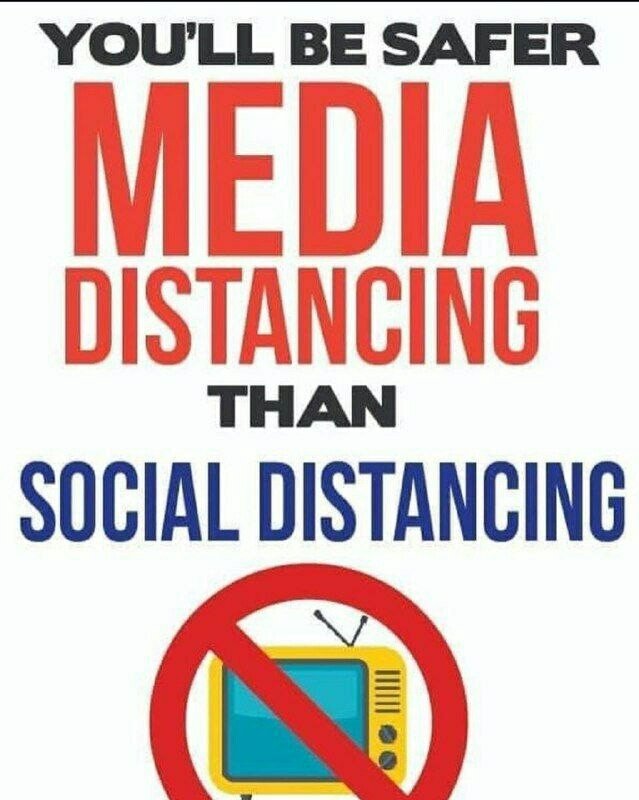
Major media outlets in recent weeks have been struggling under a flood of major reporting failures, scrambling to address significant lapses in reporting as nationwide trust in media reaches record lows.
The Washington Post this week revealed that it had significantly misreported a story in which then-President Donald Trump was alleged to have called one of Georgia’s top elections investigators and urged that official to “find the fraud” in the state’s election data. The Post, which had relied on anonymous sourcing to verify the claim, said that a review of an audio file of the call discovered this month revealed that Trump had never uttered those words.
Those allegations were explosive at the time they were reported, even finding their way into the impeachment trial memorandum of Senate Democrats. The Post in its correction indicated that its reporter has not listened to the recording prior to reporting on it, instead relying on “information provided by a source” to bolster the allegations in the report.
Other media outlets picked up on the allegation as well, including CNN, which after the discovery of the recording quietly updated its own report on the alleged scandal. But its 10.5-font-sized “Editor’s Note” did not specify the errors from the earlier report, instead linking readers to a report on the recently discovered recording that itself did not identify the error from the network’s original article.
The New York Times has been involved in several corrections, some big like the elaborate hoax played on its Caliphate podcast and others small but still affecting reputations on Twitter. Last month, for instance, Times technology reporter Taylor Lorenz had to be corrected when she tweeted an allegation that tech entrepreneur Marc Andreessen had used “the r-slur” during a forum, only to have one of the forum’s moderators deny it happened. Lorenz then tweeted back: “Thanks for clarifying.”
The Capitol riot on Jan. 6 resulted in more journalism malpractice, so much so that award-winning journalist Glenn Greenwald wrote an entire essay about “false and exaggerated” media claims he had uncovered. “False reporting is never justified, especially to inflate threat and fear levels,” he declared.

The primary obstacle in getting people to realize that they are being propagandized by our rulers is their unquestioned assumption that if there were a mass-scale narrative management operation geared at manufacturing consent for the status quo, they would have heard about it in the news or learned about it in school.
And, of course, they would not have, because both the plutocratic media and the modern schooling system are designed to indoctrinate people into accepting the status quo. From the time we are children our minds are deliberately and systematically warped to psychologically align us with the interests of the ruling class, and then we are passed on to the news media to ensure that we are continually shaped and reshaped in real time throughout our adult lives based on the specific needs of the oligarchic empire from year to year. A brainwashing institution is never going to teach you to be skeptical of their brainwashing.
Our indoctrination into the establishment worldview is not just in training us to espouse certain beliefs and think a certain way, it’s in training us to look to the sources of our indoctrination for guidance throughout our lives. What do we do when we are unsure about something, class? That’s right, we go to reliable, authoritative sources like The New York Times, The Washington Post, CNN, and any other outlet that has consistently supported every war we’ve ever been deceived into by our rulers.
Our indoctrination isn’t just in what to think, it’s in how to think.

A Columbia Journalism Review expose reveals that, to control global journalism, Bill Gates has steered over $250 million to:
the BBC, NPR, NBC, Al Jazeera, ProPublica, National Journal, The Guardian, the New York Times, Univision, Medium, the Financial Times, The Atlantic, the Texas Tribune, Gannett, Washington Monthly, Le Monde, Center for Investigative Reporting, Pulitzer Center, National Press Foundation, International Center for Journalists, and a host of other groups.
To conceal his influence, Gates also funneled unknown sums via subgrants for contracts to other press outlets.
His press bribes have paid off. During the pandemic, bought and brain-dead news outlets have treated Bill Gates as a public health expert — despite his lack of medical training or regulatory experience.
Gates also funds an army of “independent” fact checkers including the Poynter Institute and Gannett — which use their fact-checking platforms to “silence detractors” and to “debunk” as “false conspiracy theories” and “misinformation,” charges that Gates has championed and invested in biometric chips, vaccine identification systems, satellite surveillance, and COVID vaccines.
 Hellbound and Down
You must be logged in to post a comment.