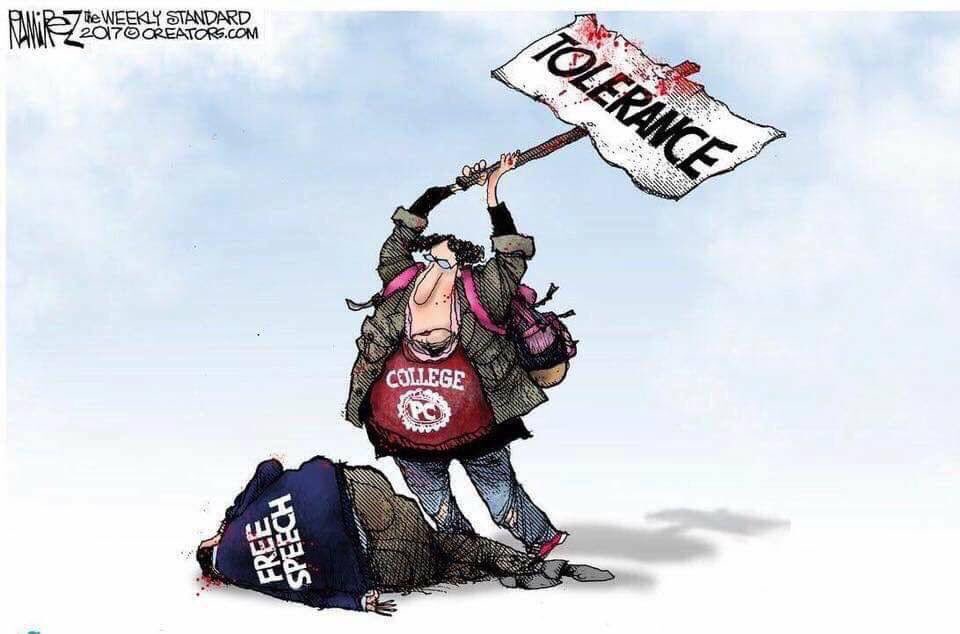
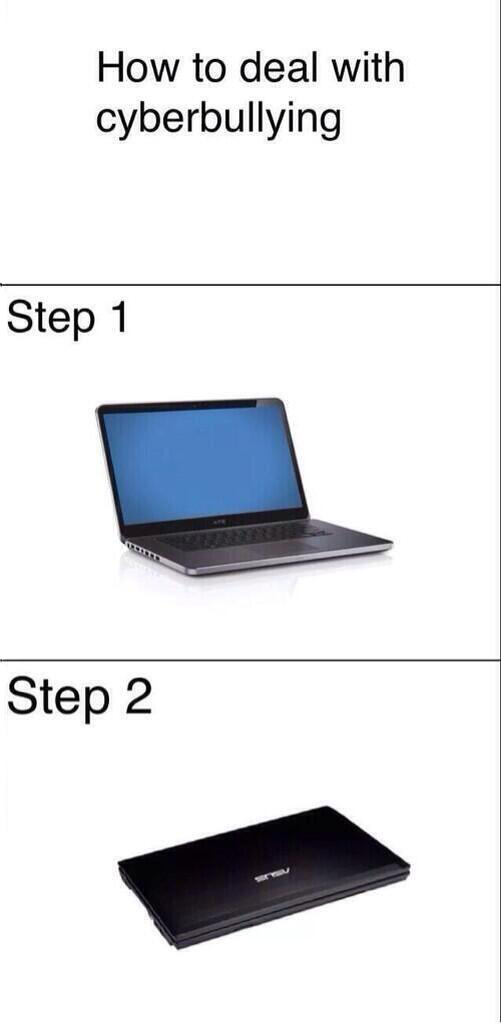
Don’t. Side. With. The. Powerful.

Don’t side with the powerful against the disempowered. Just don’t.

Learning to distinguish between empowered parties and disempowered parties can be a little tricky, because nobody likes to think of themselves as siding with the powerful against the weak. It’s something we all know intuitively to be wrong, so we’ll often find clever ways of using an incomplete analysis of the power dynamics at play which allows us to feel as though we’re fighting the power when we’re really doing the exact opposite.

And propagandists are of course all too eager to help us do this.

Keep reading

‘Nonbinary’ is now a legal gender, Oregon court rules

In a historic move sure to challenge federal policy, an Oregon circuit court ruled on Friday that a resident could legally change their gender to nonbinary.

The Daily Dot spoke—in an exclusive first interview—with Jamie Shupe, the Portland, Oregon, resident and Southern Maryland native who requested the gender identity change.

“Male and female are the traditional categories, but they fail to properly categorize people like me. So I challenged that,” said Shupe.

Shupe’s petition for sex change, as the court calls it, was filed on April 27. With the help of Portland attorney Lake James Perriguey and armed with two letters from primary care doctors (shared privately with the Daily Dot) stating that Shupe’s gender should be classified as nonbinary, the case was made.

Keep reading

Vandalism Is Violence: Destructive Riots Are Not ‘Just Property Damage’

Well, many left-wing journalists, activists, and commentators who are politically sympathetic to the rioters have argued that rampant destruction isn’t really a problem, because it’s “just” destruction of property, not violence against people.

One person who makes this argument is Oakland-based “racial justice organizer” Cat Brooks, who was interviewed by the New York Times.

“I don’t consider property destruction violence,” Brooks said in defense of the rioting and vandalism in her city. “Violence is when you attack a person or another living, breathing creature on this planet. Windows don’t cry and they can’t die.”

Meanwhile, New York Times writer Hannah Nicole-Jones, founder of the controversial “1619 Project,” has also defended the destruction of property and argued that it doesn’t constitute violence.

“Violence is when an agent of the state kneels on a man’s neck until all of the life is leached out of his body,” she said. “Destroying property, which can be replaced, is not violence. To use the same language to describe those two things is not moral.”

Keep reading

Black Lives Matter co-founder appears to label white people ‘defects’

A co-founder of Black Lives Matter Toronto argued that white people are “recessive genetic defects” and purportedly mused about how the race could be “wiped out,” according to a post on what appears to be her Facebook page.

Yusra Khogali has faced increased scrutiny over the past year after BLM Toronto gained political influence following their disruption of the Toronto Pride parade and confrontations with Ontario Premier Kathleen Wynne.

On Friday, Toronto Police announced they would not participate in this year’s upcoming parade. This has been a longstanding demand of BLM TO and one that the board of Pride Toronto recently backed in a controversial vote.

Khogali has a track record of inflammatory, divisive rhetoric.

Only last week during a protest in front of the US consulate Khogali shouted into a microphone that “Justin Trudeau is a white supremacist terrorist” and urged the crowd to “rise up and fight back.”

“Look at us, we have the numbers,” she said.

Keep reading

Norwegian flag removed from bed and breakfast after locals think it’s a Confederate flag

A Michigan bed and breakfast has removed their Norwegian flag after several complaints from guests and city residents revealed that they mistook it for the Confederate flag.

The Nordic Pineapple in St. Johns received “at least a dozen hateful emails,” said Greg and Kjersten Offenecker, who said they’ve removed both the Norwegian flag and the American flag outside their Civil War-era home.

The couple told the Lansing State Journal that they never saw the flag as anything more than the Norwegian flag.

Keep reading

What Cancel Culture Has In Common With Medieval Outlawry

Cancel culture is slippery in the taxonomist’s hands, but I think something like columnist Ross Douthat’s definition is about right: “Cancellation, properly understood, refers to an attack on someone’s employment and reputation by a determined collective of critics, based on an opinion or an action that is alleged to be disgraceful and disqualifying.”

This description highlights the differences of function between medieval outlawry and cancel culture today: Outlawry was a formal, legal punishment backed by the threat of violence and usually intended to punish people accused of felony crimes like murder, arson, or conspiracy. Cancel culture has no such legal force. It’s a movement of social censure, and in its quintessential cases—e.g., Justine Sacco or, more recently, David Shor or the woman from The Washington Post Halloween party story—there’s no criminal allegation or, many times, even a lean outside the Overton Window. (The “Central Park Karen,” somewhat unusually among high-profile cancellation stories, is being prosecuted.)

Beyond these distinctions, however, outlawry and cancel culture have much in common: They grow out of the same human impulse of ostracism, the desire to exclude offenders from “respectable” society. They give the broader community permission to attack their targets, whether with physical violence (as in outlawry) or via verbal abuse, doxxing, or threats (as in cancel culture). They oust offenders from their social class (today, typically the professional-managerial class) and deprive them of their normal means of livelihood.

Keep reading