Albert Einstein on free speech…


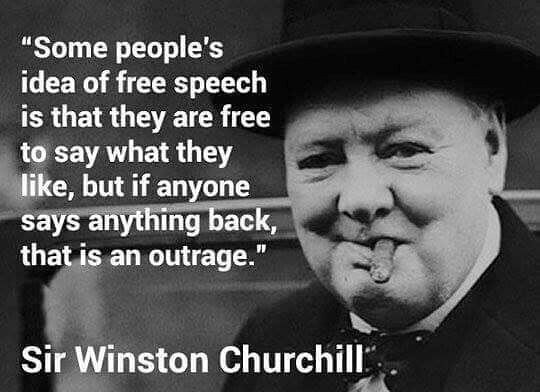
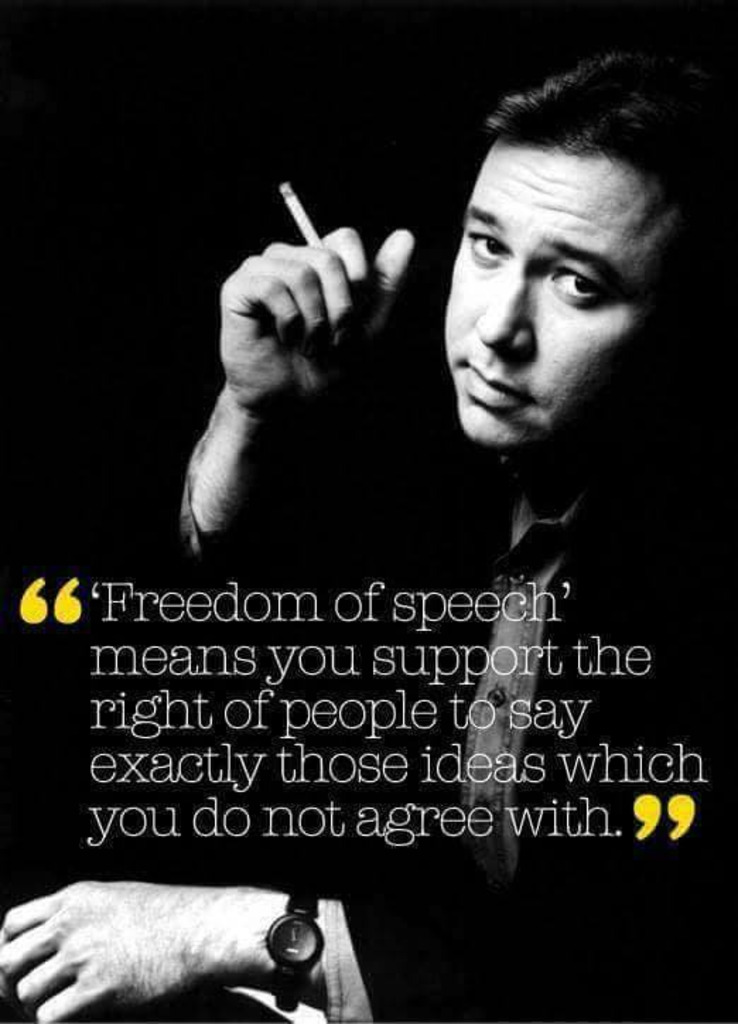
Free speech is perhaps the most important liberty Americans enjoy. People exercise it every day without even thinking about it, and for good reason it is mentioned in the very first amendment to the U.S. Constitution. But free speech is more than just the words in the Bill of Rights. Before there was a law, there was the idea of free speech. The law limits the government to protect the right, but does not define the right.
More than simply a legal issue, free speech is a part of American culture—an important distinction. If free speech meant only the words in the Constitution, if all it guaranteed were that the government could not jail us for our words, it would be a dead letter. Governments across the world guarantee rights in their laws yet violate them daily.
Indeed, free speech was not invented in 1791. The law only codifies what the Founders and their contemporaries already believed: that a free people must be allowed to openly express themselves, and that the cure for bad ideas is good ideas, not censorship.
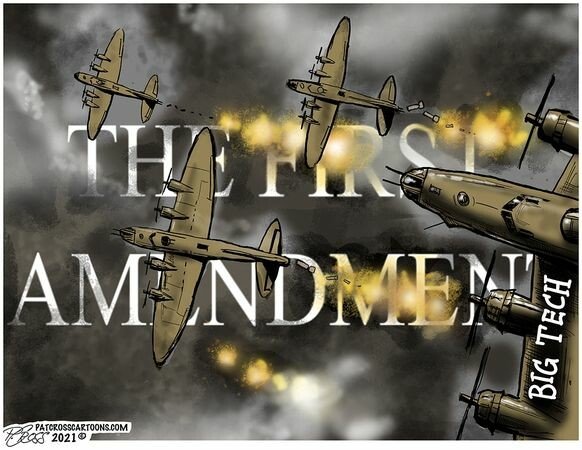
The First Amendment is essential, but the American people believe in the principle of free speech. That includes more than just being free of government punishment. It includes the idea that no power — be it government, corporation, or mob — should be able to suppress the free exchange of ideas.
We often speak of the “marketplace of ideas,” and just as with markets for goods, the concept came first, and laws to protect it followed. Now, the concept is under threat. Should it fail, and should deplatforming, monopoly pressures, and “heckler’s vetoes” become accepted practices, then no matter what the law says, free speech as a concept will die.
Canada’s Heritage Minister Steven Guilbeault, a Liberal Party member, said a new internet censorship bill will be tabled within two weeks. To Liberals, the bill will protect Canadians from online abuse – but to those concerned about freedom and civil liberties, it is a law that will have a chilling effect on free speech.
We previously reported details about its inception here.
“My job is to ensure the safety and security of the Canadian population. That’s what I am here for,” said Guilbeault.
He reiterated his previous remarks that the bill would help limit hurtful content online, beyond the current hate speech laws outlined in the Criminal Code. However, he did not provide examples of the hurtful content to be outlawed in the new bill, Blacklock’s Reporter stated.
After Republicans increased their share of the Hispanic vote in 2020, Congressional Democrats are clamoring to use the force of government to prevent Latinos from hearing conservative ideas.
Multiple members of the Congressional Hispanic Caucus (CHC), including Rep. Ruben Gallego (D-AZ), the chair of its political arm, want the Federal Communications Commission (FCC) to block the sale of a Miami Spanish-language radio station to a company they believe will move its programming from a left-wing to a right-wing slant.
America CV, a Spanish-language media company, announced that it was buying Caracol 1260 AM this month. Soon after, it said it would change the station’s name to America Radio and replaced Raul Martinez, a liberal talk show host and former government official, Newsweek reported.
After an unprecedented year of YouTube censorship, the Freedom Forum Institute, a group which states that its mission is “to foster First Amendment freedoms for all,” has given YouTube CEO Susan Wojcicki a Free Expression Award.
The homepage for the 2021 Free Expression Awards and Festival states that it recognizes individuals “for their courageous acts of free and fearless expression” and lists YouTube as a “signature sponsor” of the event.
In a video promoting the award, Wojcicki proposed that removing content only becomes censorship when you go “too far”:
“We’re removing content that violates our policies. You can go too far and that can become censorship, and so we have been working really hard to figure out what’s the right way to balance responsibility with freedom of speech.”
During an interview, she then discussed how censorship impacted her personally when her grandfather stayed in Poland after World War Two and was behind the Iron Curtain – a political boundary that divided Europe for more than 45 years and was infamous for the way open contact with those inside the Iron Curtain was heavily censored.
Aside from Bill Maher’s audience – who, as the late Christopher Hitchens once noted before giving them the finger, will “clap at apparently anything” – the “liberals” (heavy on the quotes) in Huffington Post’s social media comments sections represent the single dumbest group of people ever assembled.
In a giant corporate circle jerk, The Huffington Post (HuffPo), previously owned by multinational corporation Verizon Media, is now owned by a combination of Verizon Media and “news” conglomerate Buzzfeed which shamelessly markets itself as “independent media.” The HuffPo/Verizon/Buzzfeed Empire donates heavily to DC Swamp politicians on both sides of the aisle.
It is, in short, Ivy League incest — a very Brooklyn, very upper-middle-class-cosmopolitan white, very woke affair. None of these people’s parents farm corn in Nebraska.

You’ve heard of “hate speech.” Now introducing a new way to demonize free speech: The Dangerous Speech Project.
Birthed from the bloated bowels of US academia is a cottage industry of speech suppression on behalf of the corporate state.
It rolls out new pseudo-woke virtue-signaling campaigns whenever it gets the chance — the bread and butter of overpaid academics. Mortgages don’t pay themselves.
Enter the Dangerous Speech Project, which ostensibly claims to want to make speech “safer.” It is the brainchild of Susan Benesch, faculty associate at Harvard’s “Berkman Klein Center for Internet & Society” and an esteemed Ivy League “Scholar of Speech.”
The project defines “dangerous speech” as “any form of expression (speech, text, or images) that can increase the risk that its audience will condone or participate in violence against members of another group.” Yet, Benesch and comrades offer no way to objectively measure that increased risk of violence.
“Dangerous speech” as a social science concept conveniently lacks any way to objectively measure its applicability in any given real-world situation. This leaves the interpreting to the whims of the censor – perfect for Silicon Valley technocrats (more on that later).
You must be logged in to post a comment.