Report: post-9/11 era one of the most militarily aggressive in US history

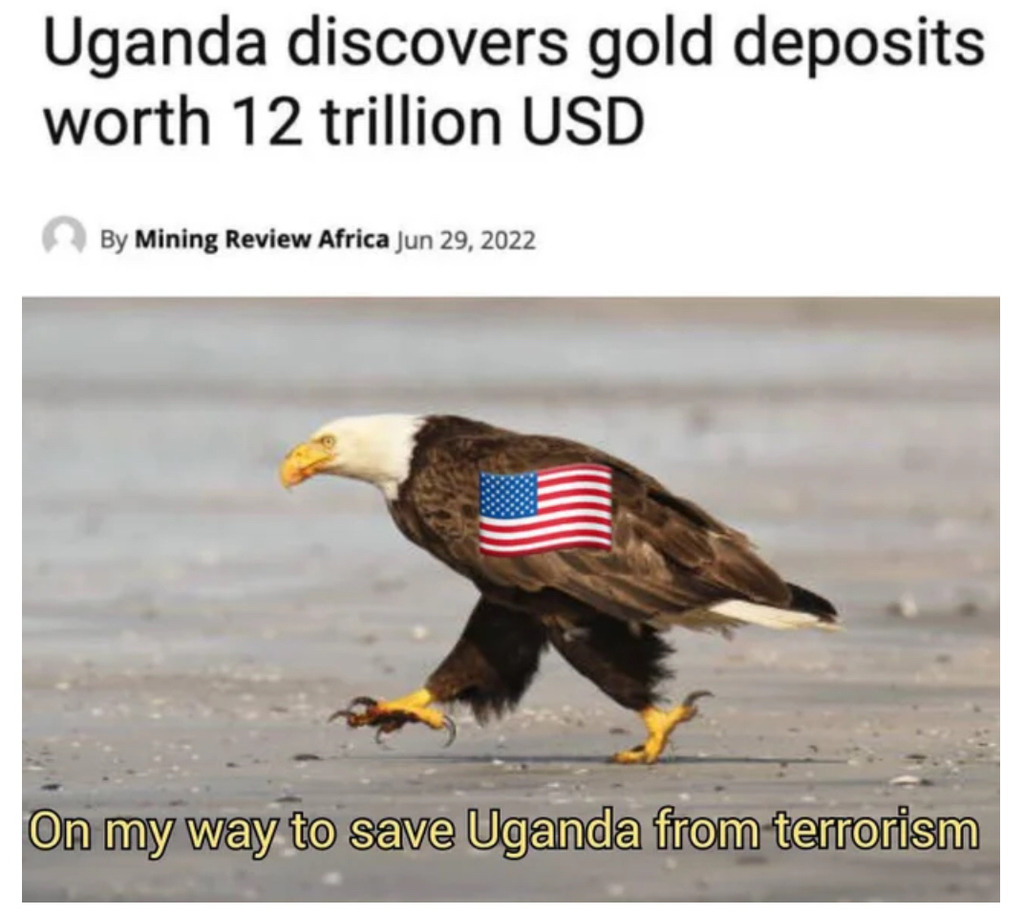
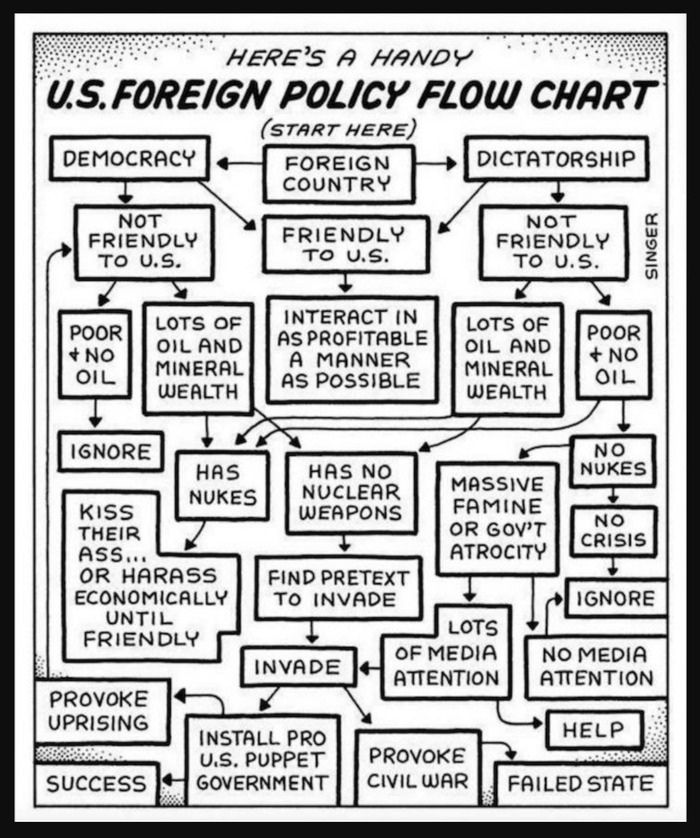
The United States has conducted nearly 400 military interventions since 1776, according to innovative research by scholars Sidita Kushi and Monica Duffy Toft. 

Half of those conflicts and other uses of force – including displays and threats of force as well as covert and other operations – occurred between 1950 and 2019, the last year covered in a new dataset, introduced by Kushi and Toft in a Journal of Conflict Resolution article published earlier this week. More than a quarter of them have taken place since the end of the Cold War.    

The United States has carried out 34 percent of its 392 interventions against countries in Latin America and the Caribbean; 23 percent in East Asia and the Pacific region; 14 percent in the Middle East and North Africa; and just 13 percent in Europe and Central Asia, according to a newly refined version of the Military Intervention Project (MIP) dataset — a venture of the Center for Strategic Studies at Tufts University’s Fletcher School of Law and Diplomacy. 

In addition to providing the most accurate count ever of U.S. military interventions — doubling the number of cases found in existing data, while also employing rigorous sourcing methods — the MIP offers 200 variables that allow for complex analyses of drivers and outcomes of wars and other uses of force.

Crucially, Kushi and Toft, the director of the Fletcher School’s Center for Strategic Studies, found that U.S. interventions have “increased and intensified” in recent years. While the Cold War era (1946–1989) and the period between 1868–1917 were the most “militaristically active” for the United States, the post-9/11 era has already assumed third position in all of U.S. history.  

Unlike earlier eras in which displays and threats of force were employed, such posturing short of military violence has been absent in recent years. The United States, they found, has actually “engaged in 30 interventions at level 4 (usage of force) or 5 (war).”

Until the end of the Cold War, note Kushi and Toft, U.S. military hostility was generally proportional to that of its rivals.  Since then, “the U.S. began to escalate its hostilities as its rivals deescalate it, marking the beginning of America’s more kinetic foreign policy.”  This recent pattern of international relations conducted largely through armed force, what Toft has termed “kinetic diplomacy,” has increasingly targeted the Middle East and Africa.  These regions have seen both large-scale U.S. wars, as in Afghanistan and Iraq, and low-profile combat in nations such as Burkina FasoCameroonthe Central African Republic, Chad, and Tunisia

Keep reading

John Bolton Admits He Helped Plan Foreign Coup Attempts

John Bolton, the former White House national security adviser for the Trump administration, has claimed that he previously helped plan attempted coups of foreign leaders.

Bolton made the comment in an interview with CNN’s “The Lead” on Tuesday, shortly after the Jan. 6 House Select Committee had wrapped up its seventh congressional hearing, regarding the breach of the U.S. Capitol.

Panel lawmakers focused much of Tuesday’s hearing on evidence around testimony provided by former White House Counsel Pat Cipollone and alleged ties between former President Trump and “extremist” right-wing groups.

The committee claims that Trump intentionally tried to mount an insurrection against the United States government in a last-ditch effort to remain in power after losing the 2020 election to Joe Biden.

Speaking to CNN, Bolton insisted that Trump could not have pulled off a “carefully planned coup d’etat aimed at the Constitution” because “that’s not the way Donald Trump does things.”

It’s not an attack on our democracy,” Bolton said. “It’s Donald Trump looking out for Donald Trump. It’s a once-in-a-lifetime occurrence.”

CNN host Jake Tapper responded, “I don’t know that I agree with you, to be fair, with all due respect” adding that “one doesn’t have to be brilliant to attempt a coup.”

However, Bolton said he disagreed with this statement before referencing his own alleged experience helping to plan a coup.

Keep reading

The well-traveled road from member of Congress to foreign agent

Earlier this month, a bipartisan bill was introduced in Congress that, among other important provisions to combat undue foreign influence in politics, would ban former members of Congress from lobbying on behalf of foreign governments. 

New Quincy Institute research finds that this congressional action is long overdue as the revolving door from Congress to lobbying on behalf of foreign interests has been spinning feverishly.

It’s no secret that when members of Congress leave office, they turn to one profession above all others: lobbying. Year in and year out, it’s the same story of former elected officials selling their connections and knowledge of how to make things happen (or not happen) in Washington to high-paying special interests. While this lobbying is often done on behalf of American interests — like big pharmaceuticalbanking, or weapons firms — former lawmakers have been lobbying on behalf of foreign interests more and more often in recent years.

We analyzed Foreign Agents Registration Act (FARA) filings since 2000 and found that at least 90 former members of Congress have registered as foreign agents, representing nearly half (87) of all countries in the world, and the trend has only become more pronounced in recent years. This raises critically important questions for U.S. national interests and highlights the importance of legislation to combat the potential risks of former members of Congress working for foreign interests.

Keep reading

Disclosed: How Obama Administration Officials Conducted Shadow Diplomacy With Iran To Undermine Trump

Senior Obama administration officials engaged in a secret meeting with Iran in 2018 as part of an effort to undermine the Trump administration’s diplomatic push to isolate the hardline regime, according to an internal State Department document.

As the Trump administration worked to increase economic pressure on Iran in 2018, a delegation of “U.S. former ambassadors held a secret, “off-the-record” meeting with former Iranian foreign minister Javad Zarif at his residence in New York City, according to a State Department memo unearthed this week as part of a lawsuit brought to compel the release of this information. The meeting took place around the same time John Kerry was reported to be working behind-the-scenes with Iranian officials to salvage the 2015 nuclear accord.

The internal memo, which is marked unclassified, details how these former U.S. ambassadors conducted shadow diplomacy with Iran’s top envoy surrounding “nuclear weapons, potential prisoner swaps, [the] Afghanistan withdrawal, and negotiations with the Taliban,” according to the American Center for Law and Justice (ACLJ), a legal advocacy group that sued the State Department to obtain the internal memo.

The document is the firmest proof to date that Obama-era officials were engaged in back-channel efforts to keep negotiations with Iran alive, even as former president Donald Trump and his administration worked to isolate the regime, former secretary of state Mike Pompeo told the Free Beacon in exclusive remarks. Pompeo, who was not aware of these meetings while leading the State Department, said the memo corroborates reports from the time about Kerry’s efforts to salvage the 2015 nuclear deal through back-channel powwows with Iranian officials.

Keep reading

The Pimps of War

The same cabal of warmongering pundits, foreign policy specialists and government officials, year after year, debacle after debacle, smugly dodge responsibility for the military fiascos they orchestrate. They are protean, shifting adroitly with the political winds, moving from the Republican Party to the Democratic Party and then back again, mutating from cold warriors to neocons to liberal interventionists. Pseudo intellectuals, they exude a cloying Ivy League snobbery as they sell perpetual fear, perpetual war and a racist worldview, where the lesser breeds of the earth only understand violence.

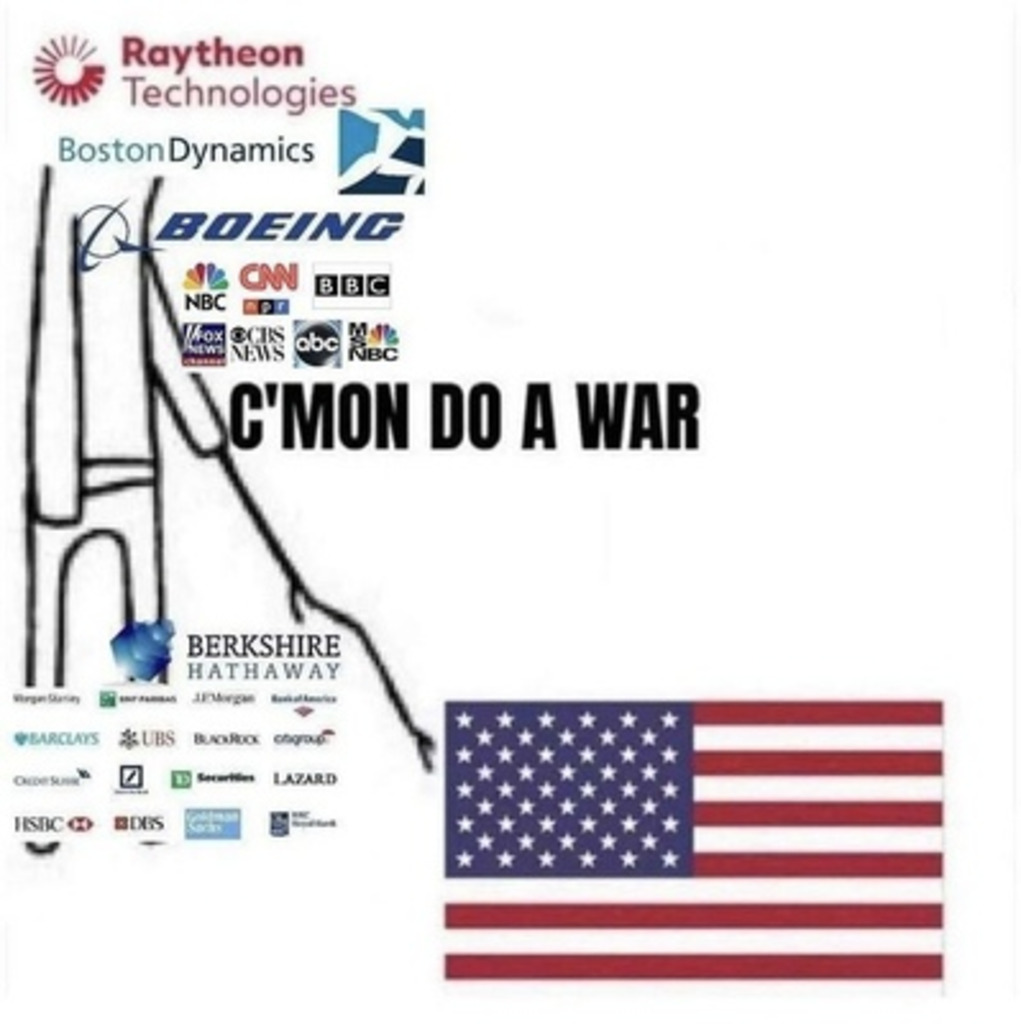
They are pimps of war, puppets of the Pentagon, a state within a state, and the defense contractors who lavishly fund their think tanks — Project for the New American Century, American Enterprise Institute, Foreign Policy Initiative, Institute for the Study of War, Atlantic Council and Brookings Institute. Like some mutant strain of an antibiotic-resistant bacteria, they cannot be vanquished. It does not matter how wrong they are, how absurd their theories, how many times they lie or denigrate other cultures and societies as uncivilized or how many murderous military interventions go bad. They are immovable props, the parasitic mandarins of power that are vomited up in the dying days of any empire, including that of the U.S., leaping from one self-defeating catastrophe to the next.

Keep reading

The Target is China

The Pentagon has produced its latest National Defense Strategy (NDS), a report made every four years to provide the public and the government with a broad overview of the U.S. war machine’s planning, posturing, developments and areas of focus.

You might assume with all the aggressive brinkmanship between Moscow and the U.S. power alliance this year that Russia would feature as Enemy No. 1 in the 2022 NDS, but you would be assuming incorrectly. The U.S. “Defense” Department reserves that slot for the same nation that’s occupied it for many years now: China.

Antiwar’s Dave DeCamp writes the following:

The full NDS is still classified, but the Pentagon released a fact sheet on the document that says it “will act urgently to sustain and strengthen deterrence, with the People’s Republic of China (PRC) as our most consequential strategic competitor and the pacing challenge for the Department.”

The fact sheet outlines four priorities for the Pentagon:

-Defending the homeland, paced to the growing multi-domain threat posed by the PRC

-Deterring strategic attacks against the United States, Allies, and partners

-Deterring aggression, while being prepared to prevail in conflict when necessary, prioritizing the PRC challenge in the Indo-Pacific, then the Russia challenge in Europe

-Building a resilient Joint Force and defense ecosystem”

“The Pentagon says that while China is the focus, Russia poses ‘acute threats’ because of its invasion of Ukraine,” DeCamp writes, showing the empire’s view of Moscow as a second-tier enemy.

Keep reading