FBI ‘Secret Spy Plane Surveillance Program’ Detailed in Court Records

The FBI’s so-called “secret spy plane surveillance program” is under scrutiny in a Florida terrorism case, where the defendant has asked a U.S. judge to toss evidence from the bureau’s aerial surveillance activities.

The FBI’s aerial surveillance program was first revealed in June 2015 by the Associated Press, which reported that the bureau maintained a civilian air force through private shell companies. The FBI admitted to the program days later, saying in a statement that “it should come as no surprise that the FBI uses planes to follow terrorists, spies, and serious criminals.”

“Contrary to some recent media reporting, the FBI’s aviation program is not classified. Some of our aircraft are registered covertly because overt registration would put our aircraft and operations at risk of compromise,” the FBI said at the time.

Nevertheless, the existence of the FBI’s program sparked outrage among civil libertarians, who celebrated when U.S. Court of Appeals for the 4th Circuit found in June that a similar program operated by the Baltimore Police Department violated the Fourth Amendment.

Keep reading

The FBI Declassifies Files on The Finders and McMartin Pre-school Child Trafficking Cases

In 1983, a woman named Judy Johnson from the affluent California community of Manhattan Beach went to the police, claiming that her 2-year-old son had been molested by Raymond “Ray” Buckey, a 28-year-old teacher at McMartin Preschool. Police began their investigation by notifying the parents of current and former students about the possibility of sexual abuse their child.

Numerous children told similar stories of satanic animal sacrifices and sexual rituals in secret rooms at the school. By 1984, Buckey was arrested on 79 counts of child molestation. His mother was also arrested as a conspirator, as well as several other members of the Buckey family, because McMartin Preschool was owned and operated by the Buckey-McMartin family.

The children said they were warned that if they told anyone, their parents would be killed. And sure enough, just as Buckey’s trial got underway in 1986 — a trial in which Judy Johnson was a key witness — she was discovered dead in her home, cause unknown. She was just 42 years old.

Almost exactly one year later, a former police officer who served as an investigator for the defense suicided himself at home.

With Johnson dead, Buckey’s defense attorney was able to impeach her character during the trial. It was also argued that the testimony of the children had been influenced (or implanted) by the psychological examiners who interviewed them. Ultimately, Buckey was not convicted. A second jury deadlocked in 1990, and the case was dismissed.

For six years, the police and the FBI had actively investigated the McMartin Preschool case, according to the Los Angeles Times. After they closed their file — and the Buckey family revealed they had sold the shuttered McMartin Preschool to Arnold Goldstein for the development of an office building — frustrated parents of the abused children hired the subsequently retired chief and head of the Los Angeles FBI, special agent Ted L. Gunderson (1928-2011) to continue with the investigation, and commissioned an archaeological survey.

A decade later, you could find Gunderson speaking out about the McMartin case as well as a network of child molesters and traffickers called “The Finders.”

For decades, the FBI’s files on the McMartin case and The Finders were sealed. Not anymore. The agency declassified and released its files. It shows a decade of research spanning from California to Belgium.

The FBI Files

The investigation into the cases described cults, child sex trafficking and kompromat. In recent decades, the mainstream media has refused to report on such cases. Such cases (see below) have been “debunked” by the usual suspects that the Crime Syndicate uses for cover. But the FBI’s own investigation suggests the cases were real enough and points to cover ups.

Keep reading

NIKOLA TESLA PROBABLY DIDN’T INVENT A DEATH RAY, BUT THE FBI STILL TOOK ALL HIS STUFF

After he died in 1943, the FBI immediately searched his hotel room and squirreled away all his notes, drawings, and documents. They stored everything in the FBI vault. The conspiracies surrounding Tesla’s supposed invention and the FBI’s involvement have only added to the mystery of Nikola Tesla. Whether or not you believe he did create a death ray (which, most scholars suggest, was a ploy for funding, as Tesla died broke), Nikola Tesla is a character who only recently had another chapter added to his story.

This new chapter in Tesla’s story happened in 2000 when the FBI released some of the papers they had taken from Tesla’s hotel room, as well as their notes on Tesla’s death. Because of his possible weapon and the occurrence of World War II, the FBI saved almost every publication on Tesla, from newspaper clippings to case files. All these documents were digitally scanned into the vault over the decades of storage. Though these documents have been released to the public, many of the pages still have redacted information on them. Big, thick black lines ink out names of FBI agents and other people involved in the Tesla case. According to self-proclaimed Tesla historian Cameron Prince: “We know for sure that the redactions in the released material indicate that the government is still holding the master keys, at the very least.” 

Keep reading

Ghislaine Maxwell Trial: Evidence from Jeffrey Epstein’s Safe Went Missing Following FBI Raid

In July 2019 the FBI raided Jeffrey Epstein’s home in New York City. The FBI agents found damning information and evidence throughout his 7-story residence. The evidence included “numerous black binders” with white labels that had “clear pages containing thumbnail photos with CDs attached.”

FBI agents also found several items in a safe including “binders with CDs, various items of jewelry, external hard drives, lose diamonds, large amounts of U.S. currency and passports.”

The FBI later said the evidence in the safe went missing. Chris Wray’s FBI said they went back a few days later and the evidence had disappeared.

Keep reading

DC bar restores status of convicted ex-FBI lawyer who deceived the FISA court during Russia probe

Kevin Clinesmith, the former senior FBI lawyer who was placed on probation as a convicted felon for falsifying a surveillance document during the Trump-Russia investigation, has been returned to “good standing” as a member of the D.C. Bar Association. 

In August of 2020, Clinesmith pleaded guilty to doctoring an email that was then used to justify a surveillance warrant that targeted former Trump campaign adviser Carter Page. As a result, Clinesmith was sentenced in January to 12 months probation, though the D.C. bar did not seek his disbarment. 

Keep reading

A Peek Inside Anom, the Phone Company Secretly Used in an FBI Honeypot

A video shows a row of jet black phones laying side by side on a wooden table. A white cable extrudes from each phone, loops on itself up to the table, and connects with a mess of other cables before linking with a nearby desktop computer. The camera pans to the right, revealing a cheap looking keyboard and more phones. There are maybe around 15 in all.

The person filming the video stretches out their hand and touches one of the devices, as if to show off their handiwork. They turn around and show a second table with another 15 phones plugged into another computer. A small bonsai tree sits at the top edge of the desk.

Finally, the video shows stacks and stacks of boxes, positioned one on top of the other, ready to send the products out.

This is a peek inside Anom, an encrypted phone company that, unbeknownst to its staff, secretly sent a copy of every message on the phones to the FBI and Australian police. Anom’s clients were members of hundreds of different organized crime groups globally, according to court records. This particular video was filmed by an Anom seller who loaded phones with the company’s custom software to then mail out to customers.

Keep reading

FBI Document Says the Feds Can Get Your WhatsApp Data — in Real Time

As Apple and WhatsApp have built themselves into multibillion-dollar behemoths, they’ve done it while preaching the importance of privacy, especially when it comes to secure messaging.

But in a previously unreported FBI document obtained by Rolling Stone, the bureau claims that it’s particularly easy to harvest data from Facebook’s WhatsApp and Apple’s iMessage services, as long as the FBI has a warrant or subpoena. Judging by this document, “the most popular encrypted messaging apps iMessage and WhatsApp are also the most permissive,” according to Mallory Knodel, the chief technology officer at the Center for Democracy and Technology.

Facebook’s Mark Zuckerberg has articulated a “​​privacy-focused vision” built around WhatsApp, the most popular messaging service in the world. Apple CEO Tim Cook says privacy is a “basic human right” and that Apple believes in “giving the user transparency and control,” a philosophy that extends to the company’s wildly popular iMessage app. For journalists, activists, and government critics who worry about government mass surveillance and political retribution, secure messaging tools can mean the difference between doing their work safely or facing imminent danger.

Keep reading

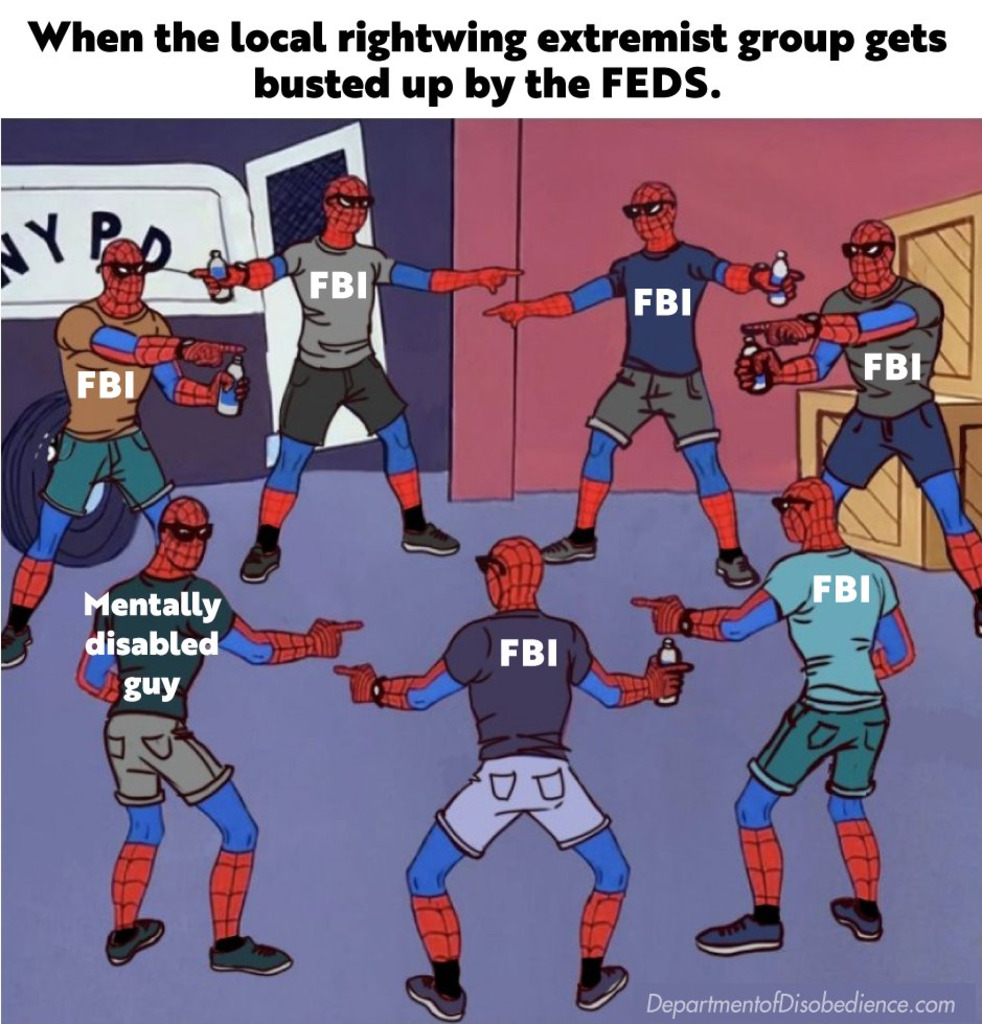
FBI And Other Agencies Paid Informants $548 Million In Recent Years With Many Committing Authorized Crimes

Federal agencies paid out at least $548 million to informants working for the Federal Bureau of Investigation (FBI), the Drug Enforcement Agency (DEA), and the Bureau of Alcohol, Tobacco, Firearms and Explosives (ATF), in recent years, according to government audits.

  • A few informants became millionaires, with some Amtrak and “parcel” delivery workers making nearly $1 million or more.
  • Many informants were authorized to commit “crimes” with the permission of their federal handlers. In a four-year period, there were 22,800 crime authorizations (2011-2014).
  • The FBI paid approximately $294 million (FY2012-2018), the DEA paid at least $237 million (FY2011-2015), and ATF paid approximately $17.2 million total (FY2012-2015) to informants.

Our auditors at OpenTheBooks.com compiled this information by reviewing federal reports. While some of the data is several-years old; it’s apparently the most recent available.

The FBI spent an average of $42 million a year on confidential human sources between fiscal years 2012 and 2018. “Long term” informants comprised 20 percent of its intelligence relationships (source: DOJ IG 2019 report).

The ATF employed 1,855 informants who were paid $4.3 million annually (FY2012-2015). Therefore, on average, each informant made $2,318 for the year. (source: DOJ IG report 2017).

Keep reading