Multiple Trains Derail In Texas & South Carolina, One Carrying ‘Hazardous Materials’

Two more trains, one carrying “hazardous materials,” derailed in Texas and South Carolina on Monday.

A Pacific Union train derailed in Houston, Texas as the result of a collision with an 18-wheeler, killing the driver.

And there were “hazardous materials on site,” according to the Splendora Police Department.

From Houston Public Media:

The crash between an 18-wheeler and Union Pacific train occurred shortly before 7:30 a.m. Monday along Interstate 69/U.S. 59 near its intersection with Fostoria and Midline roads, between the towns of Splendora and Cleveland, according to Lt. Troy Teller of the Splendora Police Department. He said 21 train cars were derailed in the collision and that a hazardous materials team from Union Pacific was on site and monitoring air quality as a precaution.

Union Pacific spokesperson Robynn Tysver confirmed that its hazmat crews were on site, adding that an estimated 100 gallons of diesel fuel was released by the truck involved in the crash.

“From what we’re being told and shown, there’s no major chemicals to be concerned about,” Teller said. “It’s more so household chemicals on board for retail purposes. It’s not a large quantity from what we’re being told.”

Hours later, a train also derailed in Enoree, South Carolina, on Monday, with no reported fatalities, and CSX Transportation, which owns the railway, is on site along with emergency crews.

Keep reading

“Get The Hell Out Of There” – Ohio’s Apocalyptic Chemical Disaster Rages On

While the US government is dispensing millions of dollars in resources to treat balloons as an existential crisis, a small town in Ohio finds itself engulfed in what actually looks like the apocalypse. Perhaps by design, all of the drama surrounding violations of US airspace by Chinese spy initiatives has done well to keep what is becoming one of the worst environmental disasters in recent memory from getting any headlines.

The chaos began early last week when a train of more than 100 cars derailed in East Palestine, Ohio near the state’s border with Pennsylvania with roughly 5,000 residents. The accident launched fifty of those hundred freight cars from the tracks. Twenty of the freight cars on the train were carrying hazardous materials, ten of which were detailed. While the accident had no fatalities, of those ten cars, five contained pressurized vinyl chloride, a highly flammable carcinogenic gas.

In order to address the volatile scenario around the crash site, the Ohio Emergency Management Agency executed its plan of venting the toxic gas with a controlled burn in order to evade an uncontrolled explosion which presented the risk of catastrophic damage. “Within the last two hours, a drastic temperature change has taken place in a rail car, and there is now the potential of a catastrophic tanker failure which could cause an explosion with the potential of deadly shrapnel traveling up to a mile,” Gov. Mike DeWine warned in statement explaining the decision to take action to avert widespread devastation.

However, that operation sent large plumes of smoke containing vinyl chloride, phosgene, hydrogen chloride, and other gases into the air as the flames from the controlled burn raged on for days. Phosgene in particular is a highly toxic gas that can cause vomiting and respiratory trouble. The toxicity of phosgene gas is so potent that it was previously used as a chemical weapon during the First World War.

The hazardous airborne chemicals prompted officials to issue mandatory evacuation and shelter-in-place orders within a one-mile radius of where the train derailed. Those orders forced nearly 2,000 residents of East Palestine out of there homes. Despite the public safety risk in proximity to the crash site, over 500 people within the parameters of the evacuation order refused to leave their homes. However, those orders were lifted on February 8th, allowing residents to return to the area adjacent to the disaster.

Keep reading

Construction to Start Soon on Controversial U.S. Lithium Mine “critical to Joe Biden’s $2 trillion clean energy plan”

Construction will reportedly soon begin on a mine that’s expected to become the United States’ largest source of lithium. This mine is viewed as critical to Joe Biden’s $2 trillion clean energy plan by powering the nation’s increased production of electric vehicles.

On Monday, a US district judge denied the majority of legal challenges raised by environmentalists, ranchers, and indigenous tribes, upholding that the federal government’s decision to approve the Thacker Pass mine in 2020 was largely not made in error. However, chief judge Miranda Du did agree with one of the protesters’ claims, ordering the US Bureau of Land Management (BLM) to complete a fresh review to determine if Lithium Americas Corp has the right to deposit waste rock on 1,300 acres of public land that the mining project wants to use as a waste site.

Because this waste site may not contain valuable minerals, there’s a possibility that this land may not be validly claimed as a waste site under current US mining laws, Du wrote in the order. A mining law from 1872 requires that mining projects must validate all claims to public lands before gaining federal approval, and that means Lithium Americas must now provide evidence that valuable minerals have been found on the proposed Thacker Pass waste site to resume the project.

Although this review may set back the project’s major construction timeline by as much as six months, that doesn’t seem to be a big concern for Lithium Americas. Reuters reported that the company met with BLM today to begin the review. The company’s chief executive, Jon Evans, told Reuters that because lithium has previously been found throughout the project area, Lithium Americas considers Du’s order to conduct a review an “easy fix.”

Calling it a win for the mining project, Evans confirmed that preparations for the mine site would promptly begin, projecting that heavy construction would be underway by this summer.

Keep reading

What is the US “Gas Stove Ban” REALLY about?

The Biden administration is apparently looking to ban gas stoves, calling them a “hidden danger”. But while that sounds bad enough, a deeper dive shows – as usual – it’s not really about what they say it’s about.

Talk of banning gas stoves and “unregulated indoor air quality” could be a Trojan horse designed to get even more “smart” monitoring technology into your home.

Let’s jump in.

ARE GAS STOVES DANGEROUS?

Well, according to Alexandria Ocasio Cortez, the New Scientist and million other outlets and pundits who started talking about it in the last two days, yes.

Earlier this week near-identical articles from the National Review, Bloomberg and CNN detail how the US Consumer Product Safety Commission will be opening “public comment on the dangers of gas stoves sometime this winter”.

The articles claim:

The emissions have been linked to illness, cardiovascular problems, cancer, and other health conditions. More than 12 percent of current childhood asthma cases are linked to gas stove use, according to peer-reviewed research published in the International Journal of Environmental Research and Public Health last month.

Now would be a good time to talk about the phrase “linked to”. It’s always a good one to look out for in any mainstream publication. Journalists love it because it implies causation without stating it.

Consider, one hundred per cent of serial killers have been linked to the ingestion of water and the wearing of shoes.

If this manipulative use of language were not evidence enough of an agenda, the rather premature deployment of the race card proves it:

Senator Cory Booker (D., N.J.) and Representative Don Beyer (D., Va.) wrote a letter to the agency last month urging the commission to address the issue and calling the harmful emissions a “cumulative burden” on black, Latino and low-income households.

SO, WILL THEY BAN THEM?

Actually, probably not.

Considering that, according to Bloomberg, some 40% of US homes use gas stoves to cook, an outright ban would be impractical to the point of madness. You can’t criminalise 40% of the country. It would be almost unenforceable.

Perhaps they might try a “phasing out”, as they plan for petrol cars in California.

But most likely of all is that this was never really about banning stoves in the first place.

Keep reading

Eco-activists trying to kill green tech that could eliminate emissions from fossil fuels

Although the United Nations states that carbon capture and storage technology (CCS), equipment that enables fossil fuel producers to sequester emissions to mitigate global warming, is needed to meet emissions reduction targets, multiple climate activist groups oppose its development as they believe CCS entrenches the oil and gas industry.

The UN Intergovernmental Panel on Climate Change (IPCC) states that governments and other entities must employ CCS to remove greenhouse emissions from the atmosphere and store them underground in order to limit global temperature increases below 2.7°F, compared to pre-industrial levels, according to an April IPCC report. However, climate activist nonprofits like the Sierra Club, which has previously referred to the IPCC’s work as the “gold standard” for climate science, argue that CCS is a “false” climate solution that is designed to help the fossil fuel industry.

“It comes from a fundamental hostility to traditional sources of energy and anything that comes from fossil fuels,” Paul Gessing, president of the Rio Grande Foundation, a free-market think tank, told the Daily Caller News Foundation. “Their focus is just to get coal plants or other facilities shut down regardless of whether carbon capture is going to be part of the energy transition or not.”

Keep reading

The Environmental Downside of Electric Vehicles

At one time, “Saving the Environment” and “Fighting Climate Change” were synonymous. That is no longer true. The quest for Clean Energy through electric vehicles (EVs) epitomizes “the end justifies the means.”

According to the International Energy Agency (IEA), an electric vehicle requires six times the mineral inputs of a comparable internal combustion engine vehicle (ICE). EV batteries are very heavy and are made with some exotic, expensive, toxic, and flammable materials.

The primary metals in EV batteries include Nickel, Lithium, Cobalt, Copper and Rare Earth metals (Neodymium and Dysprosium). The mining of these materials, their use in manufacturing and their ultimate disposal all present significant environmental challenges. Ninety percent of the ICE lead-acid batteries are recycled while only five percent of the EV lithium-ion batteries are.

Oil has been so demonized that we tend to overlook some of its positive traits as a power source relative to the battery power of EVs. The power for an internal combustion engine, oil, is a homogeneous commodity found abundantly around the world (especially in our own backyard). In 2019, the four top oil producing nations were the United States, Russia, Saudi Arabia, and Canada. In contrast, the power for EVs is dependent on a mixture of diverse commodities from just a handful of third world countries.

In spite of the environmental hysteria about oil drilling, the surface area disturbed is relatively small since the oil is extracted from under the ground. In contrast, many of the materials prominent in the clean energy revolution are obtained through open-pit horizontal mining which is extremely damaging to wide areas of the environment.

Keep reading

EPA Ignores Own Science, Plans to Reapprove Deadly Neonicotinoid Pesticides

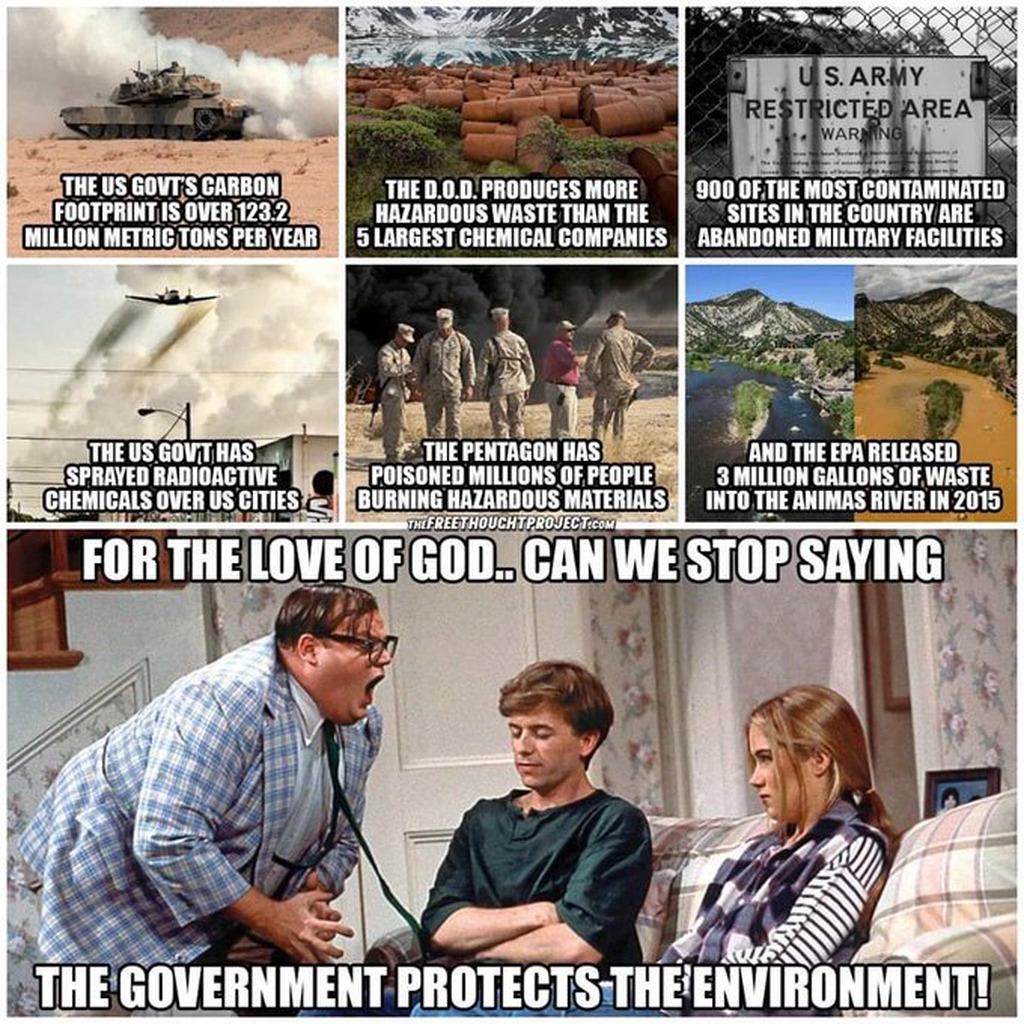
Recent coverage by The Guardian of the U.S. Environmental Protection Agency’s (EPA’s) plan — to extend the registration of several demonstrably harmful neonicotinoid insecticides — compels Beyond Pesticides to identify, once again, the agency’s failures to enact its core mission.

That mission is “to protect human health and the environment,” and to ensure that “national efforts to reduce environmental risks are based on the best available scientific information.”

EPA has undertaken a review of the registration of several members of the neonicotinoid (neonic) family of pesticides and, despite the agency’s own findings of evidence of serious threats to pollinators, aquatic invertebrates, and other wildlife, it issued interim decisions on these neonics in January 2020 that disregard the science on the pesticides’ impacts.

EPA appears to be prepared to finalize these registrations late in 2022; this would, barring further action, extend the use of these harmful compounds for 15 years.

Neonics are used widely in the U.S., both on crops to kill sucking insects, and as seed treatments with the same goal for the developing plant.

These insecticides are systemic compounds, meaning that once applied, they travel to all parts of a plant through the vascular system, and are then present in pollen, nectar, and guttation droplets.

Non-target organisms — such as bees, butterflies, birds, bats, and other insects — feed and drink from those sources and are thus readily and indiscriminately poisoned.

Keep reading

Germany to raze a 1,000-year-old forest in the name of ‘going green’

Germany, as we well know with its Russian gas capers, is a highly industrialized society in need of a lot of energy. 

Fine and dandy. But how they get it presents increasingly bad options.

They got rid of their nuclear power in the wake of the 2011 Fukushima nuclear meltdown after a big earthquake in Japan, (despite Germany not being in a quake zone), driving themselves to dependency on foreign suppliers. That’s presented problems for them what with Russia filling that role, so their other recourse has been the one Joe Biden is touting for America: Green energy — like wind and solar power.

It’s costly, requiring state subsidization, given that Germany is not a big sunshine zone nor particularly windy:

But it’s costlier than just the wasted cash. They also are now looking at the loss of their 1,000-year-old Reinhardswald old-growth forest — known as the Grimm’s Fairy Tale forest.

German authorities, completely ignoring German sentiment about forests, which is quite mystical, have decided to mow down the big one to get some wind power put in, in the name of ‘going green.’ Like the Central Valley of California, which has been turned brown and starved of water in the name of ‘going green,’ Germany is trashing its most beautiful forest in the name of ‘going green.’ Funny how that works.

Reinhardswald is known as the Grimm’s Fairy Tale forest. In a weird conundrum (the Germans probably have a word for this) the greenie industrial complex has morphed into Rumplestiltskin, spinning wind into gold for the state of Hesse’s bureaucrats but demanding Germany’s first child as payment.

Don’t get us wrong: We are all for progress. But to call this ‘progress’ is pretty disgusting. How is it ‘progress’ to trash Germany’s 1,000-year-old irreplaceable forest? Germany has a big population, a lot of ugly postwar urban landscapes, and yucky modern art. It has a few nice traditional places, too, but the big one for Germans is their beautiful ancient forests, the ones that eminent Germans like Goethe and Kant and Durer and Schubert likely walked through, marveled at, and drew inspiration from. Google ‘Reinhardswald’ at Google Images and see what this place looks like. There are also some likely practical reasons to keep the forest in reserve. In France, when the roof of the Cathedral of Notre Dame burned in 2019, what was lost were old-growth beams that could not be replaced easily at all because the old-growth forests were gone. Germany would not have such a problem if it needed to harvest a couple of trees to save, say. the Cologne cathedral if it were, heaven forbid, to endure such a catastrophe. There are always unexpected reasons to want to conserve some unique and irreplaceable natural habitats.

Keep reading