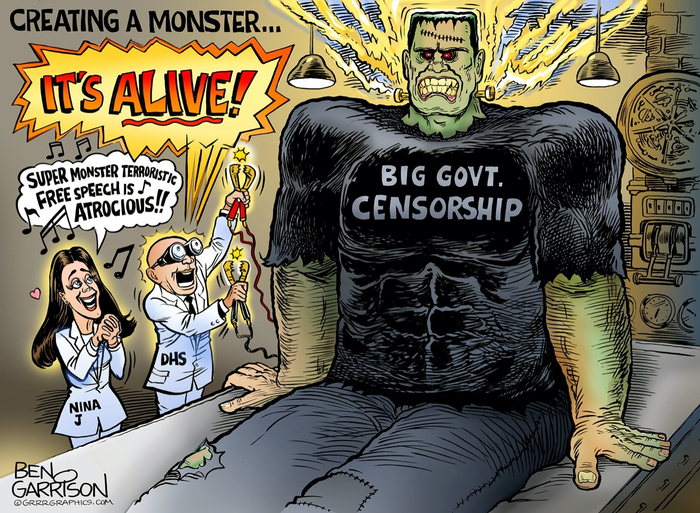
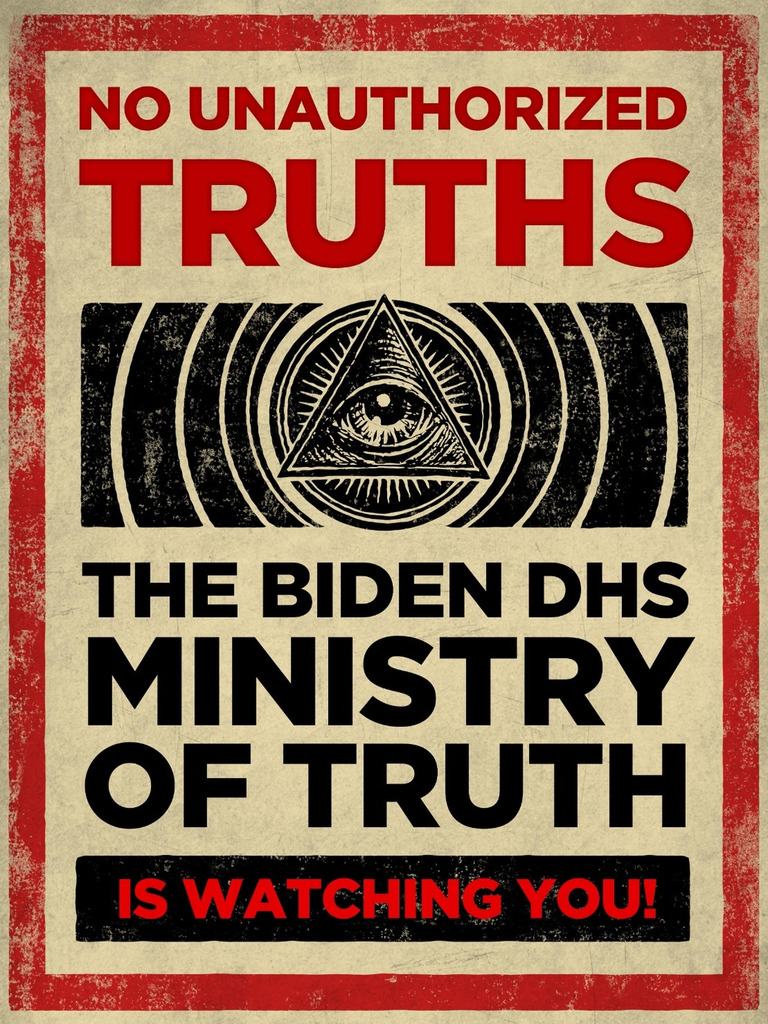
Why?


The Department of Homeland Security (DHS) wants Americans to believe since 2011, when the word “extremists” was just starting to take root in the public’s consciousness, there has been an explosion of violent extremism.
In 2011, DHS published the “Empowering Local Partners To Prevent Violent Extremism In The United States” report, while at the same time calls for ending America’s neverending war on terror started taking hold.
The DHS report made dubious claims like al-Qa‘ida was trying to recruit and radicalize Americans across the country, which coincidentally was also the 10th anniversary of 9/11. The report mentions extremists and violent extremists interchangeably during a time when Americans were beginning to question the war on terror.
In May 2011, National Public Radio wrote, “Why We Must End The War On Terror” and asked in September, “Is It Time To End The War On Terror?” Similar articles were being published across the country asking the same thing.
Fast forward eleven years to 2022, and the war on terror shows no signs of abating.
DHS, who could be mistaken for magicians if it were not so ironic, have convinced law enforcement that America now has at least twenty-three different types of extremists.
There does not appear to be a master list of American extremists published by DHS or the Department of Justice.
I used four sources to compile this list of twenty-two different types of violent extremists, but I fear that the government’s “official list” is far larger.
Sources: National Strategy for Countering Domestic Terrorism, A Schema of Right-Wing Extremism in the United States, Homegrown Violent Extremist Violent Indicators (2019) report and the National School Board.
The Department of Homeland Security (DHS) published a report recommending an increased focus on scanning the social media accounts of its employees in order to detect “extremism.”
Among the examples of “extremism” cited by DHS are: a belief that fraud occurred in the 2020 election, and objections to current coronavirus policies.
From the DHS report, obtained by Reclaim The Net:
A March 2021 unclassified threat assessment prepared by the Office of the Director of National Intelligence (ODNI), Department of Justice, and DHS, noted that domestic violent extremists “who are motivated by a range of ideologies and galvanized by recent political and societal events in the United States pose an elevated threat to the Homeland in 2021.” The assessment pointed to newer “sociopolitical developments such as narratives of fraud in the recent general election, the emboldening impact of the violent breach of the U.S. Capitol, conditions related to the COVID-19 pandemic, and conspiracy theories promoting violence” that “will almost certainly spur some [domestic violent extremists] [sic] to try to engage in violence this year.”
The report shows increased DHS concern with rooting out “extremists” within its own ranks, including through monitoring the social media accounts of employees.
Last Spring, Secretary of Homeland Security Alejandro Mayorkas ordered an internal review to identify how to best detect, prevent, and respond to threats related to domestic violent extremism within the department.
A component of this was based on online activity. “DVE [domestic violent extremist] attackers often radicalize independently by consuming violent extremist material online and mobilize without direction from a violent extremist organization, making detection and disruption difficult,” the unclassified initial report stated.
The report (obtained here) said that extremists, “exploit a variety of popular social media platforms, smaller websites with targeted audiences, and encrypted chat applications to recruit new adherents, plan and rally support for in-person actions, and disseminate materials that contribute to radicalization and mobilization to violence.”
One of the recommendations is to increase “efforts to better identify and evaluate mis- dis- and mal-information (MDM) with a homeland security nexus, including false or misleading conspiracy theories spread on social media and other online platforms that endorse violence.”
While not directly stated, it was inferred that the DHS was in some way monitoring online activity. Obviously, some privacy and free speech concerns were raised.
And now, this month, the DHS has released a report with the findings of the review.
We obtained a copy of the report for you here.
The new guidelines on extremist behavior include those who question the fraud in the 2020 election and anyone who question the regime’s talking points on COVID and its treatments including the mandates.
A March 2021 unclassified threat assessment prepared by the Office of the Director of National Intelligence (ODNI), Department of Justice, and DHS, noted that domestic violent extremists “who are motivated by a range of ideologies and galvanized by recent political and societal events in the United States pose an elevated threat to the Homeland in 2021.”3 The assessment pointed to newer “sociopolitical developments such as narratives of fraud in the recent general election, the emboldening impact of the violent breach of the U.S. Capitol, conditions related to the COVID-19 pandemic, and conspiracy theories promoting violence” that “will almost certainly spur some [domestic violent extremists] [sic] to try to engage in violence this year.”4
Over half of the US population question the results of the 2020 presidential election.
Another half of the public questions the ever-changing COVID talking points coming from the medical elites including Dr. Fauci who lied under oath about his funding of gain of function research in Chines labs.
If you mention this you may end up on their list.
Senator Ron Wyden is calling for an investigation after finding that Immigration and Customs Enforcement (ICE) has secretly monitored and collected records on 200 million American money transfers without obtaining a warrant for at least the past 12 years.
After reviewing a letter Wyden wrote to the DHS inspector general, the Wall Street Journal reported that it was the first time Congress learned about the program, the Oregon Democratic senator’s office first learned of it last month.
The Division of Homeland Security was collecting data on domestic and international money transfers of that amount going to or from Arizona, California, New Mexico, and Texas – as well as money transfers over that amount going to or from Mexico from anywhere in the U.S.

Recent Department of Homeland Security (DHS) decisions to monitor trucker protests and link domestic terrorism to misinformation have prompted backlash from some conservatives and civil libertarians, but DHS Counterterrorism Coordinator John Cohen defended his department’s actions at a Feb. 15 online event.
The DHS’s Feb. 7 bulletin warned of a heightened terrorism threat because of “false and misleading narratives,” misinformation, and “conspiracy theories.”
“The United States remains in a heightened threat environment fueled by several factors, including an online environment filled with false or misleading narratives and conspiracy theories, and other forms of mis- dis- and mal-information introduced and/or amplified by foreign and domestic threat actors,” the bulletin said.
Sen. Marsha Blackburn (R-Tenn.) reportedly accused the DHS of “policing” speech in a Feb. 15 letter, while Center to Advance Security in America (CASA) is probing the department over its methodology for crafting the bulletin, according to the Washington Times.
Cohen defended the bulletin at the Feb. 15 online event, hosted by George Washington University’s Program on Extremism. He said the DHS now has “hard analysis” linking violence to narratives about government’s response to COVID-19, the 2020 election, immigration, and race.
“We have tied those narratives specifically to the overwhelming majority of domestic violent extremism incidents,” he said.
“These narratives have, in fact, inspired violence.”
According to Cohen, the threats of information are coming from all directions.
The Department of Homeland Security (DHS) refused to provide evidence to support its claims that COVID-19 “misinformation” and “false or misleading narratives” inspired violent terrorism during 2021.
DHS issued a terrorism advisory bulletin Monday warning that of the dangers of online misinformation, which the agency said has been exploited by “threat actors” and to inspire acts of terrorism.
“The United States remains in a heightened threat environment fueled by several factors, including an online environment filled with false or misleading narratives and conspiracy theories, and other forms of mis- dis- and mal-information (MDM) introduced and/or amplified by foreign and domestic threat actors,” DHS said in the bulletin. “These threat actors seek to exacerbate societal friction to sow discord and undermine public trust in government institutions to encourage unrest, which could potentially inspire acts of violence.”
The agency specified COVID-19 misinformation and false claims about election fraud in particular as contributing to violence.
In its latest terrorism threat bulletin, the Department of Homeland Security (DHS) labeled online “misinformation” a terror threat.
The bulletin warned about the “proliferation of false or misleading narratives, which sow discord or undermine public trust in U.S. government institutions.”
The DHS further stated that there was an “online environment filled with false or misleading narratives and conspiracy theories, and other forms of mis-, dis- and mal-information introduced and/or amplified by foreign and domestic threat actors.”
“These threat actors seek to exacerbate societal friction to sow discord and undermine public trust in government institutions to encourage unrest, which could potentially inspire acts of violence,” the bulletin stated.
According to the DHS, misinformation could result in “mass casualty attacks.”
It listed unsubstantiated claims about Covid and election fraud as the two main sources of misinformation.
You must be logged in to post a comment.