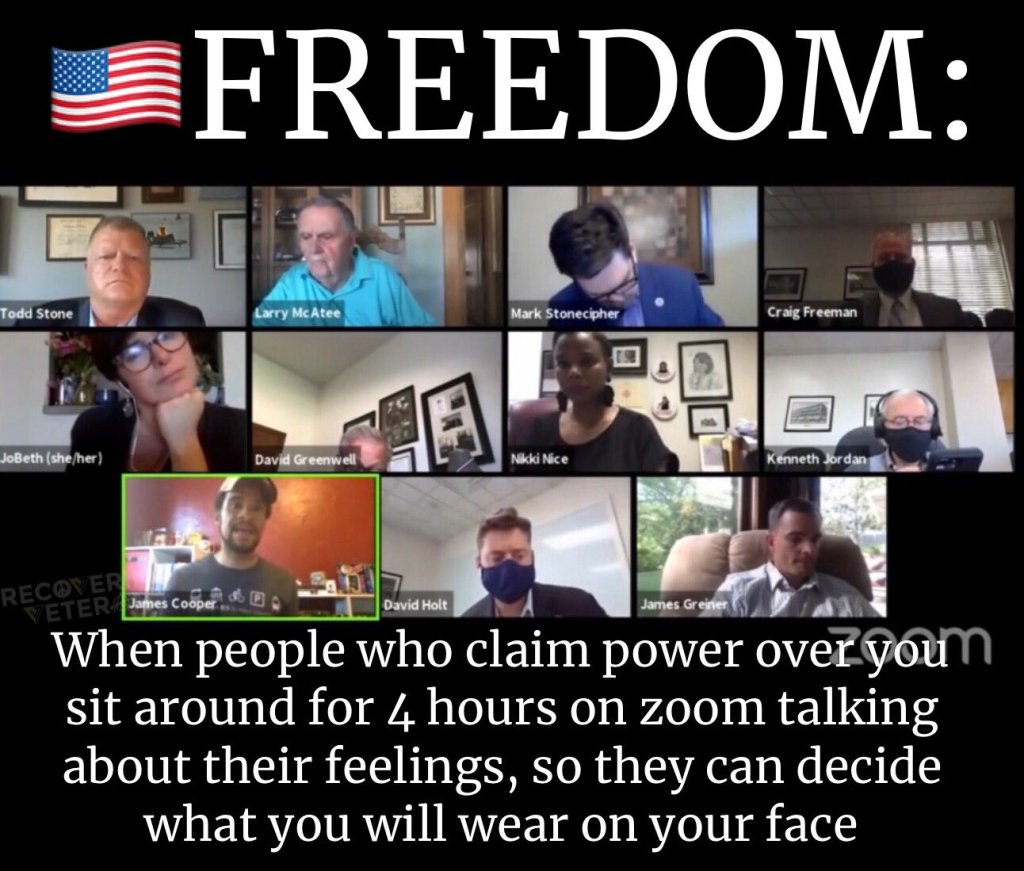
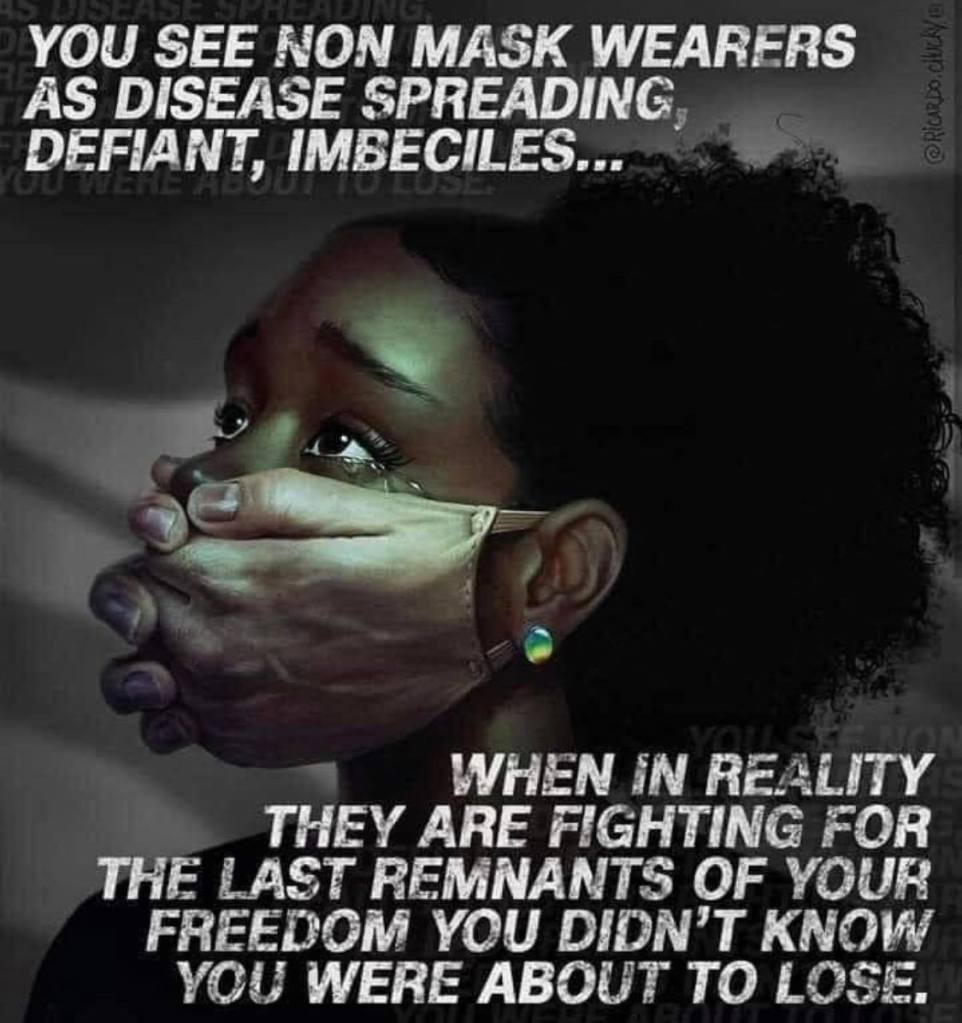
The 2 minutes Hate: It’s OK to Yell at Strangers Who Don’t Wear Masks

Roughly two-thirds of Americans say they wear masks in public. Unfortunately, that still leaves a substantial portion of potential COVID-19 carriers unmasked. Coming across anyone flouting public health recommendations and putting you, your family, and your community at risk triggers a number of thoughts and feelings. Depending on the situation, your annoyance could range from a mild simmer to an all-out rolling boil. So, what do you do?

First off, your indignation at that Target shopper in front of you in line without so much as a handkerchief around their neck is warranted. Wearing a mask is crucial. The medical community, including White House health advisor Dr. Anthony Fauci, has said in as many ways as possible that Americans who aren’t wearing face masks are increasing the risk of spreading the coronavirus. Even asymptomatic carriers of the virus may be spreading the disease. It’s absolutely reckless to expose the elderly and other at-risk groups to airborne coronavirus — the reason for social distancing and wearing face masks in the first place.

But understanding a situation is important. Some people might not be wearing their mask, letting it dangle around the neck for a minute because they were hot or uncomfortable. Some people may have simply spaced out on wearing a mask outside of their home because, honestly, mask-wearing is not yet second nature. Other people, particularly minorities, might not be wearing a mask of any sort in certain areas because covering their faces could be more dangerous than catching COVID-19. And yes, there are some for whom not wearing a mask is a willful act of assholery. These people are unwilling to conform to a new societal norm and refuse to yield what they believe to be their right to breathe “free.”

Of course, there’s no way to know exactly which type of non-face mask-wearer you’re dealing with. And there are ways to approach a situation delicately before your anger boils over. So, before you form a posse of fellow shoppers to shame them, consider alternatives to confrontation. Start slow, and escalate as needed, following these five steps.

Keep reading

“The horrible thing about the Two Minutes Hate was not that one was obliged to act a part, but that it was impossible to avoid joining in. Within thirty seconds any pretence was always unnecessary. A hideous ecstasy of fear and vindictiveness, a desire to kill, to torture, to smash faces in with a sledge hammer, seemed to flow through the whole group of people like an electric current, turning one even against one’s will into a grimacing, screaming lunatic. And yet the rage that one felt was an abstract, undirected emotion which could be switched from one object to another like the flame of a blowlamp”

George Orwell

Texas health officials remove over 3,000 ‘probable’ coronavirus cases from overall count

Texas health officials removed more than 3,000 reported coronavirus cases from an overall count after “probable” cases for people who were never tested were counted as confirmed.

“Since we report confirmed cases on our dashboard, we have removed 3,484 previously reported probable cases from the statewide and Bexar County totals,” Chris Van Deusen, a spokesman for the state health agency, said to the Austin American-Statesman.

“The State of Texas today had to remove 3,484 cases from its Covid-19 positive case count, because the San Antonio Health Department was reporting ‘probable’ cases for people never actually tested, as ‘confirmed’ positive cases.- TDHS,” Fox 4 Dallas Evening News anchor Steve Eagar tweeted Wednesday. “What other departments make this same mistake?”

Keep reading

Google Will Ban Ads On Sites Publishing “Debunked” Coronavirus Theories

Google is about to take one giant step into directly shaping the prevailing media narrative.

One month after Google made news by banning ads on websites – such as this one – for violating its terms of service when it comes to “derogatory” material (a purposefully amorphous concept), the world’s leading search engine and internet advertising monopoly which controls 70% of online ad spending, will take an even more aggressive step. According to CNBC, starting on August 18, Google will “ban publishers from using its ad platform next to content that promotes conspiracy theories about Covid-19.” Additionally, “in cases where a particular site publishes a certain threshold of material that violates these policies, it will ban the entire site from using its ad platforms.”

In short, anyone who deviates from the conventionally accepted narrative, or as CNBC puts it  challenges the “authoritative scientific consensus” on the coronavirus pandemic will be promptly demonetized.

Keep reading

Dr. Anthony Fauci Opposes Controlled Study on Effectiveness of Masks

Dr. Anthony Fauci said Tuesday he opposes conducting a controlled study on the effectiveness of masks to prevent the spread of the coronavirus.

Fauci discussed the idea during a conversation with students of Georgetown University’s Institute of Politics and Public Service.

One student asked if it is possible to do a study in the midst of a pandemic about the effectiveness of wearing masks.

“What kind of studies can we do right now in the middle of the pandemic about masks and transmission of the disease?” the student asked. “Or are we just relying on anecdotal evidence because we are not able to do those kind of studies right now?”

Fauci said there are enough “meta-analyses” of existing data showing the efficacy of masks.

Keep reading

A Pandemic of Surveillance

Pandemic maps are all the rage, these days, but the latest one from the Electronic Frontier Foundation (EFF) is a little different; instead of viral hotspots, it displays a plague of official snoopiness, arranged by location and sortable by technology. While it documents intrusions that predate the current crisis, the Atlas of Surveillance is all too relevant to the age of coronavirus. Concerns about curtailing contagion help to normalize detailed scrutiny of people’s lives and drive us toward a pervasive surveillance state.

“The Atlas of Surveillance database, containing several thousand data points on over 3,000 city and local police departments and sheriffs’ offices nationwide, allows citizens, journalists, and academics to review details about the technologies police are deploying, and provides a resource to check what devices and systems have been purchased locally,” EFF announced on July 13.

Users can click on the map to see what surveillance technologies are used in specified localities. If you want to see what’s going on in your area, the map is searchable by the name of a city, county, or state. The map can also be filtered according to technologies such as body-worn cameras, drones, and automated license plate readers.

Keep reading