The New York Times Guild Once Again Demands Censorship Of Colleagues

THE NEW YORK TIMES GUILD, the union of employees of the Paper of Record, tweeted a condemnation on Sunday of one of their own colleagues, op-ed columnist Bret Stephens. Their denunciation was marred by humiliating typos and even more so by creepy and authoritarian censorship demands and petulant appeals to management for enforcement of company “rules” against other journalists. To say that this is bizarre behavior from a union of journalists, of all people, is to woefully understate the case.

What angered the union today was an op-ed by Stephens on Friday which voiced numerous criticisms of the Pulitzer-Prize-winning “1619 Project,” published last year by the New York Times Magazine and spearheaded by reporter Nikole Hannah-Jones. One of the Project’s principal arguments was expressed by a now-silently-deleted sentence that introduced it: “that the country’s true birth date” is not 1776, as has long been widely believed, but rather late 1619, when, the article claims, the first African slaves arrived on U.S. soil.

Despite its Pulitzer, the “1619 Project” has become a hotly contested political and academic controversy, with the Trump administration seeking to block attempts to integrate its assertions into school curriculums, while numerous scholars of history accuse it of radically distorting historical fact, with some, such as Brown University’s Glenn Loury, calling on the Pulitzer Board to revoke its award. Scholars have also vocally criticized the Times for stealth edits of the article’s key claims long after publication, without even noting to readers that it made these substantive changes let alone explaining why it made them.

Keep reading

Twitter Adds New Restrictions To Crack Down On Spam, ‘Misinformation’ Ahead Of Election Day

Following in the footsteps of Facebook, which last month announced plans to launch its long-promised “oversight board” before Nov. 3, Twitter has announced that it’s planning a raft of measures, including making it more difficult for tweets to go viral ahead of the vote, to ensure that social media doesn’t contribute to any election day violence.

According to a blog post published around noon on Friday, one of the ‘speed bumps’ being implemented by twitter will prompt users to add a “comment” when they go to share – or retweet – a tweet. The move is designed to slow the rapid-fire retweeting of others” – a behavior that President Trump, one of the world’s most famous Twitter users, has occasionally exhibited.

Twitter’s recommendations and trends features will see “new curbs” added to try and prevent abuse.

“Twitter has a critical role to play in protecting the integrity of the election conversation, and we encourage candidates, campaigns, news outlets and voters to use Twitter respectfully and to recognize our collective responsibility to the electorate to guarantee a safe, fair and legitimate democratic process this November,” company officials said in a blog post – written by Vijaya Gadde, the Legal, Policy and Trust & Safety Lead at Twitter, and Kayvon Beykpour, its product lead – published at noon Friday.

Politicians, including President Trump, will be subjected to new restrictions if they start to share “falsehoods” according to Twitter. If they continue sharing “false” information – aka information that challenges the Democratic narrative – the accounts will be hit with “additional warnings and restrictions”.

Keep reading

Instagram Bans QAnon Accounts, But Refuses to Remove ISIS Accounts Celebrating 9/11

Facebook-owned Instagram has announced that will ban all QAnon accounts, including ones that don’t promote violence, while refusing to remove ISIS propaganda accounts that celebrate 9/11 under the justification that “people may express themselves differently.”

In an update to its policy announced yesterday, Facebook said that it was moving beyond a measure taken back in August that removed QAnon accounts which contained “discussions of potential violence.”

“We’ve seen other QAnon content tied to different forms of real world harm, including recent claims that the west coast wildfires were started by certain groups, which diverted attention of local officials from fighting the fires,” said the social media giant.

Facebook specified that it would “remove any Facebook Pages, Groups and Instagram accounts representing QAnon, even if they contain no violent content.”

Many pointed out the hypocrisy of Antifa accounts still being allowed on the platform despite the movement’s involvement in numerous violent riots over the last six months.

Keep reading

Who at Facebook Is Deleting Donald Trump’s Posts?

Facebook declined to answer a series of specific questions from Motherboard about how it polices Trump’s content, and why it took so long to delete this post. In an email, Facebook spokesperson Andrea Vallone said that the company has “teams around the globe that deal with content questions, so coverage across all time zones, and we have our Elections Operations Center in the U.S. up and running. The president is treated the same as other politicians.”

Keep reading

Reporters Claim Facebook is Censoring Information on Julian Assange Case

Craig Murray, the former British ambassador to Uzbekistan and longtime confidant of Julian Assange, has been fastidiously reporting on the Australian publisher’s extradition hearing to the United States. Yet few people have been reading it. This, according to Murray, is because of a deliberate decision by online media giants to downplay or suppress discussion of the case. On his blog, Murray wrote that he usually receives around 50 percent of his readers from Twitter and 40 percent from Facebook links, but that has dropped to 3 percent and 9 percent, respectively during the hearing. While the February hearings sent around 200,000 readers to his site daily, now that figure is only 3,000.

To be plain that is very much less than my normal daily traffic from them just in ordinary times. It is the insidious nature of this censorship that is especially sinister – people believe they have successfully shared my articles on Twitter and Facebook, while those corporations hide from them that in fact it went into nobody’s timeline,” he added.

Asked about the situation by former New York Times reporter Chris Hedges, Murray explained that

Anybody who is at all radical or takes any view of anything that is outwith the official establishment view gets used to occasional shadow banning, but I have never seen anything on this scale before.”

“90% of my traffic has just been cut off by what seems to be a general algorithm command of some kind to downplay Assange,” he added. “I think it is as simple as that.”

Keep reading

Fahrenheit 451 Predicted People Would Demand Tyranny

Even if it has been a while since you read Fahrenheit 451, you might remember Ray Bradbury’s classic for its portrayal of a dystopian future in which an authoritarian government burns books.

Read Fahrenheit 451 again to discover why people wanted their tyrannical government to burn books. Bradbury wrote Fahrenheit 451 in 1953, yet the parallels to today’s social climate for censorship are haunting.

Bradbury’s protagonist is Guy Montag, who, like all firemen in Bradbury’s future, burns books. 

In Bradbury’s dystopia, firemen became “custodians of our peace of mind, the focus of our understandable and rightful dread of being inferior; official censors, judges, and executors.”  

Today’s mainstream and social media are “custodians of our peace of mind” as they filter out “conflicting theory and thought.” Captain Beatty is Montag’s boss. Beatty explained, “If you don’t want a man unhappy politically, don’t give him two sides to a question to worry him; give him one.” 

If you don’t want people debating questions such as Covid-19 policy, Beatty has the ticket:

“Cram them full of noncombustible data, chock them so damned full of ‘facts’ they feel stuffed, but absolutely `brilliant’ with information. Then they’ll feel they’re thinking, they’ll get a sense of motion without moving.” 

Today, millions listen daily to reports of case counts of Covid-19. Like Bradbury predicted, listeners can recite the numbers but have no context to make sense of the numbers. Many have little idea that important scientists and doctors have advocated alternatives to lockdowns that could save lives and abate catastrophic impacts on economies. As in Bradbury’s world, many are working tirelessly to disparage and censor alternative views

Keep reading

Apple Removes RSS Feed Readers From Chinese App Store

Apple has reportedly removed two RSS feed reader apps from China’s App Store to comply with Chinese law. Fiery Feeds and Reeder both tweeted that their iOS apps had been removed in China over content that is considered “illegal” in the country.


Fiery Feeds quoted a three-year-old tweet from Inoreader, a similar RRS service that was banned from Apple’s Chinese ‌App Store‌ back in 2017 and had its entire service blocked in the country in April. Apple’s original message to Inoreader read:

We are writing to notify you that your application will be removed from the China ‌App Store‌ because it includes content that it illegal in China, which is not in compliance with the ‌App Store‌ Review Guidelines:

5. Legal
Apps must comply with all legal requirements in any location where you make them available (if you’re not sure, check with a lawyer). We know this stuff is complicated, but it is your responsibility to understand and make sure your app conforms with all local laws, not just the guidelines below. And of course, apps that solicit, promote, or encourage criminal or clearly reckless behavior will be rejected.

It’s not clear why Apple waited until now to block the additional feed readers, but the fact that it pulled these apps at all suggests RSS readers can sometimes circumvent China’s Great Firewall and pull in content from third-party websites that are otherwise on its blocked list.

Apple has faced increasing pressure from investors and human rights activists about its relationship with China and its tendency to comply with Beijing’s demands. Last year, for example, Apple removed the app of news outlet Quartz from China’s ‌‌‌App Store‌‌‌ after complaints from the government that it included content that is illegal in the country. The app was covering the Hong Kong Umbrella Movement protests at the time.

Keep reading

Spotify Employees Threaten to Strike If Joe Rogan Podcasts Aren’t Edited or Removed

Late last week, we first reported that Spotify employees were demanding direct editorial oversight over the recently-acquired Joe Rogan Experience podcast.  That would include the ability to directly edit or remove sections of upcoming interviews, or block the uploading of episodes deemed problematic. The employees also demanded the ability to add trigger warnings, corrections, and references to fact-checked articles on topics discussed by Rogan in the course of his multi-hour discussions.

Some of the group’s demands have already been met by Spotify management, though a refusal to allow further changes is stirring talk of a high-profile walkout or strike.  According to preliminary plans shared with Digital Music News, the strike would principally involve New York-based Spotify employees, and would be accompanied by protests outside Spotify’s Manhattan headquarters.  Other aspects would involve media appearances and coordination with other activist organizations.

For Spotify, the decision to offer some concessions may have only emboldened demands for wide-scale editorial oversight.

During the transition of Rogan’s podcast episodes onto the Spotify platform, multiple past episodes were omitted.  Those included interviews with Milo Yiannopoulos, Gavin McInnes, and Alex Jones.  Additionally, Rogan issued a rare public apology and correction over his claim that left-wing anarchists had set fires in Oregon, a point that was made during a recent interview with Douglas Murray.  The apology is now believed to be the result of pressure from Spotify staffers.

But those measures apparently don’t go far enough. Rogan’s claim during the Murray podcast is still part of the podcast recording, despite demands that the offending section be removed or directly corrected within the audio itself.  It now appears that Spotify is unwilling to directly edit or otherwise alter any existing episodes, with content alteration considered a bright line that shouldn’t be crossed.

Keep reading

Facebook Will Restrict Certain Users If US Election Gets “Extremely Chaotic Or Violent”

Earlier this week, Facebook gave us a welcome break from the virtue-signaling by threatened to pull its business from Europe should courts uphold an EU-wide ban on transfering European user data to US-based servers (something Washington is desperately trying to stop TikTok from doing, in a sense).

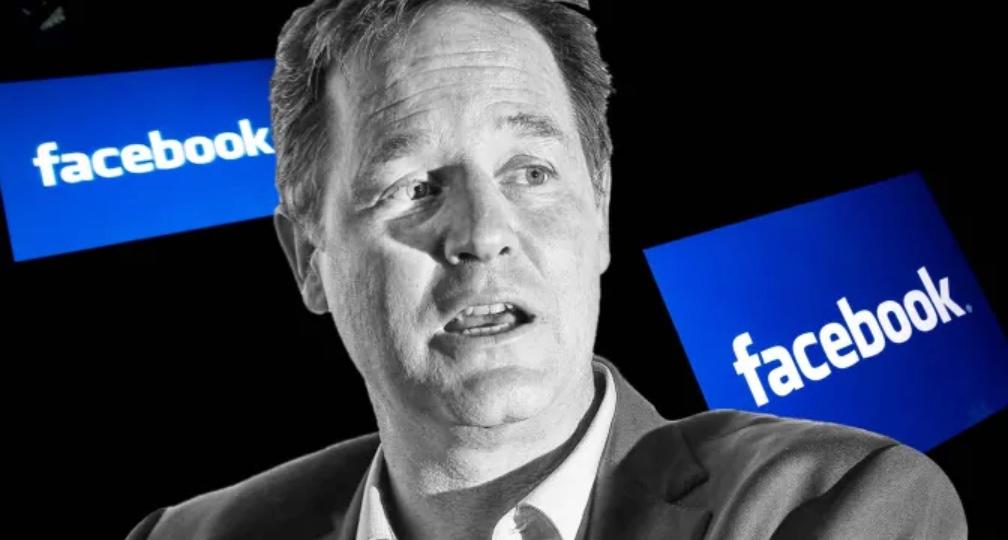
But that didn’t last long. On Tuesday, the social media giant’s head of global communications, former deputy PM Nick Clegg, told the Financial Times that the company is developing contingency plans should the US election lead to an outbreak of chaos and uncertainty. Though he didn’t go into too much detail, the implication is clear: Facebook is planning to significantly curtail speech on its platform, echoing the Internet blackouts utilized by authoritarian regimes including Iran, Venezuela and elsewhere.

Clegg preferred to call them the “break-the-glass” options, and assured readers that they probably wouldn’t happen anyway.

In an interview with the Financial Times, Nick Clegg, the company’s head of global affairs, said it had drawn up plans for how to handle a range of outcomes, including widespread civic unrest or “the political dilemmas” of having in-person votes counted more rapidly than mail-in ballots, which will play a larger role in this election due to the coronavirus pandemic. “There are some break-glass options available to us if there really is an extremely chaotic and, worse still, violent set of circumstances,” Mr Clegg said, though he stopped short of elaborating further on what measures were on the table. The proposed actions, which would probably go further than any previously taken by a US platform, come as the social media group is under increasing pressure to lay out how it plans to combat election-related misinformation, voter suppression and the incitement of violence on the November 3 election day and during the post-election period.

Of course, post-election day indecision is nothing new in American politics, though it will be the first time we’ve seen one since Facebook was founded in 2004. It also comes – as the FT none-too-subtly points out – as “conerns mount that even US president Donald Trump himself could take to social media to contest the result or call for violent protest, potentially triggering a constitutional crisis.”

But don’t worry: Because as Clegg explains, Facebook has done this before in “other parts of the world.”

“We have acted aggressively in other parts of the world where we think that there is real civic instability and we obviously have the tools to do that [again],” Mr Clegg added, citing the previous use of “pretty exceptional measures to significantly restrict the circulation of content on our platform”.

Facebook has also taken several steps to immediately step up and address any harmful activity that might emerge on its platform during the election. Citing unnamed sources, the FT says Facebook has planned for more than 70 scenarios, and that any high-stakes decisions will fall to a team of executives including CEO Mark Zuckerberg and COO Sheryl Sandberg. The company is employing a range of experts, including military planners, to help the company’s leadership make the best decisions possible.

“We’ve slightly reorganised things such that we have a fairly tight arrangement by which decisions are taken at different levels [depending on] the gravity of the controversy attached,” Mr Clegg said. The executive also said that “the amount of resources we are throwing at this is very considerable”. Facebook will have a virtual war room – dubbed its “Election Operations Centre” – for monitoring for suspicious activity and updating its “voter information hub”, which will showcase verified results to users, he said.

Keep reading