No, thanks!


A new lawsuit alleges that Twitter is aiding and abetting child sex traffickers and pedophiles by allowing them to buy and sell children, as well as spread child pornography, on its platform. Twitter, in its own defense, says the immunity protections outlined in Section 230 of the Communications Decency Act (CDA) do not require the social media service to act on behalf of innocent children who are being exploited.
If it was Donald Trump attempting to tweet about the fraudulent 2020 election from a separate account – Trump’s personal account was banned by Twitter several months ago – you can be sure Twitter would immediately flag and remove the “offending” tweet, as well as the account used. Since we are talking about children being raped and abused, however, Twitter is not at all concerned.
According to Jack Dorsey and Co., the lawsuit should be dismissed because Twitter bears no responsibility in removing child pornography and those who create and spread it from its platform. Section 230 of the CDA ensures this, which is why many are now calling for it to be rescinded.
“Given that Twitter’s alleged liability here rests on its failure to remove content from its platform, dismissal of the Complaint with prejudice is warranted on this ground alone,” the company insists.
According to reports, Twitter is not only supporting child sex trafficking and child pornography – it is also benefitting from it financially. Nearly every time an incident is reported, Twitter takes its sweet time responding, if it ever even responds at all.
“Twitter is not a passive, inactive, intermediary in the distribution of this harmful material; rather, Twitter has adopted an active role in the dissemination and knowing promotion and distribution of this harmful material,” the lawsuit states, further blaming “Twitter’s own policies, practices, business model, and technology architecture.”

Instagram has deleted a clip of President Joe Biden falling up the stairs of Air Force One three times, stating that it is “violence and incitement.”
The post was shared by Ashley StClair, a political commentator, along with the caption “Joe Biden vs his biggest opponent yet…stairs.”
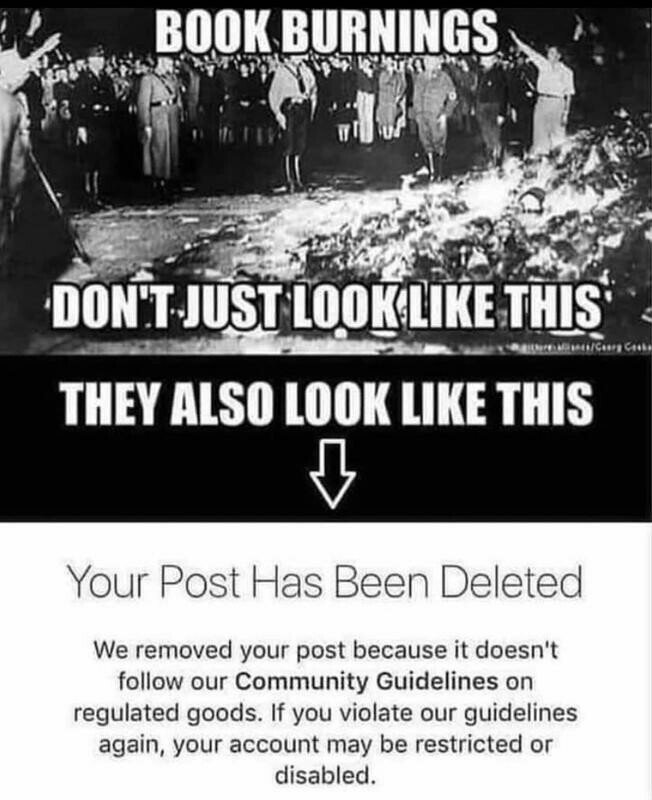
“We removed your story because it goes against our Community Guidelines. We created these guidelines to support and protect our community on Instagram,” Instagram stated.
Facebook announced Wednesday that it will restrict the popularity of groups and users that accrue violations and, in some cases, remove them altogether in order to reduce harmful content and misinformation.
“We’ve taken action to curb the spread of harmful content, like hate speech and misinformation, and made it harder for certain groups to operate or be discovered, whether they’re Public or Private. When a group repeatedly breaks our rules, we take it down entirely,” Facebook announced in a press release Wednesday.
Building upon its decision to stop recommending political groups to U.S. users in January after the Jan. 6 attack on the U.S. Capitol, Facebook will now reduce the privileges and popularity of groups that violate its content moderation rules.
This means users will be less likely to discover groups that have had Facebook community violations in the past and will see warnings when they try to join them.
Groups with a large number of members who have broken Facebook rules will be required to get administrator and moderator approval before posts can be published.
Individual users who have repeatedly violated Facebook policies within a group will be blocked altogether from posting in groups or inviting others to groups and creating new groups themselves.
Spotify has removed an anti-lockdown song by Ian Brown, the former lead vocalist of English rock band The Stone Roses. The music streaming service claims the song violated its policies against COVID-19 misinformation.
Brown released the anti-lockdown song “Little Seed Big Tree” last September. “NO LOCKDOWN NO TESTS NO TRACKS NO MASKS NO VAX,” he tweeted while launching the song.
On March 12, Brown took to Twitter to announce that Spotify had removed his song.
“SPOTiFY stream the streams and censor artists like they have with my last song TOOK IT DOWN just put it down the memory hole! FREE EXPRESSiON AS REVOLUTION,” he wrote.
On Monday, Twitter filed a complaint in court against Texas Attorney General Ken Paxton, who launched an investigation into the platform’s content censorship policies. Twitter argues that Paxton launched the investigation in retaliation to the de-platforming of former president Trump, which the company ironically claims is an abuse of power.
We obtained a copy of the complaint for you here.
“Twitter seeks to stop AG Paxton from unlawfully abusing his authority as the highest law-enforcement officer of the State of Texas to intimidate, harass, and target Twitter in retaliation for Twitter’s exercise of its First Amendment rights,” the company wrote in the court filing.
Following the suspension of Trump’s accounts on most mainstream social media platforms after the Jan 6 riot, Paxton launched an investigation into the moderation policies at Twitter, Facebook, Twitter, Apple, and Amazon.

The treasure trove of data currently being gathered through social media networks and other electronic means is a completely unregulated space, with microtargeting, in particular, spurring intense discussion in the wake of widely publicized allegations of Russian “interference” in the 2016 U.S. elections and the liberal use of data analytics, by Brexit promoters in the UK and the Trump campaign itself, to sway voters.
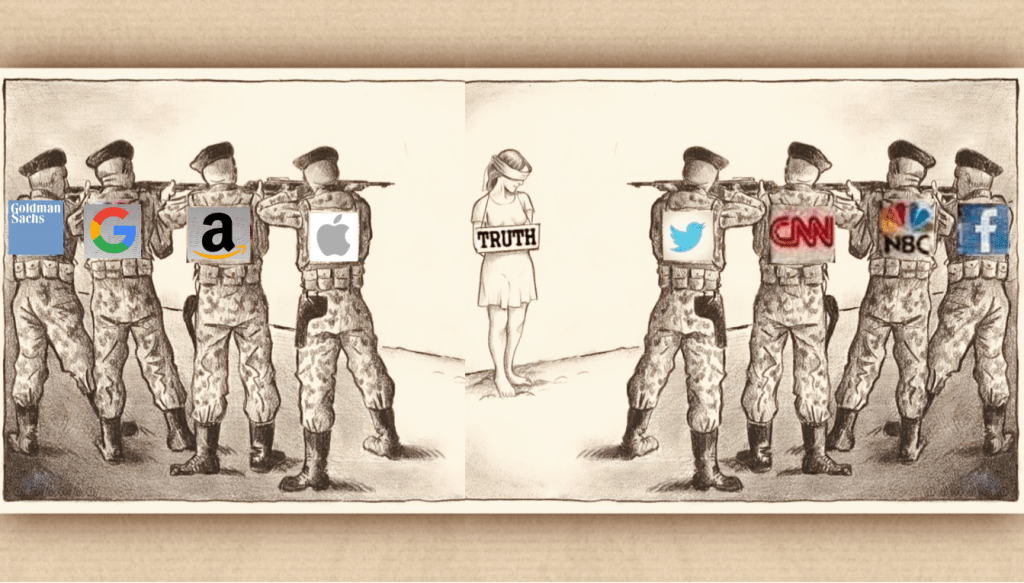
Hovering in the background of the simmering debate is the growing power of Facebook, Apple and other platform owners, whose monopolistic business practices are facing increasing push back around the world. Nevertheless, our content landlords still hold the key to the big-data realm by virtue of their dominant position, and whoever wants access to the new oil must kiss the ring of the Big Tech overlords.
Twitter failed to respond to a letter by Republican Reps. Jim Jordan from Ohio, and Ken Buck from Colorado, who requested documentation and data to aid a Congressional investigation by the House Judiciary Committee. The request was first made in July 2020.
In the letter, the Republican House representatives requested Twitter provide the House Judiciary Committee with documentation and data related to several issues, including the platform’s content moderation policies, its assertion that President Trump’s warnings to protesters violated its policies (last summer Trump warned rioters they would face violence from the National Guard), and its decision to fact check the then-President’s tweets.
In the recent letter, dated March 4, the Republican Reps claim that the request was first sent last July. Twitter did not provide the requested information then, and is yet to respond to the most recent letter.
You must be logged in to post a comment.